Families choosing a gluten-free snack
A clear gluten-free label matters when a child needs to avoid gluten. Check the current pack for oats and any other allergens relevant to that child.


Start with a biscuit clearly labelled gluten-free, then check its current ingredient and allergen information for the child who will eat it. A chocolate-coated biscuit, smaller chocolate-chip oat biscuits and a coconut-and-chocolate option offer different portions and formats; if the snack is going to school, check that school’s packed-lunch and allergy policies too.
A clear gluten-free label matters when a child needs to avoid gluten. Check the current pack for oats and any other allergens relevant to that child.
A portable biscuit may fit the routine, but the school’s packed-lunch and allergy policies still need checking before it goes in a bag.
Chocolate-coated, chocolate-chip oat and chocolate-and-coconut biscuits differ in format and portion size. Compare their allergen statements and nutrition panels rather than treating them as interchangeable.
Check dietary suitability first, then compare portions and packaging for the way the biscuit will be used.
| Priority | What to check | Your needs |
|---|---|---|
| Gluten-free label | Look for an explicit gluten-free claim on the current pack, not just a recipe without obvious wheat. The Food Standards Agency states that a gluten-free claim means no more than 20 mg/kg gluten in the food as sold. | I need a clearly labelled gluten-free biscuit, rather than relying on how the ingredients look. |
| Other allergens | Read the ingredients, highlighted allergens and any ‘may contain’ warning. For oat biscuits, check whether oats or avenin are suitable for the child; gluten-free does not mean free from every allergen. | The biscuit also has to fit the child’s requirements concerning oats, milk, soya, egg or nuts where relevant. |
| Portions and nutrition | Compare energy, sugars and saturates per biscuit and per 100g. McVitie’s lists 6.2g sugars per Gluten Free Milk Chocolate Hobnob; Nairn’s lists 2.1g per Chocolate Chip Oat Biscuit Break and 2.2g per Dark Chocolate & Coconut Chunky Oat Biscuit Break. Biscuit sizes differ. | I want to decide how many biscuits make up the snack and use the per-100g panel when comparing differently sized products. |
| School policies | Check the individual school’s packed-lunch and allergy policies before sending a biscuit in. Department for Education guidance on food provided by state-funded schools in England does not, by itself, settle what can go in every home-packed snack. | If I’m packing food for school, I need to know that school’s rules as well as what is on the biscuit pack. |
A gluten-free oat biscuit can still contain other allergens or carry a ‘may contain’ warning. The Food Standards Agency also notes that oats must be identified as an allergen even when they are gluten-free.
Read the full statement on the current pack, including oats and avenin information where relevant to the child.
The cited McVitie’s and Nairn’s biscuits have different published sugar amounts per biscuit, but their biscuit sizes differ too. A per-biscuit figure describes a portion, not an equal-weight comparison.
Use both per-biscuit and per-100g figures, and consider the number of biscuits you intend to serve.
England’s retail food-promotion framework and Department for Education guidance on food provided by state-funded schools address different settings. Neither replaces a check of the individual school’s packed-lunch and allergy policies.
Ask the school about its current policy before packing a chocolate biscuit.
Nairn’s UK page lists 56% gluten-free wholegrain oats and 15% dark chocolate chips for its Chocolate Chip Oat Biscuit Breaks, while a Joybuy listing under a similar name lists 55% oats and 20% chocolate chips. A name alone is not enough to establish that the recipes match.
Compare the current ingredient list, allergen statement and pack version of the specific product you plan to buy.
Gluten Free Milk Chocolate Hobnobs offer a chocolate-coated oat-biscuit style.
Its gluten-free oat biscuit range includes Chocolate Chip Oat Biscuit Breaks and Dark Chocolate & Coconut Chunky Oat Biscuit Breaks.
Tesco’s UK gluten-free biscuit range includes chocolate-oriented options such as Belgian Chocolate Chunk Shortbread and Belgian Chocolate Wafers.
Sainsbury’s UK gluten-free category includes Free From Chocolate Chip Cookies and Free From Digestive Chocolate.
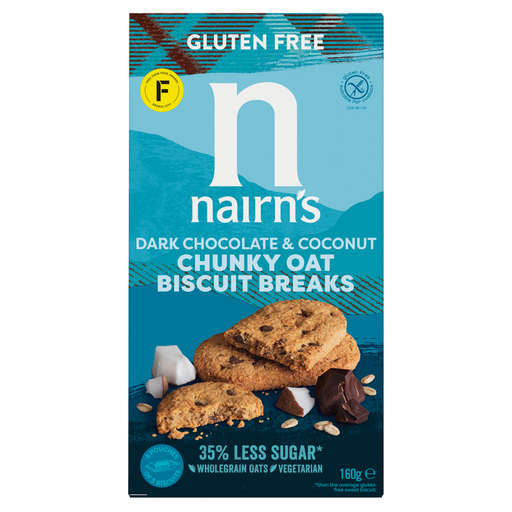
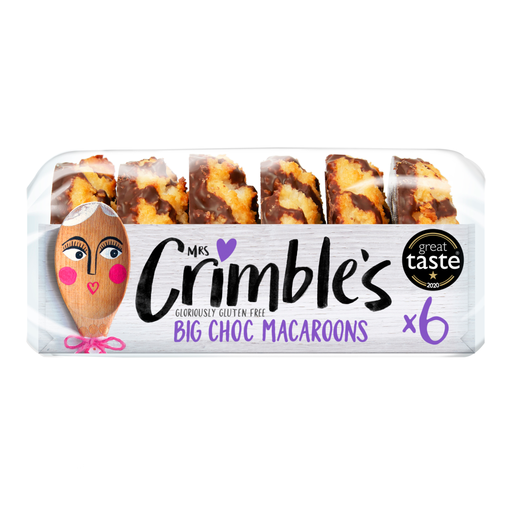
These Joybuy options show two gluten-free chocolate biscuit styles for an after-school snack: a chunky oat biscuit break and a pack of larger chocolate macaroons. Check each product’s current label against the child’s needs.
 No image available
This 160g gluten-free oat-biscuit option suits a chocolate-and-coconut snack preference. Check the current pack for oat suitability and other allergen information before serving or packing it.
 No image available
This pack of six larger gluten-free chocolate macaroons offers a different format from smaller oat biscuit breaks. Check the current allergen statement and portion information for the intended snack.
No. The Food Standards Agency states that a gluten-free claim means no more than 20 mg/kg gluten in the food as sold. It also notes that gluten-free oats must still be identified as an allergen.
Yes. Nairn’s says its cited oat biscuit products are unsuitable for people who react to avenin, a protein in oats. Other ingredients and ‘may contain’ warnings differ by product, so check the exact pack against the child’s requirements.
Check the individual school’s packed-lunch and allergy policies before packing one. Department for Education guidance on food provided by state-funded schools in England does not, on its own, determine the rules for every home-packed snack.
No such school-wide conclusion follows from those rules. England’s Food (Promotion and Placement) Regulations 2021 list sweet biscuits as a category in a retail promotion framework; whether a biscuit can be packed for a particular school is a separate question for that school’s policies.
Follow the instructions on the pack you buy. Tesco’s listing for McVitie’s Gluten Free Milk Chocolate Hobnobs says to store them in a cool, dry place and use an airtight container once opened.