Hosts serving a gluten-free guest
Choose a biscuit with an explicit gluten-free claim, then serve it away from crumbs from ordinary biscuits. Coeliac UK advises using clean surfaces and separate utensils where crumbs could transfer.


Choose a biscuit explicitly labelled gluten free, then consider whether the guest would prefer a chocolate-coated biscuit, chocolate chips or a different cookie texture. Check the current pack for oats and other allergens, and keep its serving area free of crumbs from ordinary biscuits. If the guest has swallowing difficulties, a product described as soft is not a substitute for their individual texture advice.
Choose a biscuit with an explicit gluten-free claim, then serve it away from crumbs from ordinary biscuits. Coeliac UK advises using clean surfaces and separate utensils where crumbs could transfer.
The guest may also need to avoid oats, milk, soya or egg. Check the ingredients and precautionary statements on the exact chocolate-biscuit pack, not just its gluten-free label.
A preference for a less crunchy biscuit is different from a swallowing difficulty. For someone with dysphagia, follow their individual clinical texture advice rather than a cookie’s description.
Start with the gluten-free claim on the particular pack, then narrow the choice by ingredients, texture and how the biscuits will be served.
| Priority | What to check | Your needs |
|---|---|---|
| Gluten-free identity | Read the full product name and look for an explicit gluten-free claim on the current pack. The Food Standards Agency defines gluten free as no more than 20 mg/kg of gluten in the food as sold. Do not substitute an ordinary biscuit from the same brand. | I’m serving someone who needs gluten-free food, so the particular biscuit I put out must be the labelled variant. |
| Oats and other allergens | Check whether the recipe contains gluten-free oats and whether the guest can eat them. Read ingredient and precautionary statements for other relevant allergens; recipes differ even among gluten-free chocolate biscuits. | If my guest avoids oats or has another allergy, a gluten-free claim alone will not settle the choice. |
| Texture | Distinguish a crunchy biscuit, a chocolate finger and a manufacturer-described soft cookie. For swallowing difficulties, use the guest’s individual speech-and-language-therapy advice rather than a texture word on the pack. | A softer cookie might suit an ordinary preference, but I won’t assume it suits someone who has trouble swallowing. |
| Portion and sugar | Check the serving size and total sugars on the nutrition label. Compare figures on the same basis, such as per 100 g or per biscuit, because biscuits and portions differ in size. | If sugar matters for this tea table, I want to know what the figure represents before deciding how many biscuits to serve. |
| Serving separately | Clear crumbs from the surface and use clean dishes and utensils for the gluten-free biscuits. Coeliac UK recommends washing surfaces with hot soapy water and avoiding shared utensils that could transfer crumbs. | I may be offering ordinary biscuits too, so I need to keep the gluten-free portion separate once the packs are open. |
McVitie’s ordinary Milk Chocolate Digestives list wheat flour. Its separately named Gluten Free Milk Chocolate Hobnobs are a different product.
Check the complete name and gluten-free claim on the pack you intend to serve.
Some gluten-free chocolate biscuits contain oats, milk, soya or egg. Coeliac UK also notes that a small number of people with coeliac disease are sensitive to avenin in gluten-free oats.
Ask about the guest’s requirements, then read the exact variant’s ingredients and precautionary statements.
A manufacturer’s description of a soft cookie does not establish whether it is suitable for someone with dysphagia. Kent Community Health NHS Foundation Trust advises that a speech and language therapist should guide decisions about potentially difficult textures.
Follow the guest’s individual texture advice if swallowing is difficult.
Crumbs or shared utensils can transfer gluten to a biscuit selected for its gluten-free label.
Clean the surface and give the gluten-free biscuits their own dish and utensils, in line with Coeliac UK’s home guidance.
These are examples of particular gluten-free product lines, not a reason to assume that every chocolate biscuit from the same brand is suitable.
Gluten Free Milk Chocolate Hobnobs are an oat biscuit with a milk-chocolate coating.
Chocolate Chip Oat Biscuit Breaks offer a gluten-free oat-biscuit style with chocolate chips.
Chocolate Fingers and Soft Cookies Double Chocolate are different gluten-free chocolate-biscuit styles to consider when an oat-based recipe does not suit.
Free From Chocolate Chip Cookies are an own-label gluten-free oat-cookie option.
These options cover a gluten-free oat-biscuit variant and a chocolate coconut macaroon for a different afternoon-tea style. Check each current pack against the guest’s ingredients and texture requirements.
 No image available
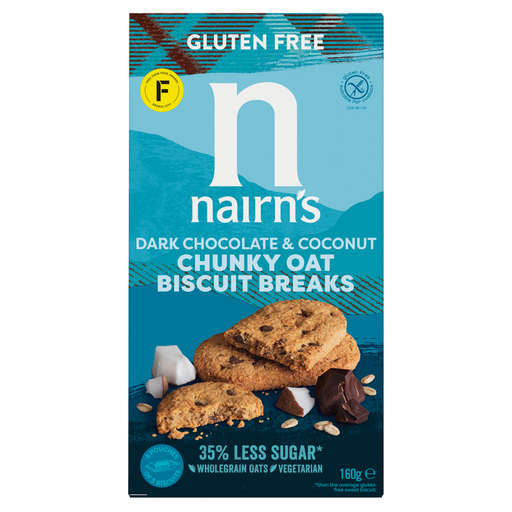
This gluten-free oat-biscuit variant is an option to consider when the guest can eat oats. Check its oat and avenin advice and its precautionary milk statement on the pack before serving.
 No image available
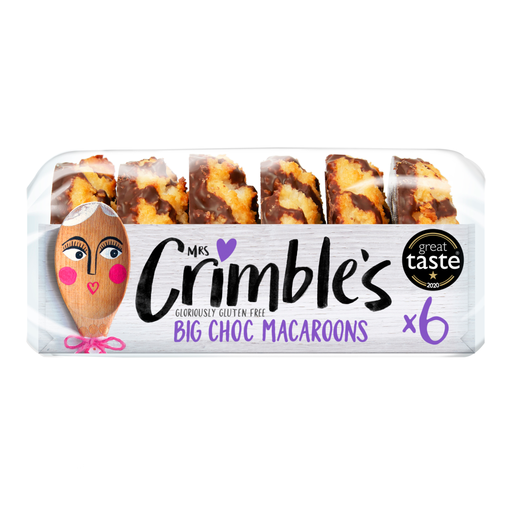
These six gluten-free chocolate macaroons offer a coconut-based alternative to the oat-biscuit style. If the guest avoids oats, check the full recipe; the listed egg and soya ingredients and milk and nut precautions also need checking against their requirements.
No. The Food Standards Agency defines gluten free as no more than 20 mg/kg of gluten in the food as sold; the claim does not mean absolute zero.
No. Coeliac UK says most people with coeliac disease can eat gluten-free oats, but a small number are sensitive to avenin in oats. Check the guest’s own oat requirements before choosing an oat biscuit.
Not necessarily. McVitie’s Gluten Free Milk Chocolate Hobnobs and Schär Chocolate Fingers both list milk. Read the particular pack for every allergy relevant to the guest.
They can be offered at the same tea, but keep the gluten-free portion away from ordinary-biscuit crumbs. Coeliac UK recommends cleaning surfaces with hot soapy water and using separate dishes or utensils where crumbs could transfer.
A soft description alone cannot establish that. Kent Community Health NHS Foundation Trust advises that a person’s speech and language therapist should guide which potentially difficult foods or textures to avoid or handle with care.