Parents preparing a gluten-free toddler snack
A carton drink and canned coconut milk serve different purposes. Check the exact product’s current gluten-free wording before adding either to a snack.


For a toddler snack, choose a coconut product whose current pack explicitly says gluten-free: a carton drink can accompany a snack, while canned coconut milk is a cooking ingredient, not a replacement for the child’s usual milk drink. Check milk, soya and other relevant allergens separately. If the drink would become a regular milk substitute, consider the child’s age and wider diet; NHS dietetic guidance notes that some coconut drinks are low in energy and protein.
A carton drink and canned coconut milk serve different purposes. Check the exact product’s current gluten-free wording before adding either to a snack.
A dairy-free claim helps with one requirement, but a coconut drink’s fortification, energy and protein also matter if it will regularly replace the child’s usual milk.
Check the gluten-free claim alongside the full ingredient and allergen information. A coconut drink may also contain soya, as the Alpro Coconut Barista With Soya listing shows.
Check the label first, then choose a carton for a drink or a can for a recipe. Using either as a regular milk substitute is a separate decision.
| Priority | What to check | Your needs |
|---|---|---|
| Gluten-free claim | Look for an explicit claim on the current pack. The Food Standards Agency states that UK food labelled gluten-free must contain no more than 20 mg/kg of gluten as sold. | I need a gluten-free snack, so the word ‘coconut’ alone is not enough to make the choice. |
| Other allergens | Read the ingredient list and allergen information separately from the gluten-free claim. Check for milk, soya and any other allergens relevant to the child. | If my child also avoids milk or soya, I need the exact product to meet those requirements too. |
| Drink and age | For a carton drink, check calcium fortification, energy and protein per 100 ml. If it would become a regular milk substitute, consider the child’s age and seek individual advice where needed. | A little drink with a snack is a different decision from replacing my child’s usual milk. NHS guidance says first infant formula is the only suitable alternative to breast milk in the first 12 months. |
| Recipe format | Choose a carton when the recipe calls for a drink and a can when it calls for cooking coconut milk. For a can, check its ingredients, saturated fat information and storage directions. | I want the right coconut ingredient for the snack without treating a cooking can as my child’s milk drink. |
Sainsbury’s lists Koko Dairy Free Unsweetened Drink at 19 kcal and 1.2 g protein per 100 ml. NHS dietetic guidance notes that some coconut drinks are low in energy and protein.
For a regular milk alternative, consider the child’s age, the drink’s fortification and the wider diet rather than relying on a dairy-free claim alone.
A can is intended for cooking. Marks & Spencer lists 15.1 g of saturates per 100 g in its Coconut Milk.
Use the amount the recipe calls for and provide the child’s usual suitable drink separately.
The claims address different requirements. The Food Standards Agency defines the UK gluten-free claim by a limit of no more than 20 mg/kg of gluten in the food as sold.
Check the current pack for an explicit gluten-free claim, then read its ingredient and allergen information for the child’s other needs.
These examples show why the exact product matters: coconut cartons differ from cooking cans, and ingredients vary between drinks.
A coconut-based carton drink example for snack use.
A coconut drink that illustrates why ingredients need checking.
A coconut-and-soya barista drink example.
Canned coconut milk intended for cooking.
Canned coconut milk for recipes rather than a carton drink.
This is a barista-style carton coconut drink, not canned cooking coconut milk. Check whether its ingredients and current label suit the toddler snack you are preparing.
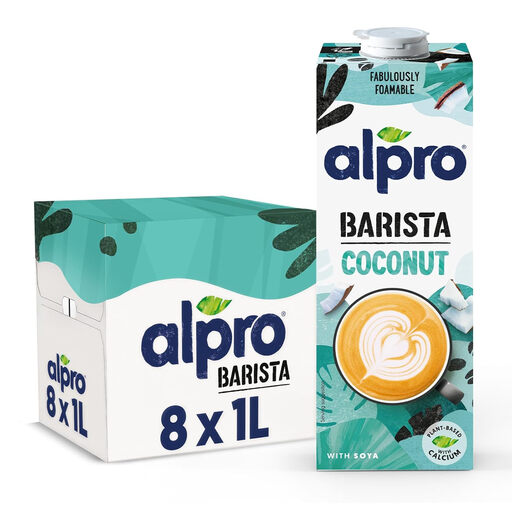 Image unavailable
This coconut drink is positioned for barista use rather than toddler feeding. It contains soya and sugars; check the current pack for an explicit gluten-free claim, full allergen information and calcium content before choosing it for a snack.
No. The Food Standards Agency says a food labelled gluten-free in the UK may contain no more than 20 mg/kg of gluten as sold. Check the claim on the exact current product rather than assuming that coconut ingredients establish it.
No. NHS guidance says first infant formula is the only suitable alternative to breast milk in the first 12 months. A coconut drink should not replace either as an infant’s main milk.
No. Gluten-free and dairy-free are separate claims. Check the current pack for milk and any other relevant allergens; for example, Waitrose lists Alpro Coconut Barista With Soya as dairy-free but containing soya.
Follow the directions on the exact can. Waitrose Essential Coconut Milk instructs refrigeration below 5°C and use within 2 days of opening.