For a creamy curry, soup or dessert, look for culinary coconut milk rather than assuming a coconut drink will give the same result. If the meal must be gluten-free, check for an explicit claim on the specific product’s current pack; a cooking ingredient’s coconut-based recipe alone does not establish its gluten-free status. For a fussy eater, NHS guidance favours small portions and calm, repeated offers over forcing an unfamiliar food.
Who is this choice for?
Families cooking for a fussy eater
A familiar curry, soup or dessert may be an easier setting for a small serving of a new coconut flavour than an unfamiliar dish on its own. The NHS advises offering variety and small portions without forcing a child to eat rejected food; it does not promise that a particular ingredient will be accepted.
Households needing gluten-free meals
Check the current gluten-free statement for the exact coconut product you intend to use, particularly when avoiding gluten for coeliac disease. The UK Food Standards Agency defines a gluten-free label as applying to food containing no more than 20 mg/kg of gluten as sold to the consumer.
Cooks choosing between a can and a drink
Culinary coconut milk is presented for dishes such as curries and soups, while the Alpro coconut drink listing suggests uses including porridge and pancakes. If a coconut drink is also replacing cow’s milk in the household, check its own nutrition panel: a UK government assessment notes that plant-based drinks vary considerably in nutrient content and fortification.
What should you check before buying?
Choose the format for the dish, then check the exact product’s gluten-free wording, nutrition panel and storage instructions.
Culinary coconut milk
Choose it when: You want coconut milk for a cooked curry, soup or dessert, as in the M&S and Waitrose product descriptions.
Keep in mind: A cooking role does not establish gluten-free suitability; check the claim on the exact product you buy.
Coconut drink
Choose it when: The recipe calls for a pourable drink, such as for porridge or pancakes; those are uses suggested in the Alpro listing.
Keep in mind: Alpro calls this product a coconut drink, not culinary coconut milk, so do not assume it will give a sauce the same body.
| Priority | What to check | Your needs |
|---|
| Gluten-free claim |
Look for an explicit claim on the exact product’s current pack or full product page. Check the pack received if a listing may have changed. |
I need to know whether this particular ingredient is suitable for a gluten-free meal, rather than judging by its short ingredient list. The Food Standards Agency’s UK gluten-free label definition is no more than 20 mg/kg of gluten in the food as sold. |
| Cooking format |
Check whether the product is culinary coconut milk or a coconut drink, and compare its suggested uses with your recipe. |
For a familiar curry or soup, I want an ingredient intended for cooking. If I am making porridge or pancakes, a coconut drink may fit the recipe instead. |
| First serving |
Consider how much coconut flavour the dish introduces and whether you can offer a small portion alongside familiar foods. |
A new flavour may be easier to offer in a small serving without pressure. The NHS advises giving fussy eaters small portions and continuing to offer a variety of foods. |
| Nutrition panel |
Compare the stated serving size and nutrition values on the exact product. For a drink used instead of cow’s milk, check its fortification as well. |
If coconut products feature regularly in our meals, I want to know what is in the amount we use. The UK government’s SACN and COT assessment notes considerable variation among plant-based drinks. |
| After opening |
Read the product’s refrigeration and use-by instructions once opened; they can differ between products. |
I would rather choose an amount we can use within the pack’s stated period than leave most of it unused after one meal. |
Common buying mistakes
-
Assuming coconut and water on a label prove a product is gluten-free
A short ingredient list does not confirm the gluten-free status of the specific product. The UK Food Standards Agency defines what a gluten-free label means for food as sold.
For a strict gluten-free requirement, check the current pack for an explicit statement rather than relying on an earlier listing or a recipe.
-
Using a coconut drink as a direct substitute in a creamy sauce
Alpro distinguishes its coconut drink from coconut milk and suggests uses such as porridge and pancakes; culinary coconut milks are described for cooked dishes including curries and soups.
Choose according to the recipe’s required format, and check gluten-free wording separately for whichever product you select.
-
Treating cooking coconut milk as a nutritional replacement for cow’s milk
A cooking ingredient and a drink serve different purposes. The UK government’s SACN and COT assessment also notes that plant-based drinks differ considerably in nutrient content and fortification.
Use culinary coconut milk for its role in the recipe; if choosing a drink in place of cow’s milk, compare the nutrition and fortification information on the exact product.
-
Forgetting the instructions after opening
Waitrose & Partners instructs shoppers to refrigerate its Essential Coconut Milk below 5°C and consume it within two days of opening.
Check the instructions on your own pack and plan another dish if its stated storage period is short.
Unused coconut milk may have to be discarded if it is not used within the pack’s stated period.
Brand and retailer references
These examples illustrate why the product type and its own label matter; a retailer or brand name does not establish that every coconut product it offers is gluten-free.
Alpro
The Alpro Coconut No Sugar long-life product is a coconut drink rather than canned cooking coconut milk.
- Sainsbury’s describes this specific drink as gluten-free and lists porridge and pancakes among its suggested uses.
- Its gluten-free description does not establish how it will perform in a recipe calling for culinary coconut milk.
Koko
Koko Cuisine Coconut Milk is presented by Koko Dairy Free as a cooking product.
- Koko lists 25% coconut extract and describes this product as creamy; the brand says it does not split.
- Check the current product pack for an explicit gluten-free claim before choosing it for a strict gluten-free meal.
Tesco
Tesco lists culinary coconut products separately from gluten-free dairy-alternative drinks.
- Its gluten-free drinks category includes Alpro Coconut No Sugar.
- A coconut milk’s appearance in a cooking category does not confirm its own gluten-free status; check its individual label.
Sainsbury’s
Sainsbury’s lists a 400ml own-label Coconut Milk among cooking ingredients.
- The listing identifies a culinary coconut milk rather than a coconut drink.
- Check the exact product’s ingredient, allergen and gluten-free information before using it for a strict gluten-free requirement.
M&S
M&S presents its Coconut Milk for cooked dishes including curries and soups.
- The M&S product information lists 60% coconut extract and 15.1g saturated fat per 100g.
- Check the current pack for a gluten-free claim rather than assuming suitability from its stated ingredients.
Waitrose
Waitrose & Partners describes its Essential and Duchy Organic coconut milks for dishes such as curries and desserts.
- The product information for both names 60% coconut extract.
- Check the individual pack for gluten-free wording and its after-opening instructions; the Essential product specifies refrigeration below 5°C and use within two days.
A Joybuy coconut milk option
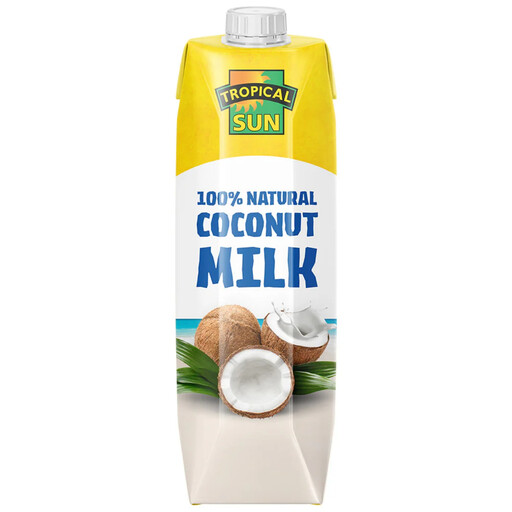
This tetra-pack coconut milk is presented for cooking curries, soups and desserts. If the meal has a strict gluten-free requirement, check the statement on the current pack before using it.
 No image available
Tropical Sun Coconut Milk Natural Tetra 1L
The product description suggests this coconut milk for curries, soups and desserts. It calls the product “naturally gluten-free”; for a strict gluten-free meal, confirm the wording on the current pack rather than relying on the description alone.
View on Joybuy
Questions about coconut milk
What does a gluten-free label mean for food sold in the UK?
The UK Food Standards Agency defines gluten-free labelling as no more than 20 mg/kg of gluten in the food as sold to the consumer. A coconut product without that statement is not automatically unsuitable, but its ingredients alone do not confirm that it meets this labelled threshold.
Can I use a coconut drink instead of canned coconut milk in a curry?
Do not assume it will give the same result. Alpro describes its product as a coconut drink and suggests uses including porridge and pancakes, while the cited M&S and Waitrose culinary coconut milks are presented for cooked dishes such as curries and soups.
How can I offer a coconut-based dish to a fussy eater?
Try a small portion as part of a familiar meal without pressing the child to eat it. NHS guidance advises continuing to offer a variety of foods and not forcing a child to eat something they reject.
How long can opened coconut milk be kept?
Follow the instructions on the product you buy. Waitrose & Partners specifies refrigeration below 5°C and use within two days after opening for its Essential Coconut Milk; do not assume that period applies to every coconut milk.
Is a coconut drink nutritionally the same as cow’s milk?
Do not assume so. The UK government’s SACN and COT assessment says plant-based drinks vary considerably in nutrient content and fortification, so compare the exact drink’s nutrition panel when choosing one in place of cow’s milk.


