What should you check?
Decide whether the coconut product is for pouring or for a recipe, then check the gluten-free wording on that exact product. Certification and other allergens are separate checks.
Ready-to-pour coconut drink
Choose it when: you want a drink for tea or a recipe that specifies a pourable coconut drink.
Bear in mind: it is not the same format as canned cooking milk; ingredients also vary between drinks.
Cooking coconut milk or cream
Choose it when: the recipe calls for canned coconut milk or cream rather than a drink for tea.
Bear in mind: a retailer’s coconut-milk category does not establish a gluten-free claim for every can.
| Priority | What to check | Your needs |
|---|
| Gluten-free claim and certification |
Read the gluten-free wording on the exact pack. The Food Standards Agency describes the UK gluten-free labelling limit as no more than 20 mg/kg gluten in the food as sold. If certification matters to you, also look for Coeliac UK’s Crossed Grain Trademark on the pack. |
I want to distinguish a gluten-free claim from an additional trademark. In Coeliac UK’s 2025 Shopping Habits survey, 74.7% of the 3,785 members who responded said they trusted its Crossed Grain Trademark more than a gluten-free statement; that finding does not describe all UK coconut-product shoppers. |
| Format and recipe |
Check whether the recipe calls for a pourable drink, cooking milk or cream. Compare the stated ingredients of the exact products rather than substituting one format by name alone. |
For tea, I want something ready to pour; for baking, I need the format my recipe specifies. |
| Whole-table preparation |
Check the scones and accompaniments individually. Coeliac UK advises separate condiments or clean cutlery for shared spreads to avoid breadcrumb transfer. |
A gluten-free carton will not help if crumbs get into the jam or onto the serving utensils. |
| Other ingredients |
Read the exact variant’s ingredients and allergen information. Sainsbury’s describes Alpro Barista Coconut as a coconut drink with soya, while its Koko Unsweetened listing says the drink is free from soya. |
If I also avoid soya or dairy, I need to check the particular drink, not assume that all coconut drinks have the same ingredients. |
Relevant brands and retailers
These references help distinguish named drinks from cooking ingredients; a claim for one product does not apply to an entire range.
Alpro
Alpro lists gluten-free coconut drinks with different formulations and uses.
- Alpro describes Coconut No Sugars as gluten-free and lists coconut milk at 14.1% in its ingredients.
- Sainsbury’s describes Alpro Barista Coconut as gluten-free but also lists soya; check the variant if avoiding soya.
Koko
Koko Unsweetened is a coconut drink option for pouring rather than a canned cooking milk.
- Sainsbury’s describes the listed Koko Unsweetened drinks as free from gluten, dairy and soya; its UHT listing gives 9% coconut milk.
- Check the particular pack’s ingredients and storage directions, as product details can change.
Tesco
Tesco’s coconut category lists cooking formats, including coconut milk, light coconut milk and coconut cream.
- The listed formats give recipe shoppers distinct types to check against their instructions.
- The category listing alone does not establish a gluten-free claim for an individual can.
Sainsbury’s
Sainsbury’s product listings provide gluten-free information for named coconut drinks.
- Its listings describe Koko Unsweetened as free from gluten and Alpro Barista Coconut as gluten-free.
- The listings advise reading the label because ingredients and product details can change.
M&S
M&S describes its canned coconut milk as a cooking ingredient.
- M&S lists 60% coconut extract in this canned product and suggests it for dishes including soups and sundaes.
- That product information does not establish a gluten-free claim for the can. Check its current label before using it for a gluten-free recipe.
Waitrose
Waitrose lists both cooking formats and a separately labelled coconut drink.
- Its listings include Essential coconut milk and cream; its Rude Health Coconut Drink listing says gluten-free and mentions baking as a use.
- The drink’s gluten-free wording does not establish the status of the separate canned products.
Coconut products on Joybuy
These options represent two different cream-tea roles: a coconut-milk carton to check against a recipe, and a ready-to-pour coconut drink. Check the current pack’s gluten-free wording before using either for a gluten-free cream tea.
 No image available
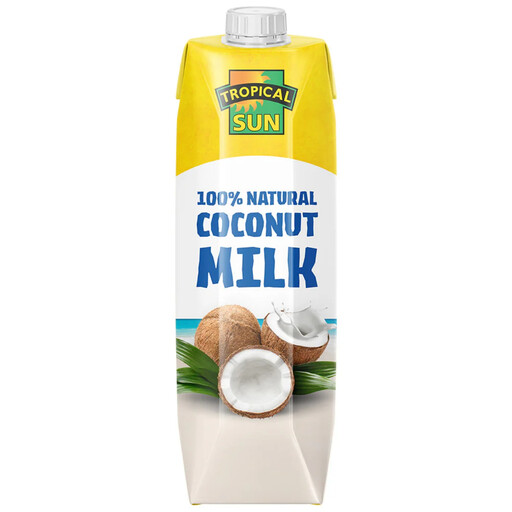
Tropical Sun Coconut Milk Natural Tetra 1L
Consider this 1L coconut-milk carton when a cream-tea recipe calls for coconut milk rather than a drink to pour into tea. Check its current pack for a gluten-free claim and, if important to you, the Crossed Grain Trademark.
View on Joybuy
 No image available
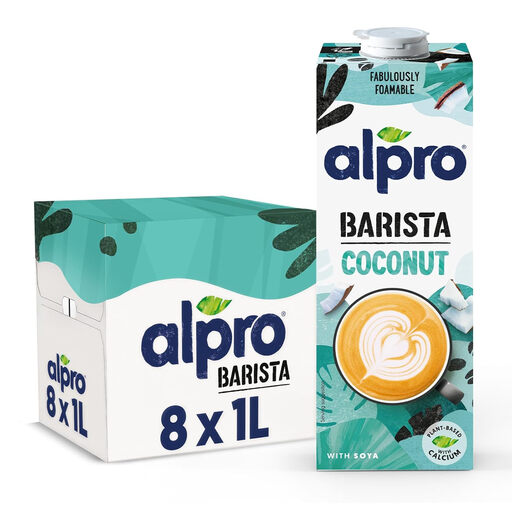
Alpro Barista Coconut Long Life Drink 8 x 1L
This 8 x 1L coconut-drink pack fits the ready-to-pour role. Sainsbury’s describes the Alpro Barista Coconut drink as gluten-free but says it contains soya, so it is not suitable for someone avoiding soya. Check the current cartons for their gluten-free wording.
View on Joybuy
Frequently asked questions
What does a gluten-free label mean in the UK?
The Food Standards Agency describes the UK limit for food labelled gluten-free as no more than 20 mg/kg gluten in the food as sold to the final consumer. Check the claim on the exact coconut product you are buying; a claim on another variant does not answer that question.
Can I swap a coconut drink for canned coconut milk in a cream-tea recipe?
Follow the recipe’s specified format rather than substituting by the word “milk” alone. Waitrose lists baking among the uses for Rude Health Coconut Drink, while M&S describes its 400 ml canned coconut milk as a cooking ingredient containing 60% coconut extract. Check the chosen product’s gluten-free status separately.
Does a gluten-free coconut drink make the whole cream tea gluten-free?
No. Check the scones and accompaniments as well as the drink. Coeliac UK advises separate condiments or clean cutlery for shared jam and spreads to avoid transferring breadcrumbs.
Do I need the Crossed Grain Trademark?
Look for it on the actual pack if that additional voluntary certification is important to you; it is distinct from a gluten-free statement. In Coeliac UK’s 2025 Shopping Habits survey, 74.7% of 3,785 responding members said they trusted its trademark more than a gluten-free statement. Its absence alone does not mean a product with a valid UK gluten-free claim exceeds the Food Standards Agency’s 20 mg/kg labelling limit.
Are gluten-free coconut drinks always soya-free?
No. Sainsbury’s describes Alpro Barista Coconut as gluten-free and as containing soya. Read the ingredient and allergen information for the exact drink if soya matters to your choice.


