Choose a coconut drink for cereal, tea or coffee, and a cooking coconut milk when a recipe calls for a richer ingredient; the two should not be substituted automatically. For a regular dairy alternative, look for a current gluten-free declaration on the exact pack and compare calcium, protein, sugars and saturated fat per 100ml. For cooking milk, check gluten-free suitability separately rather than assuming it from the coconut ingredients.
Who is this choice for?
The intended use matters as much as the word “coconut”: a drink for regular pouring and a cooking ingredient call for different label checks.
Older shoppers replacing dairy milk
If coconut drink is going into cereal or hot drinks regularly, compare calcium fortification and protein as well as the gluten-free declaration. The NHS advises checking the nutrition label for fat, saturated fat, salt and sugar when choosing plant-based alternatives.
Gluten-free home cooks
For curries, sauces or baking, choose a product intended for cooking and check the gluten-free information on that exact pack. A coconut ingredient list alone does not establish the finished product’s gluten-free status.
Shoppers comparing sugars
Compare the sugars figure per 100ml, not just wording such as “no added sugar”. Alpro UK lists 0g sugars per 100ml for Coconut No Sugars and 1.9g per 100ml for Coconut Original.
What should you check before buying?
Start with whether the product is for drinking or cooking, then check the exact pack for gluten-free labelling, nutrition and storage instructions.
| Priority |
What to check |
Your needs |
| Gluten-free status |
Look for a current gluten-free declaration on the exact product, rather than relying on its coconut ingredients. The UK Food Standards Agency states that food labelled “gluten-free” must contain no more than 20mg/kg gluten as sold to the final consumer. |
If I need a strict gluten-free diet, I want confirmation for the pack I am buying, including when an online listing uses different wording. |
| Drinking or cooking |
Check the product’s intended use and its nutrition per 100ml. Koko Dairy Free describes Koko Cuisine as a cooking product containing 25% coconut extract; it is not the same product as a coconut drink. |
For cereal or coffee, I need a pouring drink. For a curry or sauce, I may want a cooking milk, provided its gluten-free status meets my needs. |
| Fortification and protein |
For a regular dairy alternative, check calcium and protein per 100ml and whether vitamins are added. Alpro UK lists 120mg calcium per 100ml for Coconut No Sugars; Waitrose lists 120mg calcium and less than 0.5g protein per 100ml for Rude Health Chilled Coconut Drink. |
When I use coconut drink in place of dairy milk often, I want to know what the particular drink contributes rather than assuming plant-based drinks have the same nutrient profile. |
| Sugars and saturated fat |
Compare both figures per 100ml, especially across drinks and cooking products. “No added sugar” is not the same as zero sugars: Alpro UK lists 1.9g sugars per 100ml for Coconut Original. |
I would compare the numbers on the packs if I plan to use the product regularly; a cooking ingredient and a pouring drink may serve different purposes. |
| Storage after opening |
Check whether the product needs chilling before opening and how quickly it must be used afterwards. Waitrose says Rude Health Chilled Coconut Drink must be refrigerated and used within five days of opening. |
For a household using a little at a time, I want a carton size and opening period that fit how often it will be used. |
Common buying mistakes
-
Assuming coconut ingredients guarantee gluten-free suitability
A product’s ingredients alone do not confirm its finished-product gluten-free declaration. Alpro UK explicitly describes its Coconut No Sugars drink as gluten-free, while Koko Dairy Free’s product information for Koko Cuisine does not make that claim.
Check the current pack for a gluten-free statement or obtain reliable confirmation for the exact product before buying for a strict gluten-free diet.
-
Using cooking milk as a routine pouring drink
Cooking coconut milk and coconut drink have different intended uses. Koko Dairy Free lists 15.7g saturates per 100ml for Koko Cuisine, so its nutrition should not be assumed to match a drinking product.
Choose according to whether you are making a drink or a recipe, and compare saturated fat per 100ml on the products you are considering.
-
Assuming every plant drink replaces dairy in the same way
Fortification and protein need separate checks. Waitrose lists 120mg calcium but less than 0.5g protein per 100ml for Rude Health Chilled Coconut Drink.
If coconut drink regularly replaces dairy milk, compare its calcium and protein figures and consider it in the context of the rest of your food choices.
-
Overlooking the opened-carton instructions
Waitrose states that Rude Health Chilled Coconut Drink must be refrigerated and used within five days after opening.
Check the carton size against how much your household will use, and follow the storage instructions on the pack.
Brands and product lines to compare
These examples show why gluten-free wording, formulation and intended use should be checked product by product; a brand name alone does not settle the choice.
Alpro
Alpro UK lists coconut drinks for pouring, including Coconut No Sugars and Coconut Original.
- Alpro UK explicitly describes both named drinks as gluten-free and lists calcium and vitamin D.
- Coconut No Sugars lists 0g sugars per 100ml; Coconut Original says no added sugars but lists 1.9g sugars per 100ml. Check the variant rather than treating the wording as interchangeable.
Koko Dairy Free
Koko Dairy Free has separate coconut-based drinking and cooking products.
- Koko Dairy Free lists 120mg calcium per 100ml for Unsweetened No Sugar Milk; its Cuisine cooking product contains 25% coconut extract.
- Check the exact pack for gluten-free confirmation before choosing either product for a strict gluten-free diet.
Rude Health
Rude Health Chilled Coconut Drink is a coconut-and-rice drink listed by Waitrose.
- Waitrose labels this chilled drink gluten-free and lists 120mg calcium per 100ml.
- It lists less than 0.5g protein per 100ml and must be refrigerated and used within five days after opening.
Tesco
Tesco lists cooking coconut milk separately from its gluten-free dairy-alternative-drinks category.
- Its cooking range includes Tesco Coconut Milk and Tesco Light Coconut Milk, while its drinks category lists named Alpro and Koko products.
- A category listing does not confirm gluten-free status for every cooking coconut milk; check each product’s pack.
Waitrose
Waitrose lists canned coconut milk as well as chilled coconut drinks.
- Its Rude Health Chilled Coconut Drink listing explicitly says gluten-free and gives nutrition per 100ml.
- Do not extend that drink’s declaration to a different Waitrose coconut-milk product; check the label of the one you choose.
Coconut drink on Joybuy
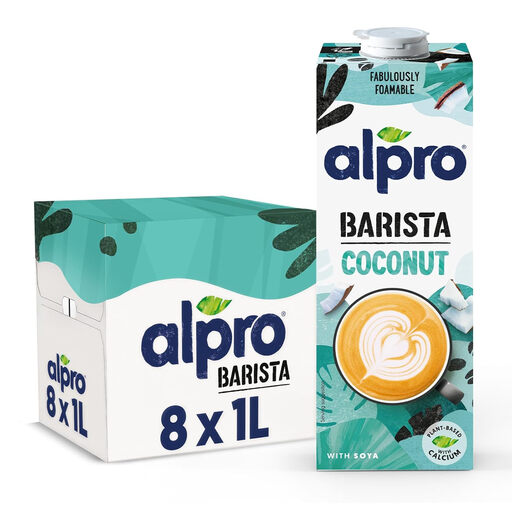
This option is a barista-style coconut-and-soya drink for coffee, rather than a coconut milk intended for cooking. Check the current pack’s gluten-free declaration if that is essential to your choice.
 No image available
Alpro Barista Coconut Long Life Drink, 8 x 1L
For coffee drinks, this coconut-and-soya drink is described in the listing as suitable for frothing. The listing states gluten-free, identifies added calcium and vitamins D2, B2 and B12, and gives 3.3g sugars per 100ml; check the current pack for its gluten-free declaration and calcium amount if these are important to you. It contains soya. Store unopened in a cool, dry place; after opening, refrigerate at +1°C to +7°C and use within five days. Do not freeze.
View on Joybuy
Frequently asked questions
Does every coconut milk qualify as gluten-free?
No: being coconut-based does not itself confirm a finished product’s gluten-free status. For a strict gluten-free diet, check the current declaration on the exact pack or obtain reliable confirmation for that product. The UK Food Standards Agency states that food labelled “gluten-free” must contain no more than 20mg/kg gluten as sold to the final consumer.
Can I use coconut drink instead of cooking coconut milk?
Do not assume they are interchangeable: coconut drink is intended for pouring, while cooking coconut milk is used for richness in recipes. Koko Dairy Free’s Cuisine cooking product contains 25% coconut extract and lists 15.7g saturates per 100ml; check the intended use and nutrition of both products before substituting.
What matters if coconut drink regularly replaces dairy milk?
Check whether the drink is calcium-fortified and compare its protein, sugars and saturated fat per 100ml. The NHS says unsweetened, calcium-fortified plant alternatives, including coconut drinks, can count as part of the dairy-and-alternatives food group; that does not mean every coconut drink has the same nutrient profile as dairy milk.
How long can I keep an opened chilled coconut drink?
Follow the instruction on the carton you buy. Waitrose says Rude Health Chilled Coconut Drink must be refrigerated and used within five days after opening; another product may have different instructions.
Does “no added sugar” mean zero sugars?
No. Alpro UK describes Coconut Original as having no added sugars but lists 1.9g sugars per 100ml, while Coconut No Sugars lists 0g per 100ml. Compare the sugars figure on the exact product’s nutrition panel.


