Who needs to check what?
The right pack depends on which allergens you avoid and whether you want a snack around training or food to carry during a run.
Marathon trainees with coeliac disease
Look for an explicit gluten-free statement on the current pack rather than assuming a potato-based crisp is suitable. Coeliac UK notes that seasonings can contain wheat flour or barley malt extract and that cross-contact can lead to a “may contain gluten” statement.
Runners wanting a savoury snack around training
Compare the carbohydrate, fat and salt in the portion you would eat. A portable bag of crisps can be a snack before or after a session, but its nutrition panel should not be mistaken for a complete long-run carbohydrate and fluid plan.
Runners checking several allergens or salt
A gluten-free statement does not answer questions about milk, soya, mustard or other allergens. If salt also matters to your choice, compare it per serving while checking the full allergen declaration for that exact flavour.
What matters when choosing?
Start with the allergen declaration, then compare the amount in the pack with how and when you intend to eat it.
| Priority |
What to check |
Your needs |
| Gluten suitability |
Look for an explicit gluten-free statement on the exact pack. Read its ingredients and precautionary allergen advice, especially for flavoured crisps. |
If I need to avoid gluten, I want a current label I can assess rather than an assumption based on the main ingredient. |
| Carbohydrate per pack |
Check the pack size and carbohydrate per serving, not just per 100 g. World Athletics lists 30–60 g per hour for endurance events lasting 1–2.5 hours and up to 90 g per hour beyond 2.5 hours. |
For a long session, I need to plan carbohydrate and fluids across the run; a crisp pack alone should not determine that plan. |
| Other allergens |
Read the full ingredient and “may contain” information for allergens relevant to you. A gluten-free claim does not establish suitability for other allergen restrictions. |
I may need to avoid milk or another ingredient as well as gluten, so I need the declaration for the particular flavour. |
| Fat and salt |
Compare fat and salt for the portion you would actually eat. Keep the serving size consistent when comparing different bags. |
For a snack close to training or one chosen with salt in mind, I want to know what a whole serving contains. |
Brand and product references
These statements concern the cited ranges or products, not every flavour made by each brand.
Seabrook
Seabrook states that its gluten-free crisps and snacks are Coeliac UK accredited. Its Sea Salted page also describes that product as gluten-free and suitable for vegans and vegetarians.
- Seabrook lists 16.7 g of carbohydrate and 0.4 g of salt per 31.8 g Sea Salted bag.
- One bag does not supply the hourly carbohydrate amounts listed in World Athletics’ endurance guidance.
Kettle Chips
Kettle Chips describes its Sea Salt & Balsamic Vinegar product as gluten-free and suitable for vegans and vegetarians.
- Its product page lists 56.8 g of carbohydrate per 100 g.
- The same per-100 g panel lists 28.9 g of fat and 1.6 g of salt; check the amount in the portion you intend to eat.
REAL Hand Cooked Crisps
REAL states that its whole crisp range is vegetarian and gluten-free.
- The range-level statement helps identify flavours to examine for a gluten-free snack.
- Check the chosen flavour’s current ingredients, other allergen statements and serving nutrition before buying.
Tyrrells
Tyrrells lists potatoes and sunflower oil as the ingredients of Naked (no salt).
- Tyrrells lists 0.02 g of salt and 16.0 g of carbohydrate per 30 g serving.
- The cited product page says “May contain milk” and makes no explicit gluten-free claim. Do not assume it meets a gluten-free requirement.
Walkers
Walkers’ Ready Salted page says the product is made in a factory that also handles wheat, gluten and barley.
- Walkers provides per-pack figures: 13 g of carbohydrate, 7.7 g of fat and 0.34 g of salt per 25 g pack.
- Do not treat this cited product as an explicitly gluten-free choice.
McCoy's
McCoy’s Salted product page carries a “May contain Milk, Soya, Gluten, Mustard” statement.
- McCoy’s lists 53 g of carbohydrate, 32 g of fat and 1.3 g of salt per 100 g for this product.
- Its stated gluten precaution matters if you need to avoid gluten.
Joybuy snack options
These are lentil, hummus, cassava and plantain chip options for a savoury snack around marathon training. Check each current pack for an explicit gluten-free statement and any other allergen information you need; none should stand in for a long-run fuelling plan.
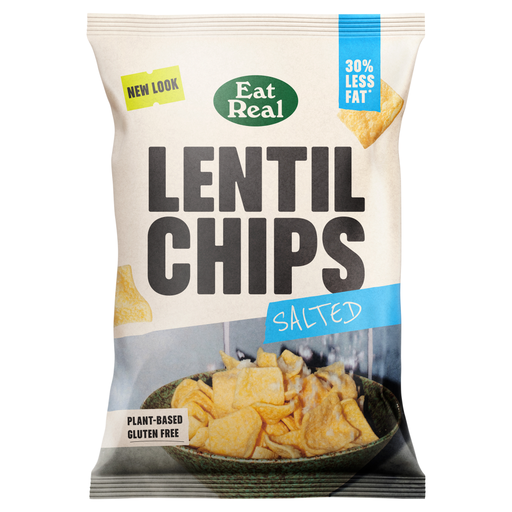 No image available
Eat Real Sea Salt Lentil Chips 95g
A lentil-based savoury snack to consider around training. Check the current pack’s gluten-free statement, other allergen advice and serving nutrition before choosing it.
 No image available
Eat Real Realest Chilli & Lemon Hummus Chips 110g
A flavoured hummus-chip option for a savoury snack outside a run. Check the exact pack for gluten and other allergen statements, as well as the nutrition in the portion you plan to eat.
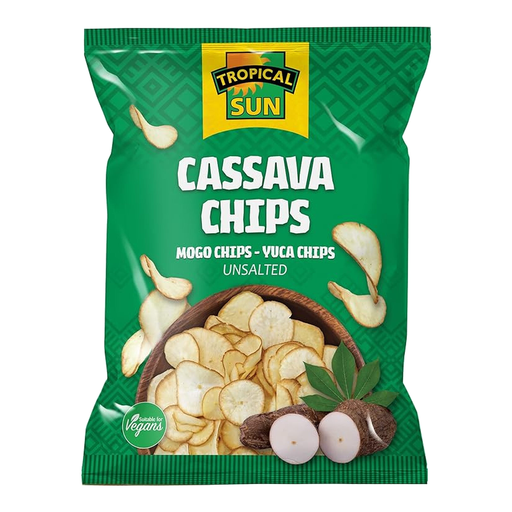 No image available
Tropical Sun Cassava Chips Unsalted 80g
The unsalted variant may be worth examining if added salt matters to your snack choice. Confirm its current gluten-free and allergen information, then compare its per-serving nutrition with other options.
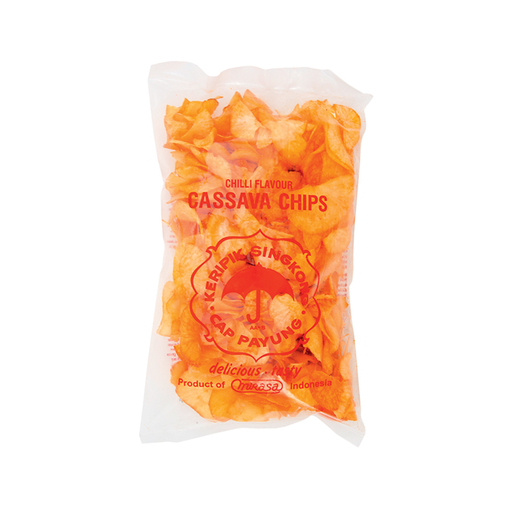 No image available
Mirasa Cassava Chips Chilli 250g
A chilli-flavoured cassava snack to consider if that flavour suits your plans around training. Check the current pack’s gluten-free claim, full allergen declaration and serving size before buying.
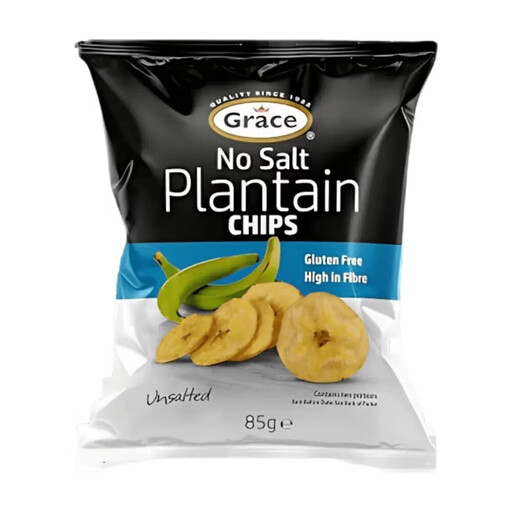 No image available
Grace Plantain Chips No Salt 85g
This no-salt plantain-chip variant offers another savoury snack choice. Check the current gluten-free statement and other allergen advice, and read the portion nutrition rather than relying on the variant name alone.
Frequently asked questions
Can gluten-free crisps be my main marathon fuel?
Do not rely on crisps as the planned primary carbohydrate source for a long run. World Athletics lists 30–60 g of carbohydrate per hour for endurance events lasting 1–2.5 hours and up to 90 g per hour beyond 2.5 hours; for context, Walkers lists 13 g of carbohydrate and 7.7 g of fat in a 25 g Ready Salted pack. Practise a carbohydrate and fluid plan that fits the event.
What does “gluten-free” on a UK food label mean?
The Food Standards Agency defines “gluten-free” as no more than 20 mg of gluten per kg of food as sold to the final consumer. The statement does not mean the product is free from milk, soya, mustard or every other allergen; read the full declaration too.
Are plain potato crisps automatically suitable for coeliac disease?
No. Coeliac UK explains that crisp seasonings can contain wheat flour or barley malt extract and that cross-contact can lead to a “may contain gluten” statement. Check the gluten-free statement, ingredients and allergen advice on the exact current pack.
Which cited products or ranges make a gluten-free claim?
Seabrook says its gluten-free crisps and snacks are Coeliac UK accredited; Kettle Chips describes its Sea Salt & Balsamic Vinegar product as gluten-free, and REAL says its crisp range is gluten-free. Those statements do not establish the allergen position of every product from those brands, so check the flavour you buy.
Should I recheck the label of a familiar flavour?
Yes. Check the current pack’s ingredients, gluten-free statement and precautionary allergen advice each time suitability matters. A familiar product name is not a substitute for the declaration on the pack you intend to eat.


