Hosts serving a guest with coeliac disease
Choose a clearly labelled gluten-free biscuit and plan where to put it. Coeliac UK advises keeping gluten-containing crumbs out of the food and any shared spreads.


Choose a digestive whose current pack is labelled gluten-free, then check whether its oats, milk and other allergen information suit each guest. Plain and chocolate-coated recipes differ, and gluten-free biscuits need a clean, separate plate if other players are eating biscuits that contain gluten.
Choose a clearly labelled gluten-free biscuit and plan where to put it. Coeliac UK advises keeping gluten-containing crumbs out of the food and any shared spreads.
Check oat ingredients, milk and precautionary allergen statements separately. A gluten-free claim does not answer every guest’s dietary question.
Start with the gluten-free claim on the pack, then match the ingredients and serving arrangements to the people coming to play.
| Priority | What to check | Your needs |
|---|---|---|
| Gluten-free identification | Look for an explicit gluten-free claim on the purchased pack. Read its current ingredients and allergen information rather than relying on the word ‘digestive’. | I need a biscuit clearly labelled gluten-free for a guest who cannot eat conventional wheat-based digestives. |
| Oat ingredients | Tesco Free From plain digestives list gluten-free oat flour; Schär’s 150g plain digestives list maize, soya and buckwheat ingredients, with no oats in the published recipe. Check the current pack. | If a guest avoids oats, I need to check the recipe as well as the gluten-free claim. Coeliac UK says most people with coeliac disease can eat gluten-free oats, but a small number are sensitive to them. |
| Other allergens | Compare plain and coated packs: Tesco’s and Schär’s examined chocolate digestives contain milk. Tesco warns of possible peanuts and nuts; Schär’s plain digestives contain soya and may contain lupin and eggs. | Chocolate may suit the group, but I need a pack whose full ingredient list and warnings fit each guest’s restrictions. |
| Serving separately | Use a clean plate and utensils for gluten-free biscuits. Coeliac UK advises clean utensils for shared spreads so crumbs are not transferred into them. | Other players will have biscuits containing gluten, so I want the gluten-free biscuits kept apart once the packets are open. |
| Pack quantity | Compare pack weights and the amount your group needs. The examined plain packs are Schär 150g, Sainsbury’s 160g and Tesco 188g; check availability before planning around a particular pack. | I want enough of the chosen biscuit for the players who can eat it, without assuming different pack weights contain the same number of biscuits. |
McVitie’s Original Digestives list wheat flour, while the examined M&S Milk Chocolate Digestives list wheat and barley malt extract.
Choose by the gluten-free claim and ingredients on the exact pack, not by its brand or biscuit name.
The examined recipes differ in oat ingredients, milk content and precautionary allergen warnings.
Ask guests about their restrictions and check the purchased pack before putting the biscuits out.
Crumbs from biscuits containing gluten can get onto a shared plate or into spreads.
Use a clean, separate plate for gluten-free biscuits and clean utensils for shared spreads, as Coeliac UK advises.
These distinctions concern the specified biscuits, not every product made by each brand.
Tesco lists plain and chocolate-coated gluten-free digestives.
Schär lists plain and chocolate-coated gluten-free digestives on its UK product pages.
Sainsbury’s lists a 160g plain gluten-free digestive made with gluten-free oat flour.
McVitie’s Original Digestives are a conventional digestive reference, not a gluten-free choice.
M&S sells conventional digestives and separate Made Without biscuits; the ranges should not be confused.
These options include a plain gluten-free digestive and a gluten-free Hobnob for anyone open to a different biscuit at board game night.
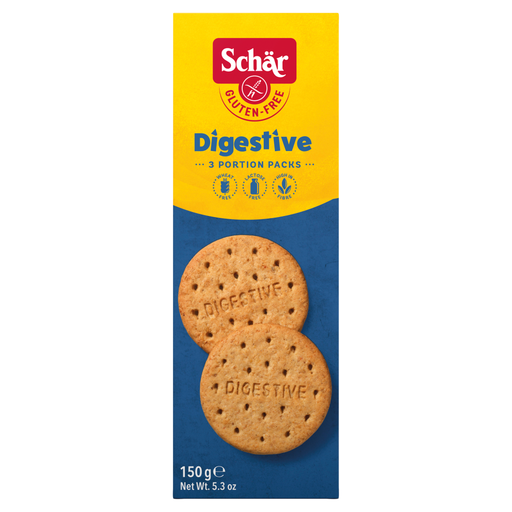 Image unavailable
A plain gluten-free digestive to consider when a guest avoids oat-based recipes. Schär’s published ingredient list contains maize, soya and buckwheat rather than oats; check the pack for its current ingredients and its warnings about lupin and eggs.
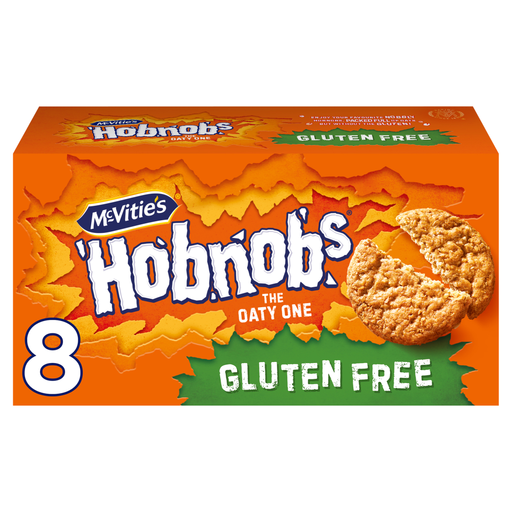 Image unavailable
This is a gluten-free biscuit option if the group does not specifically want digestives: Hobnobs are a different biscuit. Check the purchased pack’s ingredients and allergen warnings against guests’ needs before serving.
No. The Food Standards Agency describes the gluten-free labelling threshold as no more than 20 mg/kg of gluten in the food as sold to the final consumer. Check for the claim on the pack you buy.
Many can, but you should ask the guest before choosing an oat-based pack. Coeliac UK says most people with coeliac disease can eat gluten-free oats, while a small number remain sensitive to them.
Put them on a clean, separate plate if other players are eating food containing gluten. Coeliac UK also advises cleaning preparation surfaces and utensils with hot soapy water and using clean utensils for shared spreads.