Shoppers with coeliac disease
Look for a gluten-free statement on the biscuit you intend to buy, then read its current ingredients and allergen information. The word “digestive” does not tell you whether it contains gluten.


Choose a digestive explicitly labelled gluten free, then check the current packet for oats and other allergens. The checked Asda, Tesco and Sainsbury’s gluten-free digestives contain oats; the checked Schär 150g listing does not list oats, but declares soya and possible lupin. For a break away from home, compare portions on the same nutrition basis and check whether the pack format suits you.
Look for a gluten-free statement on the biscuit you intend to buy, then read its current ingredients and allergen information. The word “digestive” does not tell you whether it contains gluten.
Separate gluten-free oat recipes from listings that do not name oats. Coeliac UK notes that a small number of people with coeliac disease are sensitive even to gluten-free oats; an alternative recipe still needs its other allergens checked.
Pack format and biscuit size matter when you are taking a portion away from home. Asda Groceries lists the Schär 150g digestives as three individual 50g packs, with five biscuits in each pack.
| Priority | What to check | Your needs |
|---|---|---|
| Gluten-free label | Find the statement on the exact packet and read its ingredient and allergen information. The Food Standards Agency defines “gluten-free” as no more than 20 mg/kg of gluten in food as sold. | I need the biscuit itself to be labelled gluten free, rather than relying on its name or an ingredient that sounds wheat free. |
| Oats and allergens | Check whether oats are listed and whether they are described as gluten free. Compare other ingredient and precautionary statements: the checked Schär listing declares soya and possible lupin, while the checked Tesco oat digestive may contain peanuts and nuts. | If I avoid oats, I want to examine a different recipe without assuming that “no oats listed” is an oat-free certification. Other allergens matter independently of gluten. |
| Portion and nutrition | Use the same per-biscuit or per-100g basis when comparing labels; biscuits and packs can differ in size. Check how many biscuits an individual pack contains. | For a break away from home, I want a portion I can carry and nutrition figures I can compare fairly. |
| Current pack | Match the packet’s weight and ingredient list to the product you intend to buy. Tesco Groceries has listed both a 188g Free From digestive and an older 160g version; they should not be treated as the same pack. | I want the allergen information and pack size for the biscuits I will actually eat, not an older version of the listing. |
Coeliac UK explains that standard oats can be contaminated through production alongside wheat, barley or rye. “Pure” or “organic” does not, by itself, mean gluten free.
Look for a gluten-free statement on the biscuit packet and read its current allergen information.
The checked recipes have different declarations. Asda Groceries lists soya and possible lupin for the Schär digestives; Sainsbury’s says its checked Free From digestives are unsuitable for customers with a nut allergy because of manufacturing methods.
Check each relevant ingredient and precautionary statement on the packet you buy.
Tesco Groceries lists a checked 188g Free From digestive separately from an older 160g listing. A pack-size match matters when comparing product information.
Check the weight and physical label before relying on an online ingredient list.
A plain gluten-free digestive listed by Asda Groceries in a 150g pack.
The checked 188g digestive is a gluten-free oat recipe.
The checked 188g digestive uses gluten-free oat flour.
The checked 188g digestive is described by Sainsbury’s as milk and gluten free and made with oats.
Its Original Digestives and Gluten Free Original Hobnobs are different biscuits.
Original Oaties are a gluten-free oat-biscuit alternative, not digestives.
These options include a gluten-free digestive and a gluten-free oat biscuit for shoppers who do not require an exact digestive. Check the current packet’s ingredients, allergens and pack format before choosing.
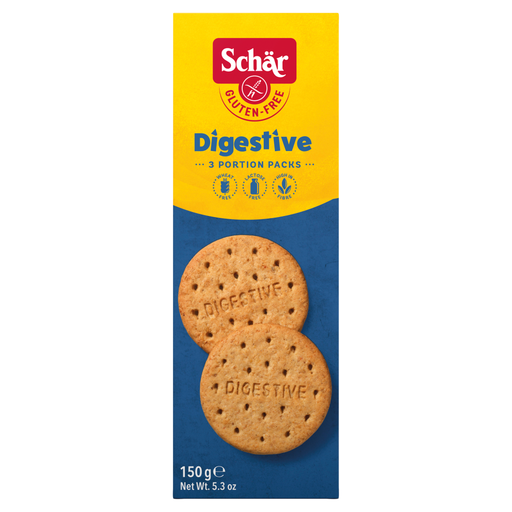 No image available
A gluten-free digestive to consider for a mid-morning break. If you avoid oats or need individual portions, check the current ingredient list and pack format; also check the soya and lupin declarations.
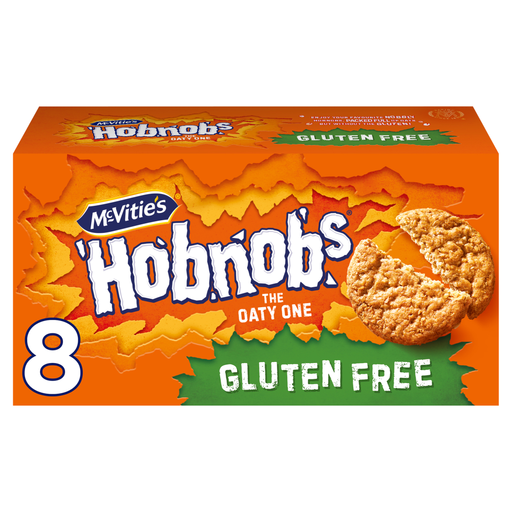 No image available
A gluten-free oat biscuit if an exact digestive is not essential. It contains gluten-free oats; check the current packet for any other allergens relevant to you.
Yes. The checked Asda, Tesco and Sainsbury’s gluten-free digestives contain oat ingredients. Coeliac UK says a small number of people with coeliac disease are sensitive even to gluten-free oats, so check both the gluten-free statement and the oat ingredients on the exact packet.
No digestive effect follows from the name. Choose by the biscuit’s stated ingredients, allergens, portion and nutrition information rather than treating “digestive” as a claim about what it does.
Follow the directions on your packet. The checked Asda and Tesco digestive listings advise cool, dry storage and an airtight container after opening; also check the pack’s best-before date.
No such conclusion follows from the gluten-free label alone. The Department for Education’s school-food guidance applies to food provided in covered schools in England; check the applicable school requirements and the particular product rather than assuming one rule covers every UK setting.