Shoppers with coeliac disease
Look for an explicit gluten-free label and read the current ingredients and allergen statement. Oats and other allergens need separate consideration even when the biscuit is labelled gluten free.


For a familiar digestive at elevenses, start with a biscuit explicitly labelled gluten free, then check whether its oats and other allergens suit the person eating it. Tesco, Sainsbury’s and Asda list oat-based gluten-free digestives; Schär offers a digestive formulation without oats, while gluten-free oat biscuits in other formats are alternatives rather than direct matches.
Look for an explicit gluten-free label and read the current ingredients and allergen statement. Oats and other allergens need separate consideration even when the biscuit is labelled gluten free.
If the conventional digestive format matters, compare the gluten-free digestives listed by Tesco, Sainsbury’s, Asda and Schär rather than assuming any oat biscuit is the same style.
A gluten-free oat digestive is not an oat-free biscuit. Schär’s listed Digestive formulation does not list oats, but its soya ingredient and lupin warning still need checking.
Check the gluten-free label first, then narrow the choice by ingredients, biscuit format and the allergens relevant to you.
| Priority | What to check | Your needs |
|---|---|---|
| Gluten-free label | Look for an explicit gluten-free statement on the current pack. The Food Standards Agency defines “gluten free” as no more than 20 mg/kg of gluten in food sold to the final consumer. | I want a labelled gluten-free biscuit, not one assumed to be suitable because it contains oats or has a familiar digestive name. |
| Oats | Check whether the ingredients include gluten-free oats. Coeliac UK says most people with coeliac disease can eat gluten-free oats, but individual reactions to avenin, an oat protein, matter. | If I avoid oats, I need to check the formulation rather than rely on the gluten-free label alone. |
| Other allergens | Read the exact pack’s ingredients and precautionary statements. The listed oat digestives carry differing nut warnings; Schär’s Digestive contains soya and may contain lupin. | My choice must fit any separate allergy requirements as well as the gluten-free requirement. |
| Biscuit format | Distinguish a conventional digestive from a Hobnob or an oat-biscuit break. Check the pack and portion format if the biscuits need to travel with you. | For tea at home, I may want a digestive; for elevenses away from home, a different biscuit format may also work. |
McVitie’s lists wheat flour and wholemeal wheat flour in its Original Digestives. The biscuit’s familiar name does not establish gluten-free suitability.
Choose a product explicitly labelled gluten free and check its current ingredients before buying.
Coeliac UK says most people with coeliac disease can eat gluten-free oats, but some react to avenin. Several gluten-free digestives are oat-based.
If oats are unsuitable for you, check for a formulation without them and assess its other ingredients separately.
Allergen statements differ between products: the listed Tesco and Asda digestives have nut warnings, Sainsbury’s flags nut-allergy suitability, and Schär’s Digestive contains soya and may contain lupin.
Read the allergen information on the exact pack for the person who will eat it.
Tesco lists a 188 g gluten-free digestive made with gluten-free oat flour.
Sainsbury’s lists 188 g digestive biscuits described as milk and gluten free and made with oats.
Asda lists a 188 g gluten- and milk-free digestive biscuit made with gluten-free oat flour and oat bran.
Schär’s listed gluten-free Digestive provides a conventional biscuit format without oats in its stated formulation.
Nairn’s Original Oaties are gluten-free oat biscuits for a tea break, rather than conventional digestives.
These Joybuy options include a gluten-free digestive and two gluten-free biscuits in different formats for elevenses. Check oats and the other allergen statements before choosing an alternative to a digestive.
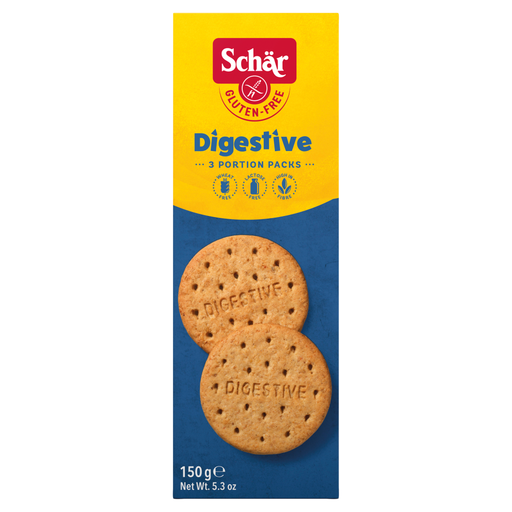 Image unavailable
A digestive-format option to consider if you avoid oats. The listed formulation uses maize, soya and buckwheat rather than oats; it contains soya and may contain lupin.
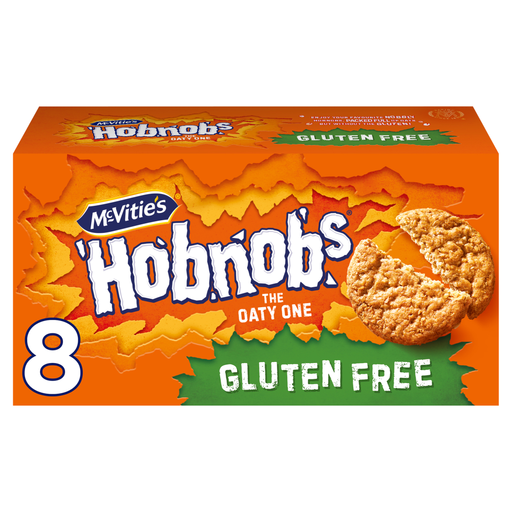 Image unavailable
An oat-biscuit alternative for a tea break, rather than a digestive. It contains oats and may contain nuts, milk, egg and soya; check the current pack if any of these matter to you.
 Image unavailable
A pouch-format oat biscuit for elevenses away from home, not a traditional digestive. It contains oats, is marked unsuitable for people who react to avenin, and may contain traces of milk.
Look for an explicit “gluten free” label, then read the ingredients and allergen statement. The Food Standards Agency defines “gluten free” as no more than 20 mg/kg of gluten in food sold to the final consumer; an oat or wheat-free description on its own is not the same check.
No. Coeliac UK says most people with coeliac disease can eat gluten-free oats, but some react to avenin, an oat protein. Check that the oats are labelled gluten free and take individual clinical advice if you have concerns about eating them.
Check a digestive’s ingredient list for an oat-free formulation rather than choosing by its gluten-free label alone. Schär’s listed Digestive uses maize, soya and buckwheat ingredients instead of oats, but contains soya and may contain lupin.
No. Schär’s product information describes “digestive” as a traditional British biscuit name, not a claim that the biscuit aids digestion.
Follow the instructions on your pack. The listed Tesco, Sainsbury’s and Asda digestives give cool, dry storage guidance and advise resealing or using an airtight container after opening.