Choose a biscuit explicitly labelled gluten free rather than relying on an oat claim or a free-from shelf position. An oat-based digestive is an option when guests can eat gluten-free oats; if oats are unsuitable, consider an oat-free digestive such as Schär and check its other ingredients and allergen advice. For guests with coeliac disease, keep the biscuits and serving utensils away from ordinary biscuit and bread crumbs.
Who are the biscuits for?
Hosts serving a guest with coeliac disease
Choose a biscuit labelled gluten free and serve it away from ordinary biscuit and bread crumbs. Coeliac UK says most people with coeliac disease can eat gluten-free oats, but a small number remain sensitive to them, so ask the guest about oats where possible.
Hosts serving guests with different dietary needs
A plain digestive-style biscuit may suit the coffee morning, but a gluten-free label does not answer every dietary question. Check the pack separately for milk, other ingredients and allergen advice relevant to each guest.
Guests who avoid oats
Look for an oat-free digestive rather than assuming all gluten-free digestives use the same recipe. The Schär digestive reviewed here uses maize, soya and buckwheat ingredients; check whether soya or its other allergen advice affects the guest.
What should you check before buying?
Start with the gluten-free claim, then check oat suitability and other allergens. Finally, plan how many suitable biscuits to serve and how to keep them separate.
| Priority |
What to check |
Your needs |
| Gluten-free claim |
Look for an explicit gluten-free statement on the pack. Do not treat an oat description or a free-from range name as a substitute. |
I want to recognise the right pack without guessing from its ingredients. In Coeliac UK’s Shopping Habits report published in January 2026, 74.7% of 3,785 member respondents said they trusted its Crossed Grain Trademark more than a gluten-free statement. That measures trust, not whether an unmarked gluten-free product is unsuitable. |
| Oats and allergens |
Read the ingredients and allergen advice for the named guest. If the biscuit contains gluten-free oats, ask about oat tolerance; an oat-free recipe still needs its own allergen check. |
If my guest avoids oats, I need another recipe. I also need to know about any separate milk, nut, soya or lupin requirements before choosing a pack. |
| Pack size |
Check the pack weight and stated servings against attendance. The plain Tesco, Sainsbury’s and Asda digestives described here come in 188g packs; the Schär digestive comes in a 150g pack. |
There should be enough biscuits that my guests can eat without assuming every pack contains the same number of portions. |
| Serving |
Use a clean plate and utensils, away from ordinary biscuit and bread crumbs. Coeliac UK advises using separate condiments or clean cutlery to avoid crumbs in shared spreads. |
I want guests who need gluten-free food to be able to take a biscuit without it touching crumbs or a contaminated spread. |
Coffee-morning mistakes to avoid
-
Assuming any oat biscuit is gluten free
Coeliac UK warns that standard oats can be contaminated when produced alongside wheat, barley or rye. An oat description alone therefore does not establish gluten-free suitability.
Choose a pack explicitly labelled gluten free, then ask whether the guest can eat gluten-free oats.
-
Assuming gluten free covers every allergy
Gluten-free biscuits can have different ingredients and allergen advice. For example, the Schär digestive lists soya ingredients, while Sainsbury’s lists possible nuts, milk, egg and soya for McVitie’s Gluten Free Hobnobs.
Ask about each guest’s requirements and read the allergen statement on the pack you intend to serve.
-
Putting suitable biscuits on a shared plate
Ordinary biscuit and bread crumbs, utensils and shared spreads can bring gluten into contact with a gluten-free biscuit after the packet has been opened.
Set out the gluten-free biscuits separately with clean serving equipment. Coeliac UK also advises separate condiments or clean cutlery for shared spreads.
Relevant biscuit ranges
These references describe particular biscuits, not every product sold under each brand. Check the pack for the version you buy.
Tesco Free From
Tesco Groceries lists a 188g gluten-free digestive made with gluten-free oat flour.
- A plain oat-based digestive format for guests who can eat gluten-free oats.
- Check the pack’s other allergen advice against guests’ requirements.
Sainsbury’s Free From
Sainsbury’s Groceries lists a 188g milk- and gluten-free digestive made with oats.
- A plain digestive option when gluten-free oats suit the guest.
- Milk-free status does not replace checking oat tolerance and the remaining allergen advice.
Free From by Asda
Asda Groceries lists a 188g Free From digestive labelled free from gluten and milk.
- A plain digestive format for a coffee-morning serving.
- Read the physical pack for its full ingredients and allergen advice before serving.
Schär
Asda Groceries lists Schär’s 150g gluten-free digestive with maize, soya and buckwheat ingredients rather than oats.
- An oat-free digestive route for a guest who avoids oats.
- It contains soya; check the pack for all other allergen advice.
McVitie’s
McVitie’s lists Gluten Free Original Hobnobs, a 150g oat biscuit rather than a digestive.
- A gluten-free oat-biscuit alternative when a digestive is not essential.
- Sainsbury’s listing says these Hobnobs may also contain nuts, milk, egg and soya.
Joybuy biscuit options
These options are an oat-free gluten-free digestive and an oat-based gluten-free Hobnob. The Hobnob may work as a coffee-morning biscuit, but it is not a digestive.
 No image available
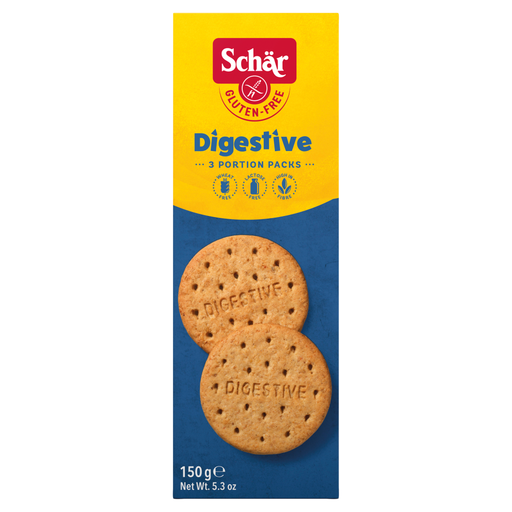
Schär Gluten Free Digestive Biscuits 150g
An oat-free digestive option when a guest avoids oats. Its listed ingredients include maize, soya and buckwheat; it contains soya and may contain lupin, so check the pack against the guest’s requirements. The product information also warns that it is not suitable for young children because of a choking risk.
View on Joybuy
 No image available
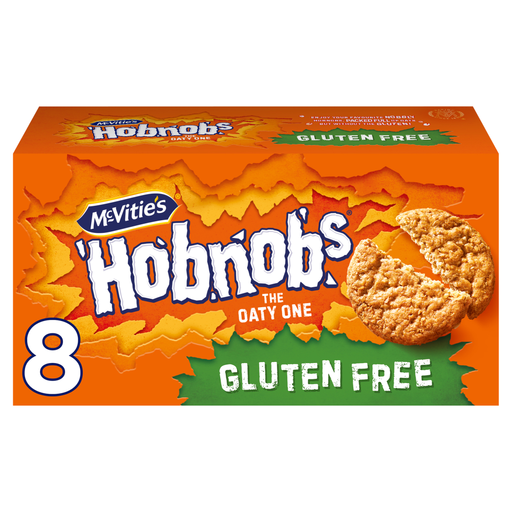
McVitie’s Gluten Free Hobnobs 150g
An oat-based gluten-free biscuit for a coffee morning when the guest can eat gluten-free oats and does not specifically want a digestive. McVitie’s lists gluten-free rolled oats and oat flour; Sainsbury’s allergen advice says the biscuits may also contain nuts, milk, egg and soya.
View on Joybuy
Common questions
Is a gluten-free digestive automatically suitable for a guest with coeliac disease?
No single pack suits every guest. Choose one explicitly labelled gluten free, then check oat tolerance and other allergen requirements and prevent contact with crumbs when serving it. The UK Food Standards Agency states that a gluten-free claim is subject to a limit of no more than 20 mg/kg gluten in the food as sold to the final consumer.
Can everyone avoiding gluten eat oat-based gluten-free digestives?
Not necessarily. Coeliac UK says most people with coeliac disease can eat gluten-free oats, but a small number remain sensitive to them. Choose a product labelled gluten free and ask whether the guest also avoids oats.
How should I serve gluten-free biscuits alongside ordinary ones?
Keep them separate from ordinary biscuit and bread crumbs, using a clean plate and serving utensils. Coeliac UK advises separate condiments or clean cutlery so breadcrumbs do not get into shared spreads.
What should I check on the pack before the coffee morning?
Check the gluten-free claim, ingredients and allergen advice against each guest’s needs, along with the pack’s storage instructions and best-before date. Use the physical pack for the biscuits you will serve rather than relying solely on an online description.


