Travellers who must avoid gluten
Look for an explicit gluten-free claim rather than relying on “wheat free” or an oat-based recipe. Check the current pack before taking it on the journey.


For a road trip, choose a digestive explicitly labelled gluten free, then check its current ingredients and allergen statement. The 188 g oat-based supermarket packs offer a sharing format; Schär’s 150 g digestive is worth checking if you want a different recipe or smaller portions. Gluten-free labelling does not settle questions about oats or other allergens.
Look for an explicit gluten-free claim rather than relying on “wheat free” or an oat-based recipe. Check the current pack before taking it on the journey.
Milk, nuts, soya, lupin and oats need separate attention. A gluten-free digestive may still contain an ingredient or carry a precautionary statement that matters to someone in the car.
Decide whether a sharing pack will be practical after opening or whether smaller portions would be easier to carry and distribute. Check the exact pack configuration before buying.
Start with the gluten-free claim and the needs of everyone who will eat the biscuits. Then compare the recipe and pack format for the journey.
| Priority | What to check | Your needs |
|---|---|---|
| Gluten-free label | Look for an explicit gluten-free claim on the current pack; check the ingredient and allergen information too. The Food Standards Agency states that “gluten-free” means no more than 20 mg/kg of gluten in food sold to the final consumer. | I need a biscuit labelled gluten free, not one described only as wheat free or oat based. |
| Oats | Check whether oats or gluten-free oat flour are listed. Coeliac UK says most people with coeliac disease can eat gluten-free oats, while standard oats can be contaminated with gluten-containing cereals. | If oats are unsuitable for me, I need to check the exact recipe rather than assuming every gluten-free digestive is oat free. |
| Other allergens | Read both the ingredients and precautionary statement for the exact product. Tesco’s digestive may contain peanuts and nuts; Sainsbury’s says its digestive is unsuitable for customers with a nut allergy; Schär’s digestive contains soya and may contain lupin. | Gluten is not the only ingredient I have to consider for everyone travelling. |
| Pack format | Compare the stated pack size and portion format. Tesco, Sainsbury’s and Asda list 188 g digestives; check how a sharing pack should be stored after opening. | For several stops, I want biscuits I can carry without leaving an opened pack loose in the car. |
Neither description on its own establishes that a biscuit meets the gluten-free labelling threshold. Coeliac UK also notes that standard oats can be contaminated with gluten-containing cereals.
For a strict gluten-free requirement, find an explicit gluten-free claim on the current pack and check whether oats suit the person eating it.
The listed digestives have different ingredient and precautionary statements, including warnings concerning nuts, soya or lupin.
Check the exact biscuit against each traveller’s allergen requirements; do not use its gluten-free claim as a substitute for that check.
An opened 188 g pack needs somewhere to go between stops; loose biscuits may be crushed.
Check the pack’s storage instructions and take a suitable resealable container if you plan to share it over the journey.
Tesco lists a 188 g gluten-free digestive made with gluten-free oat flour.
Sainsbury’s lists a 188 g gluten- and milk-free oat digestive.
Asda lists a 188 g gluten-free digestive that contains oats.
Schär has a 150 g gluten-free digestive listed by Asda.
McVitie’s Gluten Free Original Hobnobs provide an oat-based biscuit alternative, not a digestive.
These choices include a gluten-free digestive and a gluten-free Hobnob. The Hobnob is an alternative snack, not a digestive-biscuit substitute for someone who needs that particular format.
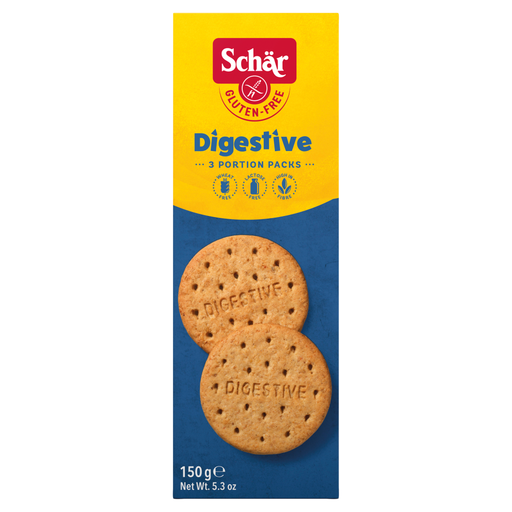 Image unavailable
A gluten-free digestive in a 150 g pack for the road trip. If separate portions or avoiding oats are decisive, confirm the pack configuration and ingredients on the current product; check the soya and lupin information as well.
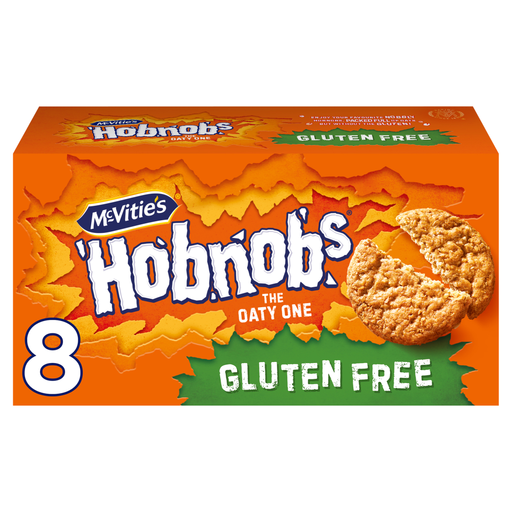 Image unavailable
A gluten-free oat biscuit to consider if a digestive is not essential. This 150 g Hobnobs product is a different biscuit type; check the current pack for allergens, including any precautionary statements about nuts, milk, egg or soya.
The Food Standards Agency states that food labelled gluten free must contain no more than 20 mg/kg of gluten as sold to the final consumer. That claim does not mean the biscuit is free from other allergens, so check its ingredients and precautionary statement separately.
No. Coeliac UK says most people with coeliac disease can eat gluten-free oats, but standard oats may be contaminated with gluten-containing cereals, and some people are sensitive to oats. Check whether the product explicitly says gluten free and whether oats suit the person eating it.
No; those are separate product claims and allergen checks. Tesco lists its Free From Digestives as milk free and vegan but says they may contain peanuts and nuts, while Sainsbury’s says its Free From Digestives are unsuitable for customers with a nut allergy. Check the current pack of whichever biscuit you choose.