Coeliac shoppers comparing snack portions
Check the current pack for gluten-free suitability before using its serving size to compare calories. Coeliac UK notes that naturally gluten-free foods can encounter gluten during processing or packaging.


For coeliac shopping, establish that the particular dried-fruit product is suitable before comparing calories: plain fruit ingredients alone do not settle the gluten question, as Coeliac UK warns that contamination can occur during processing or packaging. Then compare kcal per 100g and for the portion you intend to eat. Sainsbury's lists 68 kcal per 30g for its ready-to-eat apricots and 97 kcal per 30g for its mixed dried fruit, but neither figure establishes gluten-free suitability, and the apricots contain sulphites.
Check the current pack for gluten-free suitability before using its serving size to compare calories. Coeliac UK notes that naturally gluten-free foods can encounter gluten during processing or packaging.
Read the full ingredients list as well as the nutrition panel. A mix can include candied fruit or syrup, so compare it with plain fruit at the same serving size.
Read the complete allergy advice for any allergens relevant to you. Dried-fruit labels can also declare sulphites or carry nut and peanut precautionary statements.
Start with the product's gluten information, then compare energy values on the same basis and check ingredients and other allergy advice.
| Priority | What to check | Your needs |
|---|---|---|
| Gluten suitability | Look for a gluten-free claim on the current pack. Without one, check ingredients and precautionary wording for cereals containing gluten, as Coeliac UK advises; do not treat a plain-fruit name or an empty allergen list as a gluten-free claim. | I need to establish whether this particular pack is suitable before choosing it as a snack. |
| Calories and portions | Compare kcal per 100g, then calculate or read the value for the portion you will eat. Legislation.gov.uk lists no more than 40 kcal per 100g as the low-energy claim criterion for solid foods; Sainsbury's lists 228 kcal per 100g for its ready-to-eat apricots and 324 kcal per 100g for its mixed dried fruit. | A smaller serving may fit the calories I have in mind, but I do not want to mistake a small pack for a low-energy food. |
| Added ingredients | Read the ingredients for candied fruit, syrup and sugar, then compare nutrition values at the same serving size. Sainsbury's lists candied peel in its mixed dried fruit, at 97 kcal per 30g, versus 68 kcal per 30g for its ready-to-eat apricots. | If I prefer a fruit-led ingredient list, I want to know what is in a mix rather than judging it by its name. |
| Other allergens | Check ingredients and precautionary statements for allergens that apply to you. Sainsbury's ready-to-eat apricots contain sulphites; ASDA's Three Raisin Mix contains sulphites and may contain peanuts and nuts. | Gluten is not my only label check if I also need to avoid another declared allergen. |
Portion size and energy per 100g answer different questions. Sainsbury's lists Fruit Bowl Raspberry Peelers at 31 kcal per 10g peeler but 310 kcal per 100g.
Check both the per-100g figure and the amount you expect to eat; compare products using equivalent portions.
Coeliac UK warns that naturally gluten-free foods can become contaminated during processing or packaging.
Look for a gluten-free claim or current product-specific suitability information. Without a claim, check the pack's ingredients and precautionary cereal wording.
Sainsbury's mixed dried fruit includes candied peel made with glucose-fructose syrup and sugar; its listed 30g serving has 97 kcal and 22.2g sugars.
Read the ingredients and compare kcal and sugars for the same serving size, rather than assuming every mix resembles plain dried fruit.
Sulphites and nut precautionary statements are separate considerations. ASDA lists sulphites and a possible peanut and nut presence for its Three Raisin Mix.
Read the whole allergy declaration on the pack for any allergens relevant to you.
These examples help distinguish product types and label information; a brand name alone does not establish the suitability of a particular pack.
Its dried-fruit range includes prunes and portion-focused guidance for snacks.
Its prune information is relevant when comparing a portion of prunes with other dried-fruit snacks.
Its ready-to-eat apricots and mixed dried fruit provide a like-for-like example of why product choice changes the calorie comparison.
Its Three Raisin Mix illustrates the value of checking allergy advice alongside nutrition information.
Its Made Without Wheat Fruit and Nut Muesli is a gluten-free product containing dried fruit, rather than a standalone dried-fruit snack.
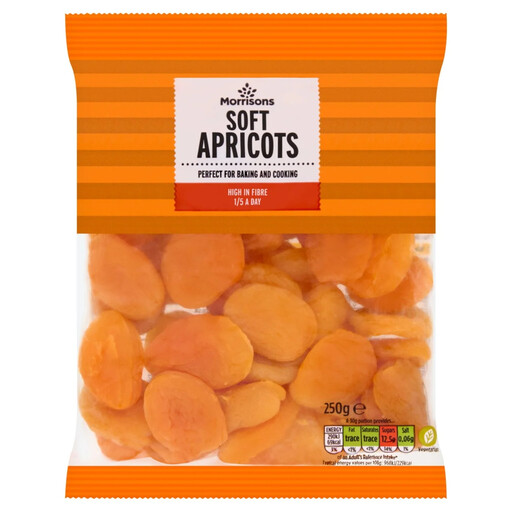
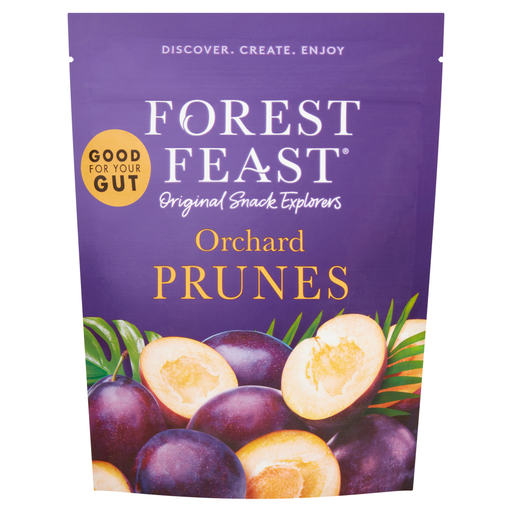
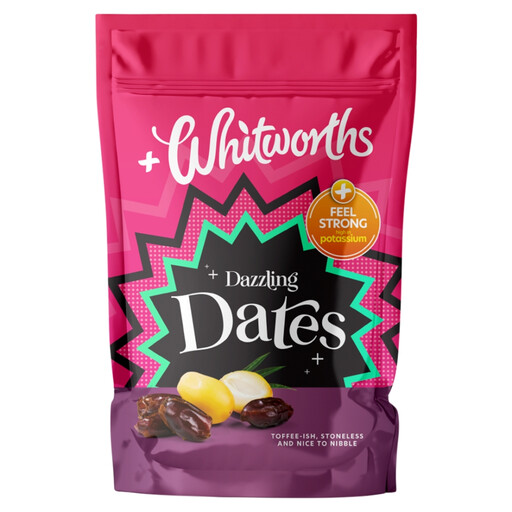
These apricot, prune and date products offer different starting points for comparing dried-fruit portions. For coeliac shopping, check the current pack's gluten information before relying on any option, then compare its nutrition panel for the portion you intend to eat.
 No image available
If apricots appeal as a portioned snack, compare this pack's kcal per 100g and per serving with the other options. Check the current ingredients and allergy advice for sulphites, as well as its gluten information.
 No image available
For prunes as a snack, compare the amount you would eat with the pack's nutrition values. Read the current ingredients rather than relying on sugar-related wording in a product title, and check the pack's gluten information.
 No image available
If you prefer to choose your own prune portion, use the pack's nutrition panel to compare the amount you will eat. Check ingredients, gluten information and other allergy advice on the current pack.
 No image available
For a prune option, compare the intended portion rather than the pack size alone. If you want plain fruit, inspect the current ingredients for syrups or sweeteners, and check its gluten information.
 No image available
If choosing dates instead of apricots or prunes, compare calories for the portion you plan to eat on the same basis. Whitworths' guidance about its prunes does not describe these dates; check this pack's nutrition and gluten information separately.
The cited dried-fruit examples do not meet the low-energy criterion listed by legislation.gov.uk for solid foods: no more than 40 kcal per 100g. Sainsbury's lists 228 kcal per 100g for its ready-to-eat apricots and 324 kcal per 100g for its mixed dried fruit, while ASDA lists 293 kcal per 100g for its Three Raisin Mix. A lower figure within this group is not the same as meeting that criterion.
No: plain ingredients alone do not establish the suitability of a particular product. Coeliac UK warns that contamination can occur during processing or packaging and advises checking for precautionary statements about cereals containing gluten when there is no gluten-free claim. The Food Standards Agency describes a gluten-free claim as applying to food containing no more than 20 mg/kg gluten.
Compare kcal per 100g first, then check the calories for the amount you intend to eat. Whitworths uses 30g in its dried-fruit portion guidance, but pack servings can differ: Sainsbury's lists a Fruit Bowl Raspberry Peeler at 31 kcal per 10g and 310 kcal per 100g.
Read the full ingredients and allergy advice for anything relevant to you. Sainsbury's lists sulphites in its ready-to-eat apricots; ASDA lists sulphites and a possible presence of peanuts and nuts for its Three Raisin Mix.
Use the current pack for the final ingredients and allergy check. Coeliac UK also publishes Food and Drink Guide updates that include changes to product suitability.