Coeliac shoppers choosing everyday nut snacks
Check the individual pack rather than relying on nuts’ naturally gluten-free ingredients. Coeliac UK advises reading both the ingredients and any gluten-related precautionary statement.


For a gluten-free coeliac purchase, start with a nut product that carries a current gluten-free claim, then check the pack’s ingredients and any gluten-related precautionary statement. A short ingredient list is not enough: KP Original Salted Peanuts, for example, say they may contain gluten. If a nut product contains oats, check that it is labelled gluten free and consider whether you personally include gluten-free oats in your diet.
Check the individual pack rather than relying on nuts’ naturally gluten-free ingredients. Coeliac UK advises reading both the ingredients and any gluten-related precautionary statement.
Check seasonings and coatings as well as the allergen statement. A gluten-free claim on one flavoured nut product does not establish the status of another flavour or mix.
Oat-containing products need a separate check: look for a gluten-free claim on the product and consider whether you personally include gluten-free oats in your diet. Coeliac UK notes that a small number of people with coeliac disease are sensitive to avenin in oats.
Check the current product’s gluten claim, ingredients and precautionary statement together. For an oat-and-nut product, check the oats separately before deciding whether it fits your diet.
| Priority | What to check | Your needs |
|---|---|---|
| Gluten-free status | Look for a claim on the specific product, then read its current ingredients and allergen information. The Food Standards Agency defines “gluten free” as no more than 20 mg/kg of gluten in food sold to the final consumer. | I want a clear basis for choosing this pack, rather than assuming plain-looking nuts are suitable. |
| Precautionary statements | Check for wording such as “may contain gluten” or “may contain cereals containing gluten”. Coeliac UK says a gluten-related statement signals an unavoidable cross-contamination risk. | If a pack warns that it may contain gluten, I would choose another option for a gluten-free coeliac purchase where one is available. |
| Oats in nut products | For granola or muesli, check that the product and its oats are labelled gluten free. Coeliac UK notes that standard oats may be contaminated and that some people are sensitive to avenin even in gluten-free oats. | I include gluten-free oats in my diet, or I need a nut snack without oats instead. |
| Current pack details | Recheck the physical pack before purchase; ingredients and allergen information can change. Use product pages or Coeliac UK product information to narrow a shortlist, not in place of the label. | A product I have bought before still needs a fresh label check. |
KP Nuts lists peanuts, sunflower oil and salt for Original Salted Peanuts, but also states that the product may contain gluten. Simple ingredients do not rule out a gluten-related precautionary statement.
Read the ingredients and the statement together. For a gluten-free coeliac purchase, look for a suitable alternative rather than relying on the ingredient count.
Coeliac UK says this wording identifies an unavoidable cross-contamination risk; Food Standards Agency guidance describes precautionary labelling in the context of cross-contact that cannot be sufficiently controlled.
Do not treat a gluten-related warning as equivalent to no warning when choosing a product for a gluten-free coeliac diet.
Wheat-free wording does not establish that the oats are gluten free. Coeliac UK also notes that some people with coeliac disease are sensitive to avenin in gluten-free oats.
Check for a gluten-free claim on the product and consider your own approach to gluten-free oats.
KP Snacks and M&S advise checking current packaging because product information can change.
Use online details to identify candidates, then make the purchase decision from the pack in front of you.
A retailer’s free-from category or a brand’s general statement cannot establish the status of every nut product it sells. Check the named item and its current pack.
A branded nut-snack range that includes Original Salted Peanuts.
Sells natural nuts and nut-containing Made Without products.
Provides a gluten-free grocery category and product-level food information.
Publishes allergen information for its own-brand and in-store prepared products.
A nut brand for which the specific pack and market matter when assessing gluten information.
A supermarket whose nut products should be assessed one pack at a time.
These options include mixed nuts, a peanut snack bar and chocolate-coated almonds. Their product details provide different levels of gluten information, so check each current pack before choosing it for a gluten-free coeliac diet.
 No image available
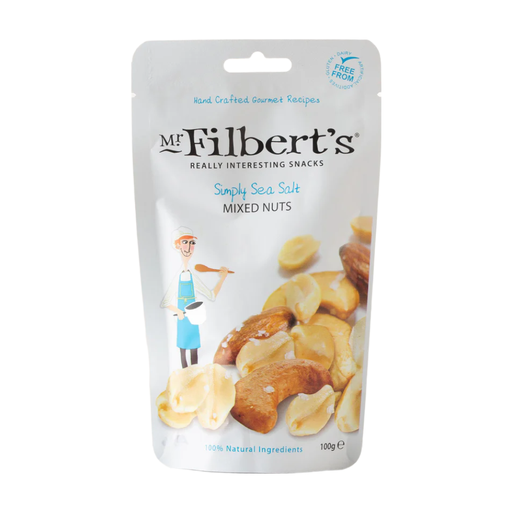
For a mixed-nut snack, the product information describes this 100g sea-salt pack as naturally free from gluten. Check the current pack’s claim, ingredients and allergen statement before buying.
 No image available
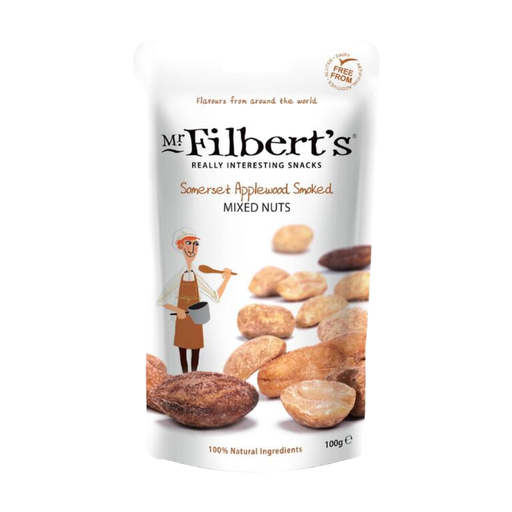
For a smoked-flavour mixed-nut snack, the product information describes this 100g pack as free from gluten. Confirm the claim and allergen information on the current pack.
 No image available
This peanut snack-bar pack offers four 35g bars rather than loose nuts. Its product information describes it as gluten free and notes that it may contain traces of soya and other nuts; check the current wrapper for the full allergen statement.
 No image available
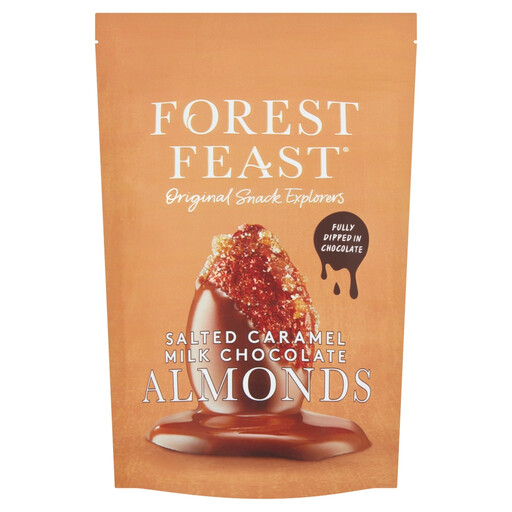
For a chocolate-coated almond snack, check this 120g pack for a gluten-free claim, gluten-containing cereals and any gluten-related precautionary statement before deciding whether it fits a coeliac diet. Its product information also identifies milk and soya as allergens.
 No image available
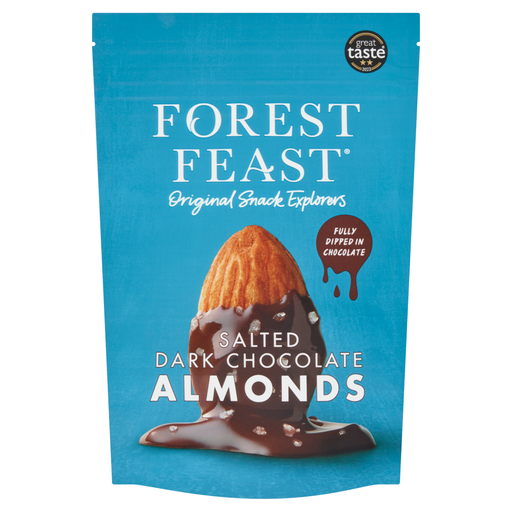
For a dark-chocolate-coated almond snack, assess this 120g pack’s current gluten claim, ingredients and precautionary statement rather than assuming it has the same status as another Forest Feast product. Its product information notes a may-contain statement for milk, peanuts and other nuts.
No. Nuts themselves do not contain gluten, but a packaged product can have other ingredients or a gluten-related cross-contact warning. Read the current ingredients and allergen statement even when the nuts look plain.
The Food Standards Agency defines “gluten free” as no more than 20 mg/kg of gluten in food as sold to the final consumer. Check that the claim applies to the product you are buying, then read its current pack for other allergen information.
For a gluten-free coeliac purchase, choose an alternative without that gluten-related statement where possible. Coeliac UK says the wording signals an unavoidable cross-contamination risk; KP Original Salted Peanuts carry such a warning despite their short ingredient list.
Check that the product is labelled gluten free and uses gluten-free oats, then consider whether you personally include those oats in your diet. Coeliac UK notes that standard oats may be contaminated and that a small number of people with coeliac disease are sensitive to avenin even in gluten-free oats.
Read the current physical pack as well. KP Snacks and M&S advise doing so because ingredients and allergen information can change; a product page is useful for narrowing your choices, not replacing the final label check.