Coeliac shoppers seeking clear labelling
You want an explicit gluten-free claim on the pasta you buy, with the option of looking for Coeliac UK’s Crossed Grain Trademark as further reassurance.


For coeliac shopping, choose pasta labelled gluten-free and check the current pack’s ingredients and allergen information; Coeliac UK’s Crossed Grain Trademark offers additional reassurance when the specific product carries it. Then choose a shape for the meal and compare fibre information if it matters to you, while checking sauces and other ingredients separately and keeping preparation equipment free from crumbs.
You want an explicit gluten-free claim on the pasta you buy, with the option of looking for Coeliac UK’s Crossed Grain Trademark as further reassurance.
You need a suitable pasta in a shape that works for the planned dish, such as spaghetti, penne or fusilli, while checking the sauce and other meal components separately.
Once gluten-free suitability is established, you want to compare fibre declarations and flour blends. Coeliac UK notes that brown or multigrain wording does not necessarily mean a food is wholegrain.
Start with the specific pack’s gluten-free information, then choose the shape and compare nutrition details that matter for the meal.
| Concern | What to check | Who this matters to |
|---|---|---|
| Gluten-free suitability | Look for a gluten-free claim on the current pack; read its ingredients, allergen information and any precautionary statement. Check for the Crossed Grain Trademark if you want that additional marker. | When choosing for someone with coeliac disease, I want clear pack-level information rather than relying on a rice or maize ingredient list. About 50% of consumers put this reassurance first. |
| Shape and everyday use | Choose the format for the planned recipe and check the pack size. Confirm the exact variant rather than assuming every product in a free-from range has the same ingredients. | For regular family meals, I need a gluten-free shape that fits what I am cooking. Around 30% of consumers make this everyday fit their primary concern. |
| Fibre and flour blend | Compare fibre values on the same dry or cooked basis, and read the ingredients if wholegrain content matters; brown or multigrain wording alone is not enough. | Once I have found suitable pasta, I may want to know how much fibre it contributes to the meal. About 20% of consumers put that consideration first. |
Rice, maize or lentil in an ingredient list does not, by itself, settle whether a product is suitable for coeliac shopping. Coeliac UK advises particular care with products that do not carry a gluten-free claim.
Check the current pack for the claim, ingredients, allergen information and any precautionary statement about cereals containing gluten.
Coeliac UK advises checking sauces and other processed foods for gluten. A gluten-free pasta choice does not establish the suitability of everything served with it.
Read the current pack of each sauce, stock or seasoning used in the meal rather than judging it by where it is sold or by an older ingredient listing.
Flour blends differ, and Coeliac UK notes that brown or multigrain wording does not necessarily indicate wholegrains.
If fibre matters to you, compare nutrition declarations on the same basis and check the actual ingredients, after establishing gluten-free suitability.
Gluten-free pasta can come into contact with crumbs or flour when equipment and preparation areas are shared.
Clean pans and surfaces before cooking, and keep gluten-free ingredients and shared condiments away from crumbs.
An own-label option for familiar pasta shapes; Tesco Groceries describes its 500 g Free From spaghetti as gluten-free, wheat-free and egg-free.
Sainsbury's Groceries lists gluten-free pasta in shapes including fusilli, penne, spaghetti and lasagne sheets.
Marks & Spencer describes its Made Without Gluten, Wheat and Egg Penne as made from maize and rice flour.
Barilla describes a UK gluten-free pasta range with shapes including fusilli, penne rigate, spaghetti and tagliatelle.
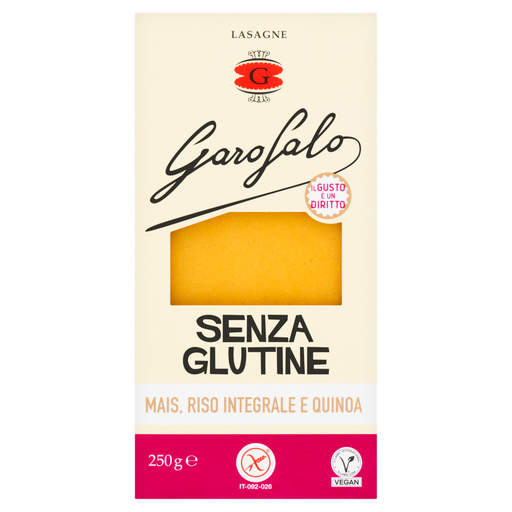
This lasagne-sheet option is for a meal that calls for that pasta format; check the current pack’s gluten-free and allergen information before choosing it for someone with coeliac disease.
 No image available
The lasagne format suits a recipe that calls for sheets rather than spaghetti or short pasta. Check the current pack’s ingredients, allergen and precautionary information; if you want the Crossed Grain Trademark, confirm whether this specific pack carries it.
The Food Standards Agency states that food labelled gluten-free may contain no more than 20 mg/kg of gluten as sold to the final consumer. Very low gluten is a separate term with a limit of 100 mg/kg; for coeliac shopping, look for pasta explicitly labelled gluten-free and check the current pack.
No. Coeliac UK’s Crossed Grain Trademark is an additional reassurance marker on products that carry it, not a requirement for every product labelled gluten-free. Coeliac UK says its scheme involves checks of manufacturers and their processes.
Yes. Check the pack you are buying for its ingredients, allergen information and any precautionary statement. Marks & Spencer notes that products can be redeveloped, so an earlier listing or previous pack should not replace the current label.
Check that specific sauce before using it. Coeliac UK advises checking sauces and other processed foods for gluten; the pasta’s label tells you nothing about a separate jar of sauce, stock or seasoning.
Use clean pans and preparation surfaces, and keep the pasta and its accompaniments away from crumbs and flour. Pay attention to shared condiments and other equipment used for gluten-containing food.