For a second home, start with dried pasta explicitly labelled gluten free, then choose a short shape for your usual sauces or bakes; add spaghetti if you regularly cook long-pasta dishes. Before leaving a pack between visits, check its storage directions and date, and read the current ingredients and allergen information on every purchase. A sauce needs its own label check, even when it is bought to serve with gluten-free pasta.
Who is stocking the cupboard?
Consumers checking gluten-free suitability
If someone using the second home must avoid gluten, the claim on the current pasta pack matters more than a familiar brand name or a previous purchase. Check ingredients and allergen information for any other requirements too.
Weekend cooks keeping a simple cupboard
Dried pasta can be planned around the sauces and bakes you actually make during short stays. Choose a useful shape, then follow that pack’s storage and cooking instructions rather than assuming they are the same across products.
Consumers stocking for several visits
Consider how much of a pack you will use before leaving and whether you can replace it locally. Coeliac UK has reported that choice and availability matter to gluten-free shoppers; that makes a familiar backup meal worth planning without assuming a particular product will always be stocked.
What matters when choosing pasta?
Check the pasta’s gluten-free claim before deciding which shapes and pack sizes suit the meals and gaps between visits.
| Concern | What to check | Who this matters to |
|---|
| Gluten-free suitability |
Look for an explicit gluten-free claim on the current pack; read its ingredients and allergen information as well. |
When I stock pasta for someone who must avoid gluten, I cannot rely on the brand or an older pack. About 31% of consumers put checking current gluten-free suitability first. |
| Cupboard storage and shape |
Check the storage instructions, pack size and whether the shape suits your planned dishes. |
If pasta will stay at the property between visits, I need a manageable pack and a shape I will use. Cupboard practicality is the primary concern for about 25% of consumers. |
| Repeatable meals |
Read the specific cooking directions and any portion guidance; keep the directions available after opening. |
For a short stay, I want to make a familiar meal without guessing how long this pasta takes to cook. About 25% of consumers chiefly need that cooking routine to be repeatable. |
| Replacement and backup |
Check local availability before travelling and plan how many unopened packs you need between visits. |
If the usual pack is hard to find near the second home, I need another workable cupboard option. For about 19% of consumers, dependable replacement is the main concern. |
What is easy to overlook?
-
Assuming a familiar brand makes every product suitable
Ingredients and allergen information can change, and a pasta sauce does not inherit the gluten-free status of the pasta served with it.
Read the current physical pack each time, checking sauces separately as well as pasta.
-
Leaving an opened bag in the cupboard
The reviewed Tesco and Asda products specify cool, dry storage and an airtight container after opening. An opened pack may still be at the property on your next visit.
Follow the instructions for your pack and keep its product name, directions and best-before date with any pasta transferred to a container.
-
Buying one shape without planning the meals
Penne, macaroni, spaghetti and lasagne serve different meal plans. Cooking directions also differ between products, so one familiar preparation time will not cover them all.
Start with a short shape for the sauces or bakes you make most often; add a long shape or lasagne only for meals you expect to cook.
-
Relying on the nearest shop for the same pack
A familiar pasta may not be the one you find when you return to the property. That matters if its shape or cooking directions are part of your meal plan.
Check local availability before travelling and keep a modest backup that meets the same dietary requirement.
Brands to consider
These ranges and products provide points of reference for planning a second-home cupboard; check the exact pack before purchasing.
Barilla
Barilla lists several shapes in its UK gluten-free pasta range.
- Barilla names fusilli, penne rigate, tortiglioni, spaghetti and tagliatelle, and describes the range as using white corn, yellow corn and rice.
- Those are range-level descriptions: confirm the ingredients, directions and availability of the particular pack you choose.
Tesco Free From
Tesco lists own-label dried pasta, including gluten-free penne.
- Tesco describes its 500 g penne as made from maize and rice flour and specifies cool, dry storage.
- Its penne instructions call for airtight storage after opening; check the directions and ingredients on the pack you buy.
Sainsbury's Free From
Sainsbury's lists own-label gluten-free shapes that include macaroni.
- Sainsbury's describes its reviewed 500 g macaroni as maize-and-rice based and made in a dedicated gluten-free environment.
- That production statement applies to the reviewed macaroni, not automatically to every product in the range.
Asda Free From
Asda lists own-label gluten-free penne and spaghetti in 500 g packs.
- The reviewed penne and spaghetti are described as corn-and-rice based, with cool, dry storage guidance.
- Asda advises that ingredients and allergy information can change; use the current pack for the final check.
M&S Made Without
M&S lists a Made Without Gluten, Wheat and Egg penne.
- M&S describes the reviewed penne as a 500 g maize-and-rice-flour product to store cool and dry, away from direct sunlight.
- Check the selected Foodhall for availability rather than planning a meal around an assumed local supply.
Dolmio
Dolmio is relevant here for pasta sauces, not as a gluten-free pasta range.
- A separately checked sauce may be useful alongside dried pasta for a planned meal.
- Dolmio's sauce range does not establish that every sauce is gluten free; read each sauce label independently.
Joybuy pasta selection
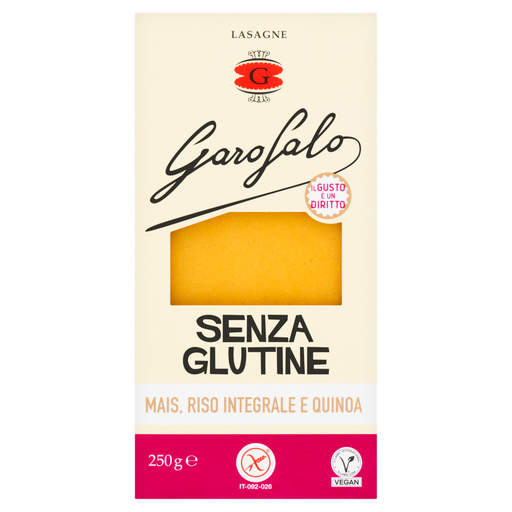
This lasagne format is for a planned second-home bake rather than the everyday short-shape or spaghetti cupboard plan. Check its pack date against the time until your next visit.
 No image available
Garofalo Gluten Free Lasagne 250g
The 250 g lasagne pack suits a planned baked pasta meal. The Joybuy listing specifies cool, dry storage and states a 39-day shelf life, so check the actual pack date before leaving it between visits. Confirm the current gluten-free wording, ingredients, allergen information and cooking directions on the physical pack.
View on Joybuy
Questions about second-home stocking
What should I check on a gluten-free pasta pack?
Look for an explicit gluten-free claim on the current physical pack, then read its ingredients and allergen information. A familiar brand name or an older online listing is not a substitute for checking the product you are buying.
Do I still need to read the ingredients if it says gluten free?
Yes, particularly if someone also avoids wheat, egg or another ingredient. Read the current pack each time because formulations and allergen information can change.
How should I store dried pasta between visits?
Follow the directions for the exact product. The reviewed Tesco and Asda packs specify a cool, dry place and an airtight container after opening; keep the best-before date and preparation directions with any pasta you transfer.
Should I keep penne, macaroni or spaghetti at a second home?
Choose according to the meals you expect to make: a short shape can cover planned sauces or bakes, while spaghetti makes sense if long-pasta dishes are regular. Follow each product’s own cooking directions.
Is a sauce suitable just because the pasta is gluten free?
No. Check the current sauce’s ingredients and allergen information separately. A sauce brand, including Dolmio, does not establish the suitability of every product in its range.


