Parents of children with diagnosed coeliac disease
Check the pasta, sauce and other ingredients for gluten, and keep preparation separate from gluten-containing food. Coeliac UK describes gluten avoidance after diagnosis as strict and lifelong.


Choose pasta with a current gluten-free claim, then consider whether its shape can be cooked and served in pieces suited to your toddler. For a child with diagnosed coeliac disease, check the sauce and preparation as well as the pasta; if coeliac testing is under way, speak to the child’s clinician before changing their diet.
Check the pasta, sauce and other ingredients for gluten, and keep preparation separate from gluten-containing food. Coeliac UK describes gluten avoidance after diagnosis as strict and lifelong.
Look for a clearly labelled pasta that you can serve in a portion and piece size suited to your child. NHS guidance for children over 12 months describes serving family meals in smaller portions and pieces.
A dry pasta shape that works with your usual meals may simplify dinner planning. Check each sauce separately, particularly its gluten information and salt content, rather than treating the pasta label as a claim about the whole meal.
Start with the current gluten-free label, then consider how you will serve the pasta and what will go with it.
| Concern | What to check | Who this matters to |
|---|---|---|
| Gluten-free status | Look for an explicit gluten-free claim on the current pack, then check its allergen and ingredient information. Check sauces separately. | If my child must avoid gluten, I need a clear claim on the exact pasta I am serving, not an assumption based on maize or rice ingredients. About 42% of consumers put confirmed gluten-free labelling first. |
| Toddler serving | Choose a shape you can portion and cut as needed; cook and serve it in pieces suited to the child’s eating ability. | When I am serving a toddler, I need pasta I can adapt to manageable pieces alongside the rest of the meal. Serving practicality comes first for about 33% of consumers. |
| Repeat meals and sauce | Consider whether the chosen shape works for regular meals, and read the current sauce label for gluten information and salt content. | For regular family dinners, I want a pasta format I can use again without overlooking what the sauce adds. About 25% of consumers prioritise that meal-planning need. |
An ingredient list alone is not the same as a gluten-free claim. The Food Standards Agency defines the UK claim as no more than 20 mg/kg of gluten in food as sold to the final consumer.
Check the exact product’s current pack for the claim and read its allergen information.
A decision about removing gluten during an assessment needs advice specific to the child.
If coeliac disease is suspected but not confirmed, speak to the child’s GP or clinician before changing their diet.
According to the NHS, some sauces contain gluten. A jarred sauce also needs its own salt and serving-size check for a toddler meal.
Read the current sauce label, keep gluten-containing ingredients separate where strict avoidance is required, and serve a portion suited to the child.
An own-label dry-pasta range that includes a 500g maize-and-rice fusilli listed by Sainsbury's as gluten- and egg-free.
An own-label range with several dry-pasta shapes. Tesco Groceries lists formats including macaroni, spaghetti, penne and fusilli.
A branded range in shapes including fusilli, penne and spaghetti. Barilla says its gluten-free pasta uses white corn, yellow corn and wholegrain rice.
A dry-pasta range that includes maize-and-rice penne described by Marks & Spencer as made without gluten, wheat and egg.
A sauce brand to consider only as a separate component of the pasta dinner, not as a gluten-free dry-pasta range.
This gluten-free lasagne is an option for a toddler dinner if you are prepared to serve the cooked pasta in pieces suited to your child; it is not a short pasta shape.
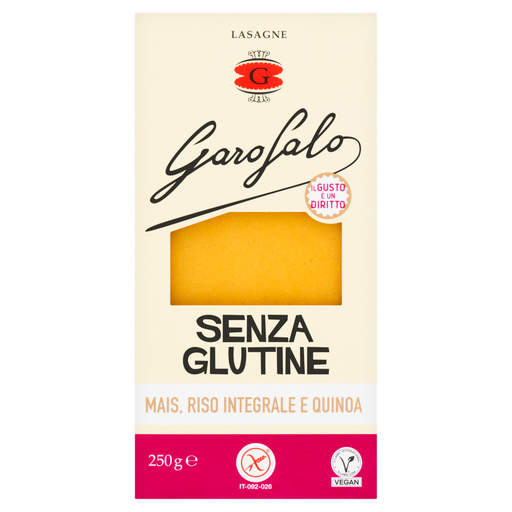 Image unavailable
Consider this gluten-free lasagne if you can adapt the cooked pasta to your toddler’s eating ability. It comes in a 250g pack; check the current pack for cooking directions and detailed allergen information, and check every other ingredient in the meal separately.
The Food Standards Agency defines the gluten-free claim as no more than 20 mg/kg of gluten in the food as sold to the final consumer. Look for that claim on the current pack rather than inferring it from maize or rice ingredients.
Speak to the child’s GP or clinician before changing their diet while coeliac disease is being investigated. Coeliac UK advises that a gluten-free diet should begin after coeliac testing is complete.
Serve a portion and piece size suited to your child’s eating ability. NHS guidance describes offering children over 12 months family meals in smaller portions and smaller pieces, without adding salt to their food or cooking water.
Ask the nursery or school for its written packed-lunch and allergen policy before packing it. Check the pasta and any sauce individually, especially if the child needs strict gluten avoidance.
No. The NHS notes that some sauces contain gluten, so check each component; where strict avoidance is required, also prevent contact with gluten-containing food during preparation.