Shoppers looking for gluten-free pasta
You need a storecupboard pasta explicitly labelled gluten-free, but still want a shape that works for the meal you plan to make.


Choose dried pasta by the specific allergen you need to avoid, rather than by a general free-from or vegan label. If gluten is the concern, look for an explicit gluten-free claim; if wheat or egg is the concern, check the current product declaration and ingredients for that allergen. Once the pack meets your requirements, choose a shape for the meal and review any relevant precautionary allergen statement.
You need a storecupboard pasta explicitly labelled gluten-free, but still want a shape that works for the meal you plan to make.
You need the exact pasta's ingredients and allergen information to address wheat or egg. A gluten-free claim alone does not settle a wheat-allergy decision.
You need to assess the current ingredients and any relevant precautionary allergen statement for each product, rather than treating vegan or free-from branding as an answer to every requirement.
For allergy-related pasta shopping, establish whether the current pack meets your allergen requirements before choosing a shape or pack size.
| Concern | What to check | Who this matters to |
|---|---|---|
| The relevant allergen | Read the current ingredients and allergen declaration. Look for an explicit gluten-free claim when avoiding gluten; assess wheat separately when avoiding wheat. | If I need to avoid gluten, wheat or another particular allergen, I want the exact pasta to address that requirement. About 50% of consumers put confirmation of their primary allergen requirement first. |
| More than one allergen | Check each relevant allergen against the exact pack, including any precautionary statement that matters to your requirements. | When my household avoids several allergens, meeting just one requirement does not settle the choice. For about 30% of consumers, suitability across multiple allergens is the primary concern. |
| Shape for the meal | After checking allergen suitability, choose the shape and pack size for the dish. | If I am making a familiar meal, I want a suitable pasta in a shape that works for it. Meal format comes first for about 20% of consumers once allergen requirements are met. |
A gluten-free claim addresses gluten content; it does not by itself answer whether a pasta meets a wheat-allergy requirement.
If wheat must be avoided, check the current ingredients and wheat declaration on the exact product rather than relying on a gluten-free logo.
The Food Standards Agency says vegan labelling alone should not be used as a substitute for allergen labelling. Precautionary information may also matter.
Read the pasta's ingredients, allergen declaration and any relevant precautionary statement.
A range can contain different recipes and declarations. Finding the right shape in a retailer category does not establish that the individual product meets your requirements.
Check the label for the particular macaroni, penne, spaghetti or other shape you intend to buy.
Ingredients and allergen information can change. Marks & Spencer advises shoppers to read the product label rather than rely solely on its website information.
Recheck the current pack, especially if the packaging has changed or a different product has been substituted.
Barilla offers gluten-free dried pasta in several shapes, including penne and spaghetti.
The range includes a macaroni option for shoppers who need that shape.
Its penne is expressly named for shoppers checking gluten, wheat and egg requirements.
Tesco lists several Free From pasta shapes, including macaroni, spaghetti, penne, fusilli and lasagne sheets.
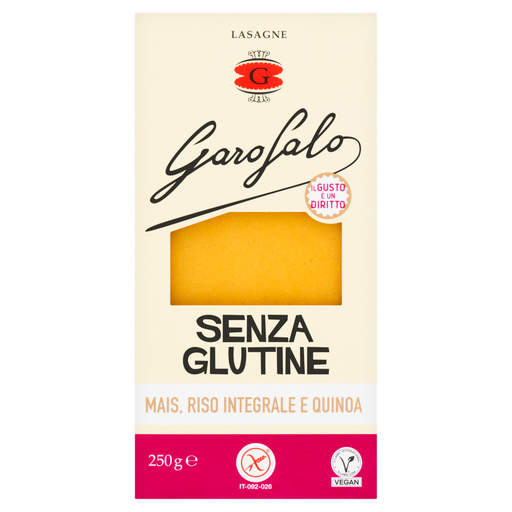
This gluten-free lasagne option may suit a lasagne meal. If you specifically need dried storecupboard pasta, confirm the product format before buying.
 No image available
For a lasagne meal where gluten-free pasta is required, this product is described as gluten-free. Its description lists corn, rice, potato and quinoa flours. Confirm that the format is dried if you need storecupboard pasta, and check the current pack for wheat, egg and any relevant precautionary allergen information.
Not by itself. The Food Standards Agency states that food labelled gluten-free must contain no more than 20 mg/kg of gluten as sold to the final consumer; that claim does not resolve a separate wheat-allergy requirement. Check the exact pasta's current ingredients and wheat declaration.
No. The Food Standards Agency says vegan labelling alone should not be used as a substitute for allergen labelling. Check the ingredients, allergen declaration and any relevant precautionary statement on the pasta you choose.
It is precautionary allergen labelling intended to communicate that an allergen could be unintentionally present, according to the Food Standards Agency. It is not the same as listing that allergen as an ingredient; assess the statement against the requirements you are shopping for.
Use the listing to identify a possible product, then read the current pack before purchase and use. Marks & Spencer notes that recipes and allergen information may change and advises customers not to rely solely on website information.