Coeliac shoppers who want a conventional crisp
Check the gluten-free statement and allergen information for the exact flavour and pack. A potato-based recipe is not, by itself, confirmation that the finished crisp is suitable.


For coeliac shopping, start with a gluten-free declaration for the exact crisp you plan to buy, then compare protein per 100 g. Among the gluten-free potato crisps examined here, KETTLE Steakhouse Barbecue declares the most protein at 8.9 g per 100 g; that figure alone does not make it a food that qualifies for a UK ‘high protein’ claim. If protein matters more than keeping a potato crisp, compare other snack types too, while checking their gluten-free status separately.
Check the gluten-free statement and allergen information for the exact flavour and pack. A potato-based recipe is not, by itself, confirmation that the finished crisp is suitable.
Use the per-100 g protein figures to compare products on the same basis. A crisp can have more protein than another without qualifying for a ‘high protein’ claim.
If staying with potato crisps is less important, a lentil crisp offers another protein figure to compare. Check its gluten-free declaration and salt information as you would for a potato crisp.
Confirm suitability for the exact product before using its nutrition panel to compare protein and salt.
| Priority | What to check | Your needs |
|---|---|---|
| Gluten-free suitability | Look for an explicit gluten-free declaration on the current pack or exact product information. Read the ingredients and any precautionary allergen wording; Coeliac UK explains that ‘may contain’ wording signals a cross-contamination risk identified by the manufacturer. | I need confirmation for this flavour and pack, not an assumption based on its potato ingredients. |
| Protein | Compare grams per 100 g across products. If a ‘high protein’ claim matters, check protein’s share of total energy: the UK criterion published on legislation.gov.uk is at least 20% of the food’s energy from protein. | I want to know whether I am choosing a higher-protein potato crisp or looking for a food that meets the ‘high protein’ claim criterion. |
| Salt and ingredients | Compare salt per 100 g alongside protein, then check the exact flavour’s ingredients and dietary-suitability statement. KETTLE Chips lists 1.4 g salt per 100 g for Steakhouse Barbecue and 0.7 g for Lightly Salted. | A higher protein figure is only part of my choice; I may also care about the salt declaration or whether a flavour contains meat ingredients. |
Ingredients and manufacturing information apply to the finished product, not just its potato base. Coeliac UK advises reading both the ingredients and precautionary allergen wording.
Check the gluten-free declaration for the exact flavour and pack you are buying, along with its current allergen information.
KETTLE Steakhouse Barbecue declares 8.9 g protein per 100 g, the highest figure among the gluten-free potato crisps compared here. Grams per 100 g alone do not establish whether a food meets the UK ‘high protein’ claim criterion, which legislation.gov.uk sets at 20% of energy from protein.
Use grams per 100 g to compare potato crisps. If the claim criterion is important to you, check protein as a share of the product’s total energy.
KETTLE Steakhouse Barbecue is not suitable for vegetarians and declares 1.4 g salt per 100 g. Tyrrells Sour Cream & Onion Lentil Crisps declare 13 g protein and 2.0 g salt per 100 g, but they are lentil crisps, not potato crisps.
Compare protein and salt on the same per-100 g basis, and check ingredients and gluten-free suitability for each product separately.
These examples concern specific products or ranges; a brand name alone does not establish that every flavour has the same ingredients or gluten-free status.
KETTLE Chips lists both Steakhouse Barbecue and Lightly Salted as gluten-free potato crisps.
Pipers lists Great Berwick Longhorn Beef as gluten-free.
Seabrook identifies Beefy as a gluten-free potato crisp and says its gluten-free crisps and snacks are Coeliac UK accredited.
Walkers Ready Salted illustrates why the exact product’s allergen information matters.
Tyrrells Sour Cream & Onion Lentil Crisps offer a non-potato comparison for shoppers willing to change crisp base.
These potato crisps offer two different starting points: comparing protein in a Pipers beef flavour, or considering a Savoursmiths flavour while checking its current gluten-free and nutrition information before buying.
 No image available
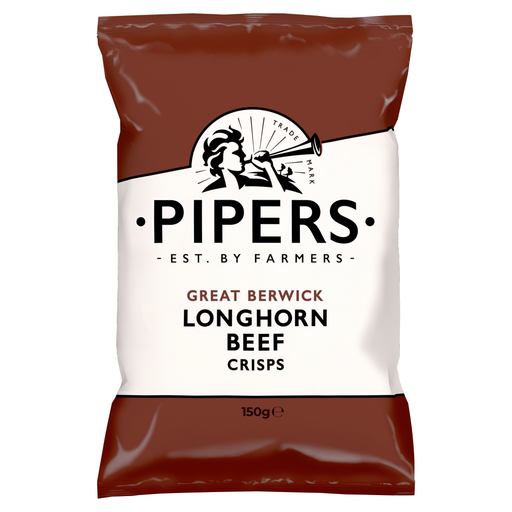
For a potato crisp with a stated gluten-free declaration, Pipers lists the Great Berwick Longhorn Beef flavour as gluten-free. The brand gives 7.1 g protein and 1.0 g salt per 100 g for this flavour; check the current 150g pack information when comparing it. It contains Longhorn beef extract and is not suitable for vegetarians.
 No image available
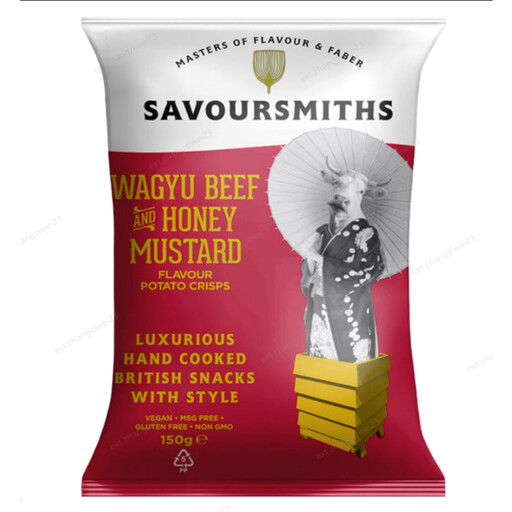
This 150g potato-crisp flavour is an option to consider if you prefer its stated vegan variant. Before choosing it for coeliac shopping or comparing its protein with Pipers, check the current pack’s explicit gluten-free declaration, allergen information and per-100 g nutrition panel.
No. A potato base does not confirm the finished product’s gluten-free status. Check the exact pack’s gluten-free declaration and ingredients; Coeliac UK explains that cereals containing gluten must be emphasised in the ingredients list of prepacked food.
Not on the strength of its per-100 g protein figure alone. KETTLE Steakhouse Barbecue leads the potato crisps compared here at 8.9 g protein per 100 g, but the UK ‘high protein’ claim criterion published on legislation.gov.uk concerns the share of total energy supplied by protein: at least 20%.
Do not treat that wording as an explicit gluten-free declaration. Coeliac UK explains that ‘may contain’ wording indicates a cross-contamination risk identified by the manufacturer. Read the full statement for the exact product and contact the manufacturer if its suitability remains unclear.
The Tyrrells Sour Cream & Onion Lentil Crisps example declares 13 g protein per 100 g, more than the potato-crisp examples discussed here. It is a different type of crisp and declares 2.0 g salt per 100 g; check its current gluten-free information separately if shopping for someone with coeliac disease.