What matters when choosing?
Start with the gluten-free claim and any other allergen requirements, then compare the nutrition panel using the same serving basis.
| Priority |
What to check |
Your needs |
| Gluten-free claim |
Look for an explicit claim on the current pack. Coeliac UK says the UK gluten-free label applies to food containing no more than 20 ppm gluten; rice as an ingredient is not itself a label claim. |
I need to avoid gluten, so I want the particular rice cakes I buy to carry that claim. |
| Other allergens |
Read the ingredients and precautionary statements for each allergen you avoid. ASDA Groceries lists a soya may-contain warning for its Free From Slightly Salted cakes; Tesco Groceries lists sesame, soya and milk warnings for its Free From Wholegrain cakes. |
Gluten is not my only concern. I need to check whether this product also has a warning relevant to my allergy. |
| Snack portion |
Compare carbohydrate per cake where stated, and use the same per-cake or per-100-g basis for fat and other nutrients. ASDA Groceries lists 6.2 g carbohydrate per Free From Slightly Salted cake; its serving may differ from another product’s. |
Before training, I want to know what my planned number of cakes contributes, rather than judging the snack by words such as “light”. |
| Plain or flavoured |
Check the nutrition panel rather than treating the versions as interchangeable. Marks & Spencer lists 2.5 g fat and 0.33 g salt per 100 g for Lightly Salted, against 16.2 g fat and 0.60 g salt per 100 g for Barbecue High Protein. |
I might prefer a savoury or flavoured cake, but I want to compare its actual portion with the plain option I would otherwise eat. |
| Current packaging |
Check the physical pack at purchase and before eating. Leeds Teaching Hospitals NHS Trust advises checking each time because recipes can change. |
Even if I buy the same rice cakes regularly, I need the ingredient and allergy information for the pack in hand. |
Brand and product-line references
These examples show why the label on a particular product matters more than the brand name alone; they do not establish that every product from a brand has the same ingredients or warnings.
Asda Free From
Its Slightly Salted Rice Cakes are a plain, explicitly gluten-free example.
- ASDA Groceries lists brown rice and sea salt as ingredients, with 6.2 g carbohydrate and 30 kcal per cake.
- The same listing says the product may contain soya.
Kallo
The reviewed Organic Lightly Salted Wholegrain Rice Cakes provide a labelled gluten-free option.
- ASDA Groceries lists 99.8% organic wholegrain rice, sea salt and 5.6 g carbohydrate per cake.
- The listing says the cakes may contain milk, sesame and soya.
Tesco
The reviewed Free From Wholegrain and standard Lightly Salted cakes have different label information.
- Tesco Groceries describes Free From Wholegrain as wheat and gluten free.
- That Free From product may contain sesame, soya and milk. The reviewed standard Lightly Salted listing does not establish an equivalent gluten-free claim.
Sainsbury’s
The reviewed plain and lightly salted 135 g rice cakes both carry a gluten-free claim.
- Sainsbury’s Groceries lists 6.1 g carbohydrate per plain cake and 5.9 g per lightly salted cake.
- Both listings say the products are not suitable for customers with a milk allergy because of manufacturing methods.
M&S
The reviewed Lightly Salted and Barbecue High Protein cakes illustrate two different nutritional profiles within a gluten-free range.
- Marks & Spencer lists 79.6 g carbohydrate and 2.5 g fat per 100 g for Lightly Salted.
- Barbecue High Protein lists 49.4 g carbohydrate and 16.2 g fat per 100 g, so compare the intended portion rather than substituting it on the strength of the gluten-free claim alone.
Snack a Jacks
A flavoured rice-cake range to assess product by product when shopping for a free-from snack.
- Snack a Jacks lists 51 kcal and 3.6 g sugars per cake for its Caramel product.
- Check that product’s current pack for a gluten-free claim and the full allergen information before considering it for a gluten-avoidance requirement.
Rice cakes on Joybuy
These Kallo options include a lightly salted cake for the plain-snack route and an apple-and-cinnamon cake if you prefer a flavoured snack. Check the current pack against your own gluten and other allergen requirements before choosing either.
 No image available
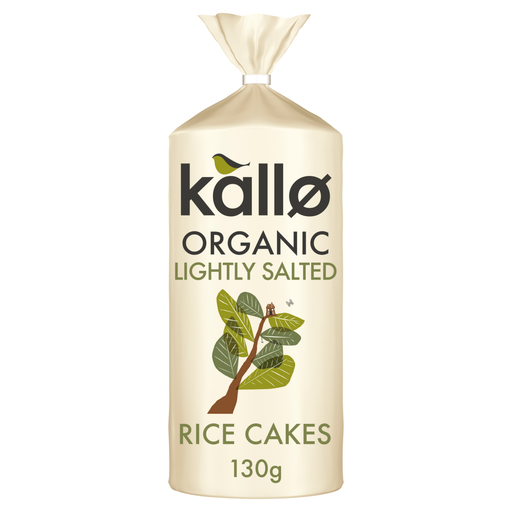
Kallo Organic Lightly Salted Rice Cakes 130g
A lightly salted option to consider when you want a plain rice cake before training. ASDA Groceries lists the reviewed Kallo Organic Lightly Salted Wholegrain 130 g cakes as gluten free, with 5.6 g carbohydrate per cake, and warns that they may contain milk, sesame and soya. Check the pack of the product you receive for its current claims and warnings.
View on Joybuy
 No image available
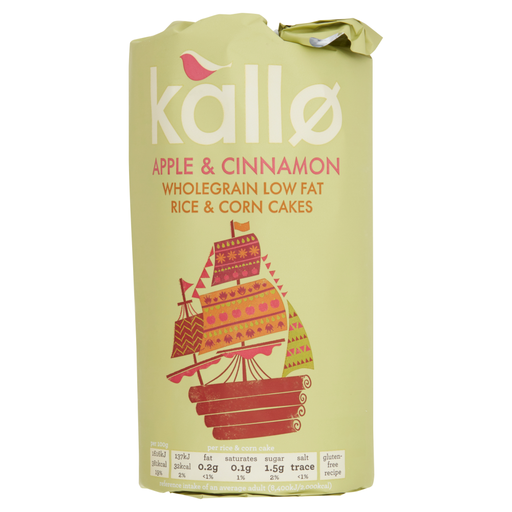
Kallo Jumbo Apple & Cinnamon Rice Cakes 127g
An apple-and-cinnamon alternative if flavour matters to your pre-workout snack choice. If you need gluten-free food, confirm an explicit claim on the current pack; also read its allergen statements and compare its nutrition panel with any plain cakes you are considering.
View on Joybuy
Questions about rice cakes before training
Does gluten free mean a rice cake is free from all allergens?
No. Coeliac UK explains that a UK gluten-free label applies to food containing no more than 20 ppm gluten; it does not rule out warnings for other allergens. For example, ASDA Groceries lists a soya may-contain warning for its Free From Slightly Salted cakes, while Tesco Groceries lists sesame, soya and milk warnings for its Free From Wholegrain cakes.
Can a vegan rice cake be unsuitable for someone with a milk allergy?
Yes. Sainsbury’s says its reviewed plain and lightly salted cakes are prepared to a vegan recipe but are not suitable for customers with a milk allergy because of manufacturing methods. Read the allergy advice on the specific pack.
How do I judge a rice-cake portion before a workout?
Check carbohydrate per cake where the label provides it, then consider the number of cakes and any other food in your planned snack. UK Sports Institute guidance notes that carbohydrate needs rise with exercise intensity and duration, so a single cake should not be treated as a complete fuelling plan for every session.
Is a high-protein rice cake interchangeable with a plain one?
Not on nutrition values alone. Marks & Spencer lists 24.8 g protein and 16.2 g fat per 100 g for Barbecue High Protein, compared with 9.6 g protein and 2.5 g fat per 100 g for Lightly Salted. Compare the portion you would eat and check its ingredients and allergen advice.
Do I need to reread the label when buying the same rice cakes?
Yes, particularly if you manage an allergy. Leeds Teaching Hospitals NHS Trust advises checking at purchase and before eating because manufacturers can change recipes.


