Hosts checking a strict gluten-free requirement
If a Christmas guest needs gluten-free food, the decision rests on the exact finished product and its current label, not on rice being an ingredient.


For a Christmas guest who needs gluten-free food, choose a tinned rice pudding only after checking that the exact current product carries a gluten-free claim; rice in the ingredients is not enough. Standard and Light Ambrosia cans offer hot-or-cold serving, but their product information does not establish them as gluten-free, and both contain milk. If you cannot confirm a suitable tin, consider a clearly labelled alternative dessert or a recipe you can check ingredient by ingredient.
If a Christmas guest needs gluten-free food, the decision rests on the exact finished product and its current label, not on rice being an ingredient.
A ready-to-serve pudding can simplify dessert, but portions matter: Waitrose describes the standard Ambrosia 400 g can as containing two portions.
Ambrosia describes its Light rice pudding as having 30% less sugar and fat than its standard version. That comparison does not establish gluten-free suitability, which needs a separate check.
For a guest with a strict gluten-free requirement, establish suitability before comparing portions or recipes. The concerns below cover people choosing rice pudding or a close dessert substitute for Christmas dinner, grouped by their primary buying need.
| Concern | What to check | Who this matters to |
|---|---|---|
| Gluten-free and allergen suitability | Look for a current gluten-free claim on the exact product and read the pack’s allergen information before serving. Standard and Light Ambrosia rice puddings contain milk. | If my Christmas guest needs gluten-free food, I need to check the finished dessert rather than rely on its rice ingredients. About 50% of consumers would put that verification first. |
| Portions and serving | Check the stated portions and whether the pudding can be served hot or cold. A standard Ambrosia 400 g can contains two portions, according to Waitrose. | When I am serving several guests after dinner, I need enough dessert and a workable way to serve it. Around 30% of consumers would prioritise portions and convenience. |
| Recipe and nutrition | Compare the declared figures on the packs using the same basis, such as per serving. Ambrosia says Light has 30% less sugar and fat than its standard rice pudding. | If I am weighing up Light and standard pudding, I want their declared sugar and fat figures to inform the choice. About 20% of consumers would make that comparison their primary concern. |
A rice ingredient does not establish the gluten status of the finished pudding. The Food Standards Agency states that food labelled gluten-free must contain no more than 20 mg/kg of gluten as sold to the final consumer.
For a guest with a strict requirement, confirm a current gluten-free claim for the exact product and check its pack before serving.
Standard, Light and Deluxe Ambrosia rice puddings list milk ingredients, so they do not suit a guest who must avoid milk.
Check the guest’s requirements separately. If both gluten and milk must be avoided, choose a product labelled to suit those needs or check every ingredient in a homemade recipe.
The standard Ambrosia 400 g can is described as containing two portions.
Plan the number of portions before choosing how many cans you need. Follow the current pack’s instructions for any leftovers.
Ambrosia’s Light comparison concerns sugar and fat relative to its standard rice pudding; it is not a gluten-free claim.
Check gluten-free suitability and allergens independently of the Light wording.
Ambrosia lists standard, Light and Deluxe rice puddings in 400 g cans.
Tesco’s rice-pudding category lists 400 g standard and reduced-fat own-label cans alongside other ranges.
Sainsbury's lists standard and low-fat own-label rice puddings in its dessert range.
Waitrose lists standard and Deluxe Ambrosia cans and publishes a separate dairy- and gluten-free rice-pudding recipe.
M&S lists dry pudding rice for cooking and has a Made Without range covering different dietary requirements.
This selection is a rice pudding in pots for babies aged 6 months and over, rather than a tinned dessert for the wider Christmas table. Check the current pack against the intended guest’s dietary requirements.
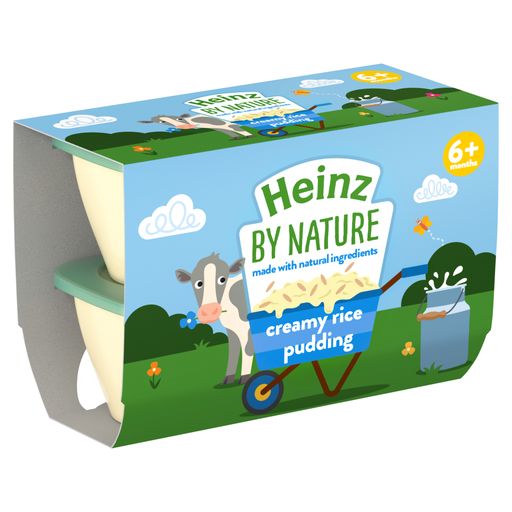 Image unavailable
Consider this only for its stated baby-food use, not as a tinned dessert for the whole table. It comes in four 100 g pots. The product description calls it gluten-free, but check the current pack before serving it to someone with a strict requirement. Its product information identifies whole milk.
Yes. The Food Standards Agency states that food labelled gluten-free must contain no more than 20 mg/kg of gluten in the food as sold to the final consumer. For a Christmas dessert, check that the claim applies to the exact product you plan to serve.
No. Rice in an ingredient list does not establish the finished pudding’s gluten-free suitability. For a strict requirement, check the exact current product and its pack rather than assuming that an ordinary rice pudding qualifies.
No. Their listed ingredients include milk. If a guest needs both gluten-free and dairy-free food, check a suitable alternative product or every ingredient in a homemade recipe; Waitrose publishes a dairy- and gluten-free rice-pudding recipe.
Ambrosia’s instructions for the standard and Light 400 g cans say to remove the remaining pudding from the can, refrigerate it and consume it within three days. Check the current pack before storing leftovers.
Yes. Ambrosia’s instructions for the 400 g standard and Light cans allow gentle heating on the hob without boiling, or heating after transfer to a microwaveable container. They can also be served cold; dietary suitability still needs a separate label check.