What matters when buying?
Check dietary suitability first, then decide whether a ready-to-eat pot or a portion from a larger tin works for the lunch being packed.
| Concern |
What to check |
Who this matters to |
| Gluten-free status |
Look for an explicit gluten-free statement on the current pack, alongside its allergen information. The Food Standards Agency gives a limit of no more than 20 mg/kg of gluten for food labelled gluten-free as sold to consumers. |
When my child must strictly avoid gluten, I need to establish suitability before thinking about the portion size. About 46% of consumers put that pack statement first. |
| Lunchbox portion |
Check the portion size, cold-serving directions and whether an opened tin needs separate storage. |
If lunch must be easy for a child to handle, I would rather pack a contained portion than send food from an opened tin. That practical need comes first for about 36% of consumers. |
| Sugars, fat and servings |
Compare sugars and fat on the same per-serving or per-100 g basis, and check how many servings the pack contains. |
Once dietary requirements are met, I may want to compare what is in the portion my child will actually eat. About 18% of consumers make that comparison their primary concern. |
Joybuy product selection
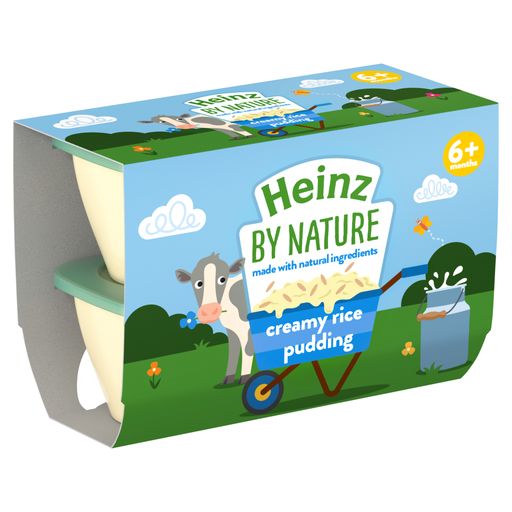
This selection is a pre-portioned rice pudding in pots, rather than a tinned option. For a strict gluten-free packed lunch, check the statement on the current pack before choosing it.
 No image available
Heinz Creamy Rice Pudding 6+ Months, 4 × 100 g
The individual pots offer a portioned format to consider for a packed lunch, rather than a tin to divide at home. The Joybuy listing describes the pudding as gluten-free, but check that the current physical pack carries the statement if strict gluten avoidance is required. Check its milk ingredients separately if dairy suitability matters.
View on Joybuy
Questions about packed lunches
Is rice pudding gluten-free if its ingredients do not list wheat, barley or rye?
That ingredient check alone cannot establish suitability for strict gluten avoidance. Look for a gluten-free statement on the current pack. The Food Standards Agency gives a limit of no more than 20 mg/kg of gluten for food labelled gluten-free as sold to consumers.
Can rice pudding be packed cold for school?
Tesco and Sainsbury's say their 400 g rice puddings can be served cold, and Ambrosia says the same of its 150 g pot. Follow the chosen pack's storage directions; serving it cold does not establish that it is gluten-free.
How should I store rice pudding left in a 400 g tin?
Tesco and Sainsbury's direct shoppers to transfer unused contents to a non-metallic container, cover and refrigerate them, and consume them within two days. Follow the instructions on your particular tin if they differ.
What should the school know about a child's gluten-free packed lunch?
Coeliac UK advises telling the relevant adults at school when a child has coeliac disease and needs a strict gluten-free diet. Share which foods the child can and cannot eat, including what to do if children swap food.
Does gluten-free rice pudding also mean dairy-free?
No. Gluten-free and dairy-free are separate requirements. The Tesco, Sainsbury's and Ambrosia products discussed here list milk or whey, so check the current allergen declaration if dairy must also be avoided.


