What matters for a picnic
Decide whether confirmed gluten-free suitability, easy serving or a particular pack format is the priority before comparing tins with pots.
| Concern |
What to check |
Who this matters to |
| Gluten-free suitability |
Look for a gluten-free statement on the exact current pack; read the ingredients and any precautionary allergen wording. |
If gluten avoidance determines what I pack, I need confirmation on the product rather than an assumption based on rice. About 36% of consumers put verified gluten-free suitability first. |
| Serving and transport |
Check portion count, unopened storage instructions and whether a sharing tin will need bowls and spoons. |
When I am packing separate lunches, I would rather hand out individual portions than serve from a tin outdoors. About 29% of consumers prioritise portioning and transport. |
| Sugar and fat |
Compare the nutrition information per 100g and per serving, and check which standard product a reduction refers to. |
If sugar and fat are my deciding factors, I want to compare the amount in the portion I will serve. About 21% of consumers put the recipe comparison first. |
| Sharing format |
Confirm portions per tin and plan clean serving utensils and suitable storage for leftovers. |
For a picnic where two people will share dessert, I may prefer one tin if serving and leftovers are manageable. About 14% of consumers prioritise the sharing format. |
Joybuy single-serve rice pudding
These pots suit separate picnic servings rather than sharing from a tin. Check the current gluten-free statement and allergen wording before serving.
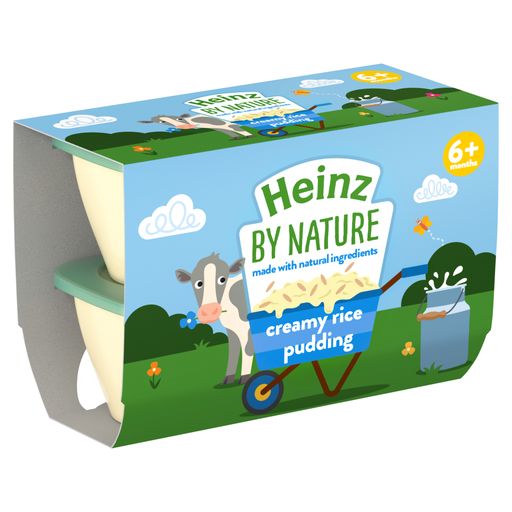 Image unavailable
Heinz Creamy Rice Pudding 6+ Months 4 x 100g
Four individual pots offer separate portions for a picnic. The product description calls this variant gluten free, but check the current pack for its gluten-free statement and full allergen wording before serving.
This product is intended for babies aged 6 months and over and contains whole milk. Its product description says to refrigerate unused portions for up to 24 hours after opening; follow the instructions on the pack.
Joybuy
Common questions
Is rice pudding gluten free simply because it contains rice?
No. Check the exact current pack for gluten-free status and read its ingredient and precautionary allergen information. Coeliac UK explains that prepacked-food labels identify cereals containing gluten in the ingredients.
What does ‘gluten free’ mean on a food label?
The Food Standards Agency defines a gluten-free claim as no more than 20 mg/kg gluten in the food as sold to the final consumer. That claim does not mean the product is free from milk or other allergens.
Can unopened rice-pudding pots travel without a cool bag?
Follow the storage instructions on the exact pack. The Joybuy listing for Ambrosia 4 x 120g pots describes unopened storage without refrigeration, but says to refrigerate remaining product after opening and consume it within three days; those instructions should not be assumed for other pots.
How should I handle opened pudding at a picnic in hot weather?
Follow its opened-pack instructions and keep food that normally needs refrigeration cool in a bag or box with ice or frozen gel packs. Food Standards Agency guidance for England, Northern Ireland and Wales says that, in extremely hot weather, food that has been out of the fridge should be used within two hours.
Is the Ambrosia gluten-free sharing tin also dairy free?
No. The Ambrosia 400g tin described as gluten free by Thomas Ridley lists milk and whey. Anyone who also needs to avoid milk should check for a product meeting both requirements.


