Families choosing gluten-free food for a toddler
Look for a gluten-free claim on the specific shortbread pack, not just ingredients that sound suitable. Check the current label before serving it to a child who needs to avoid gluten.


For toddler snack time, start with a shortbread that is specifically labelled gluten-free, then check the actual pack against the child’s other allergens: the butter recipes discussed here contain milk, while the milk-free recipes differ on oats, soya and nut warnings. Shortbread is a biscuit to consider for an occasional snack rather than a routine choice; think about how the child will eat it and check the nursery or school’s policy before packing it.
Look for a gluten-free claim on the specific shortbread pack, not just ingredients that sound suitable. Check the current label before serving it to a child who needs to avoid gluten.
Gluten-free does not also mean milk-free or suitable for someone with an oat, soya, nut or peanut allergy. The shortbreads discussed here have different recipes and warnings, so the exact variant matters.
Check the setting’s food and allergen policy as well as the child’s ability to eat the biscuit safely. Rules for food a setting provides do not, by themselves, settle what a family may pack.
Choose by the dietary requirement first, then compare the remaining allergen information, the occasion and the place where the snack will be eaten.
| Priority | What to check | Your needs |
|---|---|---|
| Gluten-free claim | Check the claim on the exact product and its current pack, rather than relying on the brand name or a similar variant. The Food Standards Agency defines a gluten-free claim as no more than 20 mg/kg of gluten in the food as sold. | “I need to know that this particular biscuit is labelled gluten-free,” especially when gluten avoidance is essential for the child. |
| Other allergens | Read the ingredients and precautionary warnings for milk, oats, soya, nuts and peanuts as relevant. The butter shortbreads discussed here contain milk; the milk-free recipes have different ingredients and warnings. | “Avoiding gluten is only part of our check; I also need to compare the pack with the child’s other allergens.” |
| Snack occasion | Compare the selected biscuit’s nutrition panel and consider its size, shape and texture before serving. The NHS advises against giving young children too many foods high in saturated fat, including biscuits, and recommends considering how food is prepared to reduce choking risk. | “For a routine snack, I may choose something other than shortbread. If serving a biscuit, I need to consider how the child will manage it.” |
| Nursery or school | Check the particular setting’s packed-food and allergen policy, and share the product’s current allergen information where needed. Guidance for food provided by a setting is not a UK-wide rule for every packed snack. | “I want to know whether this exact biscuit fits the rules where the child will eat it.” |
Dean’s traditional Shortbread Rounds list wheat flour, while Walker’s gluten-free claim applies to its specific Gluten Free Shortbread Rounds.
Match the full variant name to the current pack and check its gluten-free claim before choosing it.
The shortbread recipes differ on milk, oats and soya, as well as nut and peanut warnings. Gluten-free labelling does not describe a biscuit’s sugar or saturated fat content.
Check every allergen relevant to the child and use the selected pack’s nutrition panel when comparing biscuits.
Walker’s researched plain gluten-free rounds and a Joybuy Walker’s listing describing ginger-and-lemon shortbread are not interchangeable product identities.
Check the variant, ingredients and pack details of the item you intend to buy rather than substituting one listing for another.
A brand name is a starting point, not an allergen statement: compare the named product and its current packaging.
Its Gluten Free Shortbread Rounds are a butter-recipe option for shoppers seeking gluten-free shortbread.
Tesco Free From Shortbread Biscuits offer a gluten- and milk-free recipe containing gluten-free oat flour.
Sainsbury’s Free From Shortbread is another gluten- and milk-free recipe.
Waitrose Free From Gluten Butter Shortbread is a gluten-free butter-recipe option.
Made Without Wheat All Butter Shortbread Rounds are listed as gluten-free.
The brand illustrates why shoppers need to check the particular shortbread, not recognise only the maker.
This gluten-free oat biscuit is an alternative to shortbread for the snack occasion, not a shortbread selection. Check its own allergen information before considering it for the child.
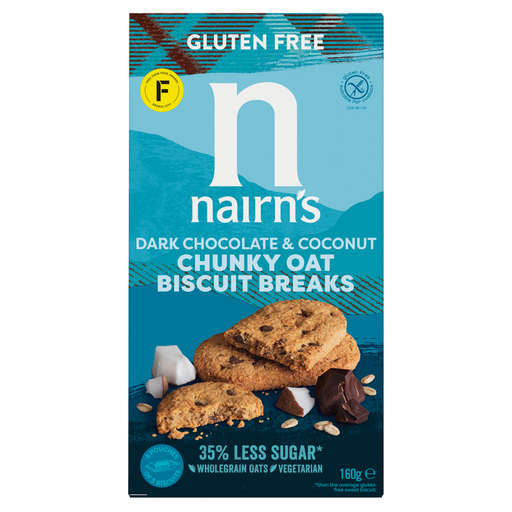 Image unavailable
This is a gluten-free oat biscuit rather than shortbread. For toddler snack time, check the current pack’s advice on soya, milk and oats, including avenin sensitivity, and consider the biscuit’s size and texture before serving.
Not necessarily. Gluten-free describes the gluten claim, not the absence of milk, oats, soya, nuts or peanuts; compare the specific pack’s ingredients and warnings with the child’s allergens.
Consider whether the child can manage that biscuit’s size, shape and texture, and supervise eating. The NHS advises thinking about those characteristics when preparing food for young children to reduce choking risk.
Check the particular setting’s packed-food and allergen policy before packing it. Department for Education guidance on food provided in England’s early-years settings and state-funded schools does not establish a UK-wide permission or ban for a family’s packed shortbread.
No: the Department of Health and Social Care’s England HFSS promotions guidance concerns qualifying retail placement and promotions, not a blanket rule for a child’s packed meal. Check the school’s applicable food policy separately rather than assuming that guidance classifies or prohibits a particular biscuit.