Who needs to check the label?
The gluten-free claim is the starting point for coeliac shopping, but the next check depends on the other ingredients and dietary choices that matter to you.
Shoppers managing coeliac disease
Check the individual pack for an explicit gluten-free claim, then read the cereal ingredients and any precautionary statement. A wheat-free description, oat recipe or familiar brand name is not a substitute for the product’s own label.
Shoppers choosing a protein-focused snack
Compare protein and fibre per bar alongside portion size. Keep peanut, other nut, milk and soya declarations in view: a gluten-free protein bar can still contain these allergens.
Shoppers also looking for vegan or no-added-sugar options
Check vegan and no-added-sugar claims separately from gluten-free status. Fruit-and-nut bars can contain naturally occurring sugars and tree nuts, so read the nutrition panel and allergen declaration for the exact flavour.
What matters when choosing a bar?
Check gluten-free suitability on the current pack first. Then use the portion, nutrition panel and other dietary declarations to choose between protein-focused, fruit-and-nut and smaller soft-fruit bars.
| Priority | What to check | Your needs |
|---|
| Gluten-free claim |
Look for “gluten free” on the current pack, not just “wheat free” or an oat-based recipe. The Food Standards Agency’s gluten-free designation sets a limit of no more than 20 mg/kg of gluten in the food as sold. Coeliac UK says its Crossed Grain symbol indicates additional certification checks where it appears. |
I need a bar labelled gluten free for coeliac shopping; the brand name or main ingredient alone cannot make that decision for me. |
| Ingredients and precautions |
Read the named cereal ingredients and any “may contain” or shared-line statement. Coeliac UK says precautionary gluten wording signals an unavoidable cross-contamination risk; ask the manufacturer for current suitability information if it leaves you unsure. |
If a bar uses oats, I want to check the product’s gluten-free claim and its full label rather than assume all oat bars are alike. |
| Portion and nutrition |
Compare protein and fibre per bar, as well as the bar’s weight. Nature Valley states that its Protein Peanut & Chocolate bar provides around 10 g protein and 4 g fibre per 40 g bar; TREK states that Original Oat provides 10 g plant protein per 50 g bar. Check the figures for any other variant individually. |
For a protein-focused snack, I want to know what one bar provides. At other times, a smaller soft-fruit portion may suit what I am looking for. |
| Other dietary needs |
Check nut, peanut, milk and soya declarations independently of gluten-free status. Read vegan and no-added-sugar claims separately, and compare total sugars on the nutrition panel if that distinction matters to you. |
A gluten-free label does not settle my other allergen checks. If I choose a fruit-and-nut bar, I also want to know which nuts it contains. |
What do the brands say about their ranges?
Brand information can help identify products to inspect, but gluten-free suitability belongs to the individual bar and its current label.
Nature Valley
Nature Valley says Protein Peanut & Chocolate and Protein Salted Caramel Nut are the only gluten-free products in its range.
- The brand states that Protein Peanut & Chocolate provides around 10 g protein and 4 g fibre per 40 g bar.
- Protein Peanut & Chocolate contains peanut, soya and milk and may contain tree nuts. Check other variants on their own packs.
TREK
TREK describes its Original Oat bar as gluten free and vegan, with 10 g plant protein per 50 g bar.
- Original Oat provides an oat-based option for shoppers comparing declared protein per bar.
- Check the exact TREK variant’s gluten-free claim and allergen statement; Original Oat carries a precautionary warning for peanuts, nuts and milk.
Nakd
Nakd describes its fruit-and-nut bars as gluten-, wheat- and dairy-free, vegan and made without added sugar.
- The Cocoa Orange bar is listed as gluten free, vegan and no added sugar.
- Cocoa Orange contains cashews. Check its other nut and soya information, and do not confuse no added sugar with no sugars.
Eat Natural
Eat Natural identifies a gluten-free range that includes bars; its Apple Soft Fruit Bar is listed as gluten free and vegan.
- The listed Apple Soft Fruit Bar is a 25 g portion and is described as a source of fibre.
- The Apple bar contains almonds. Check its own nutrition panel if protein per portion matters to your choice.
Graze
Graze describes its Oat Boost flapjacks in terms of wholegrain oats and fibre.
- Those descriptions do not establish that an individual flapjack is gluten free. Look for an explicit claim on the current pack before considering it for coeliac shopping.
Alpen
Alpen says its products contain gluten from wheat, barley or oats.
- Do not use the Alpen range as a gluten-free snack-bar option on the basis of its brand name or an oat ingredient.
Snack bars to compare on Joybuy
These Joybuy options are protein-focused bars and flapjacks. For coeliac shopping, check the gluten-free claim and full allergen information on the current pack of each variant; the two TREK flavours and the Nature Valley bars should not be treated as having identical ingredients.
 No image available
TREK Salted Caramel Protein Flapjacks, 3 x 50 g
A protein-focused flapjack option. Check the current pack for its gluten-free claim and complete allergen statement, including soya.
View on Joybuy
 No image available
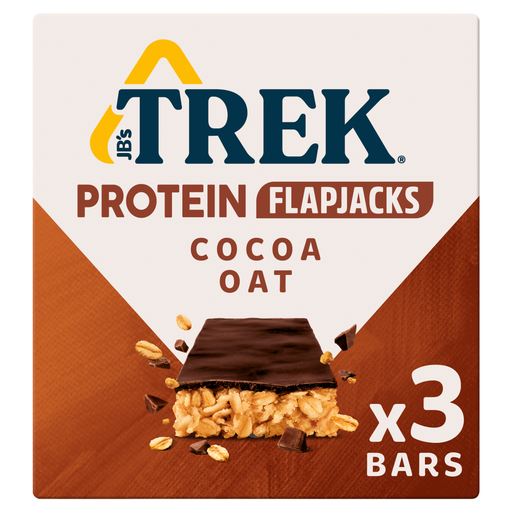
TREK Cocoa Oat Protein Flap Jacks, 3 x 50 g
An oat-based, protein-focused flapjack. Confirm the gluten-free claim on this flavour’s pack and read its soya and precautionary allergen information.
View on Joybuy
 No image available
Nature Valley Protein Peanut & Chocolate Bars, 4 x 40 g
Nature Valley names this variant as gluten free and states that each 40 g bar provides around 10 g protein and 4 g fibre. It contains peanut, soya and milk and may contain tree nuts; check the current pack.
View on Joybuy
 No image available
Nature Valley Protein Salted Caramel Nut Bars, 4 x 40 g
Nature Valley names this variant as gluten free. It is a nut-containing protein-bar option; check the current pack for almonds, peanuts, milk, soya and any other allergen information.
View on Joybuy
 No image available
Nature Valley Protein Peanut & Chocolate Cereal Bars, 8 x 40 g
An eight-bar pack of the Peanut & Chocolate variant that Nature Valley names as gluten free. The brand states around 10 g protein and 4 g fibre per 40 g bar; it contains peanut, soya and milk and may contain tree nuts.
View on Joybuy
Frequently asked questions
What does “gluten free” mean on a UK snack-bar pack?
The Food Standards Agency’s gluten-free designation means no more than 20 mg/kg (20 ppm) gluten in the food as sold to the final consumer. For coeliac shopping, look for that explicit claim on the current pack rather than relying on a brand name or a wheat-free description.
Is a wheat-free bar automatically suitable for coeliac shopping?
No. Wheat-free wording does not replace a gluten-free claim. Check the full ingredients list for the named cereals used and read any precautionary gluten statement on the individual bar.
Can I choose an oat-based snack bar?
Choose it for coeliac shopping only when that individual product is explicitly labelled gluten free. Oats in a recipe do not establish the finished bar’s gluten-free status, and oats still need to be identified in its allergen information.
What if a bar says “may contain wheat”?
Do not read the statement as an assurance that the bar is suitable. Coeliac UK says precautionary wording, including shared-line statements, indicates an unavoidable cross-contamination risk identified by the manufacturer. Contact the manufacturer for current information if you are unsure about that product.
Does gluten free also mean nut-free, dairy-free or vegan?
No. Nature Valley Protein Peanut & Chocolate contains peanut, soya and milk, while the Nakd Cocoa Orange fruit-and-nut bar contains cashews. Check each product’s separate allergen and dietary declarations, even when its gluten-free claim meets your first requirement.


