
24/7 Customer Support

Free returns

Same-day & Next-day Delivery

Quality Guaranteed

Unlock Your Welcome Offers: FREE Delivery | Up to 80% OFF | Free 30-day JoyPlus trial
Download the APP
Buying golf equipment can quickly become expensive, particularly when product listings focus on impressive-sounding features rather than practical details. A rangefinder may advertise long-distance measurement but have awkward controls. A golf trolley may look compact but lack useful storage. Even a golf club set can be unsuitable if the configuration does not match your playing level.
This guide helps UK golfers compare golf equipment by use case, portability, construction and running costs, with practical recommendations for beginners, regular players, families and indoor users.
A golf rangefinder with slope measurement, high magnification and flag-locking may sound appealing, but not every golfer needs all three. Slope-adjusted distances may also need to be disabled for tournament play. Check whether the device provides a straightforward mode for ordinary distance measurement and whether the controls are usable while standing on the course.
A golf push trolley can fold flat and still be inconvenient if its wheels cannot be removed or its handle is difficult to adjust. Before buying, check the folded dimensions, wheel-release system, frame material and storage features. This matters for golfers using smaller car boots or club lockers.
Terms such as “long distance”, “high performance” and “premium feel” are not enough to compare products. Look for measurable details instead: the number and type of clubs, ball quantity, battery connection, magnification, wheel count and included accessories. Product descriptions should also make safety and care instructions clear.
For a rechargeable golf rangefinder, inspect these specifications:
Laser devices should not be pointed at the sun or used by children without direct adult supervision. Check the supplied safety information before use.
An aluminium frame is useful where low carrying weight and resistance to rust are priorities. A two-wheel golf trolley can be compact and simple to manoeuvre, while a three-wheel golf trolley generally offers a broader base and additional balance.
Check for:
A wider wheelbase can be helpful on uneven paths, but the trolley should still be lifted and stored according to the manufacturer’s instructions.
A golf club set should provide a sensible progression of clubs rather than simply a large quantity. The Ben Sayers M8 set listed here includes a driver, 5 hybrid, 7 and 9 irons, sand wedge and mallet putter, together with a stand bag. This configuration gives a beginner access to several common shot types without requiring separate purchases immediately.
Golf balls also vary by construction and compression. Extra-soft, low-compression golf balls may be a practical option for beginners and casual golfers seeking a softer feel. However, ball choice depends on swing speed, launch preferences and the course conditions.
For home practice, an indoor putting mat with an automatic ball return can make repeated drills more convenient. Check the available floor space, mat backing and whether the surface lies flat before setting it up.
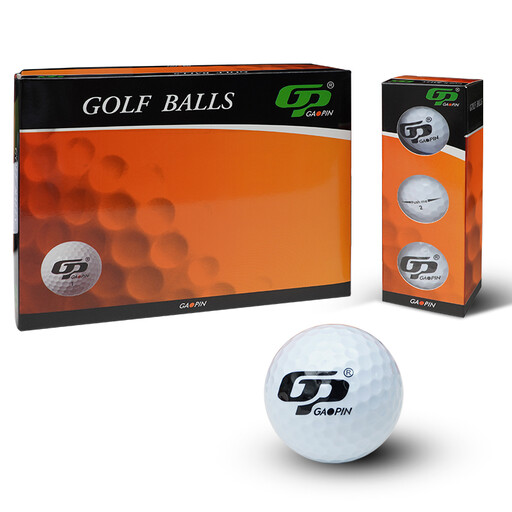
Why This Fits Their Persona: A 12-piece pack gives new golfers and occasional players a straightforward way to replace lost balls without committing to specialist equipment.
The listing specifies extra-soft construction, a high-speed core and low-spin design rather than relying only on vague distance wording.
12 balls per pack; extra-soft feel and low-compression positioning for beginners and casual play.
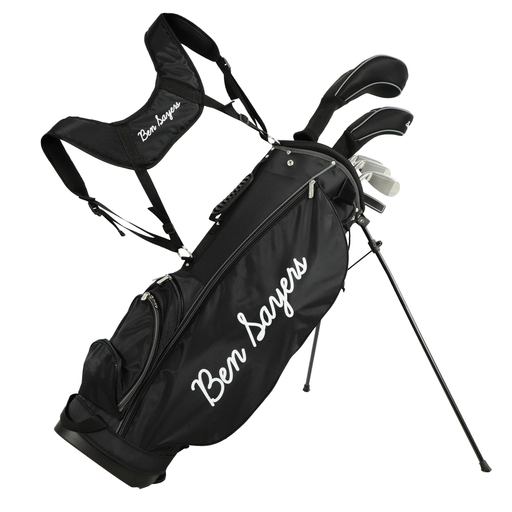
Why This Fits Their Persona: Regular golfers wanting a coordinated set may value the included clubs, stand bag and dedicated storage for course essentials.
The set contents are clearly listed, including the driver loft, hybrid, irons, wedge and putter, making comparison easier than shopping by club count alone.
Six clubs; lightweight stand bag; cooler pocket, valuables pocket, rain hood and one-year manufacturer warranty listed.
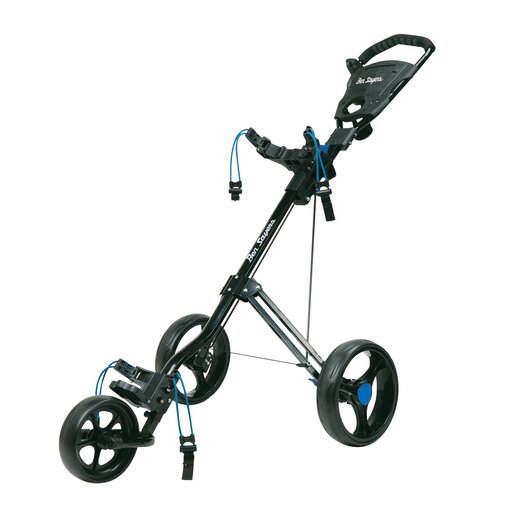
Why This Fits Their Persona: Golfers carrying equipment across full rounds may prefer a three-wheel design with course storage and a brake.
The specifications identify the aluminium frame, quick-release wheels, wide wheelbase, adjustable handle and click-on, click-off footbrake.
Three wheels; integrated drinks, scorecard, tee and ball storage; umbrella holder included.
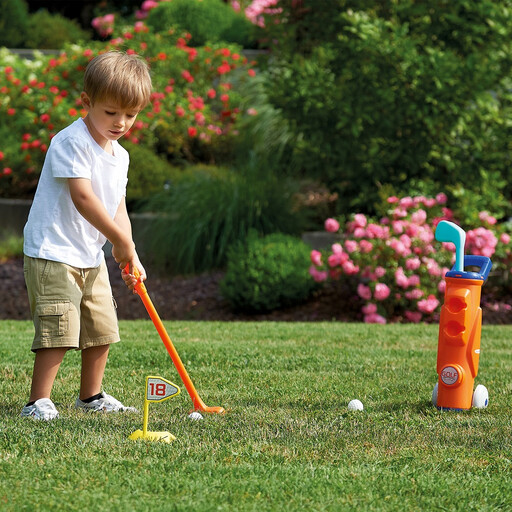
Why This Fits Their Persona: Families introducing children to golf can use the compact wheeled bag and practice hole at home, in the garden or at the park.
It is clearly positioned as a children’s plastic set rather than adult golf equipment, with an age recommendation from three years and a small-parts warning.
Two child-sized clubs, two balls, a practice hole and a two-wheel bag; no batteries required.
A golf accessory should solve a specific problem rather than add unnecessary weight. A golf stand bag is practical for golfers who walk and want quick access to clubs. A rechargeable rangefinder reduces the need to carry spare disposable batteries. A golf skort with quick-drying fabric and zipped pockets may suit women golfers who want storage for small essentials during outdoor activity; check the size chart and fabric-care instructions before ordering.
For a second trolley option, the Ben Sayers two-wheel push golf trolley includes removable wheels, a weather-proof scorecard holder and a drinks bottle with holder. For mixed indoor and outdoor use, the ochama TR1 combines viewing and distance-measuring functions, with Type-C charging listed in its product description.
We have compiled a complete, real-time list of products that fully satisfy these strict selection criteria and UK safety regulations.
It can be useful if you regularly play courses where judging distances is difficult. Beginners should prioritise simple controls, clear optics and a rechargeable battery. Slope mode and high magnification are optional features, not automatic necessities.
Its usable lifespan depends on weight carried, storage conditions, wheel wear and exposure to wet ground. Dry the frame after wet rounds, check wheel fixings and store it folded in a dry place. Removable wheels and replaceable components can make long-term storage easier.