
24/7 Customer Support

Free returns

Same-day & Next-day Delivery

Quality Guaranteed

Unlock Your Welcome Offers: FREE Delivery | Up to 80% OFF | Free 30-day JoyPlus trial
Download the APP
Choosing between Good Boy dog treats and chews can be more complicated than it first appears. Packs may highlight “natural” ingredients, low fat or dental benefits, but these phrases do not tell you whether a chew is suitable for your dog’s age, size, chewing style or daily diet.
The practical approach is to look beyond flavour and packaging. Check the ingredient list, analytical constituents, feeding instructions and warnings before buying.
Natural dog treats can still contain rawhide, wheat, cereals, glycerine or relatively high levels of fat. A natural ingredient is not automatically appropriate for a puppy, a dog with food sensitivities or a pet that swallows chews quickly.
For example, some Good Boy dog chews contain rawhide for a firmer, longer-lasting texture, while others, such as the Duck and Rice Sticks, are rawhide-free. Always compare the full composition rather than relying on front-of-pack wording.
Chewing may provide a mechanical abrasive action that helps remove some surface build-up, but dental dog chews should not be treated as a replacement for veterinary advice or a regular oral-care routine. Select a size your dog can handle, supervise chewing and remove small or broken pieces.
Treats should complement a complete diet, not replace meals. Several products advise that treats should not exceed 10% of a dog’s daily calorie intake. This matters particularly when combining training rewards, chew treats and table scraps.
A low-fat option may be useful for a weight-conscious dog, but the appropriate portion still depends on the dog’s size, activity and overall food intake.
Many of the listed Good Boy dog treats are not suitable for puppies under four months old. Other products have narrower guidance. Good Boy Chicken Fillets, for example, are listed for adult dogs over nine months old weighing 7–12kg, while the Jumbo Chicken with Carrot Stick has specific guidance for dogs in the same weight range.
Do not assume that a product labelled “for all breeds” is suitable for every life stage. Read the product instructions and check the packaging before serving.
A small braid may suit a smaller dog, while large pressed bones, knotted bones and giant twists are designed for more substantial chewing. The chew should be larger than your dog’s mouth and appropriate for its weight and chewing style.
Rawhide dog chews generally offer a firmer, longer-lasting texture. However, dogs that swallow large pieces may not be suitable candidates for hard chews. Supervision is essential, and any chew that becomes small enough to swallow should be removed.
Use the analytical constituents to compare products objectively:
These figures are useful for comparison, but they do not turn a complementary treat into a complete or therapeutic food.
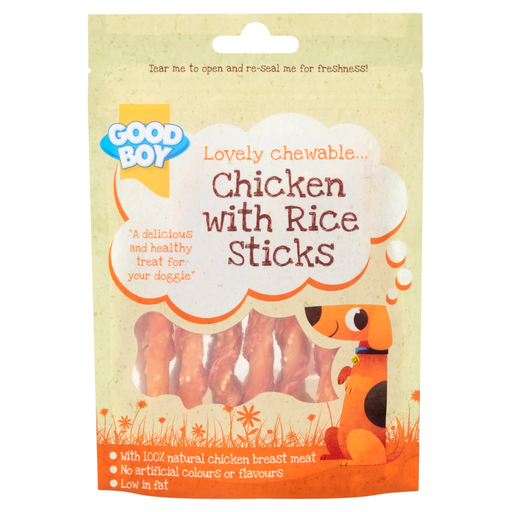
Why This Fits Their Persona: A practical everyday option for owners wanting one product for rewards, occasional chewing and portion-controlled treats.
Its stated fat content is 1.5%, and the product information gives clear guidance for treats and training rewards.
77% chicken breast, 7% rice and 1.5% fat; resealable storage is useful for repeated reward sessions.
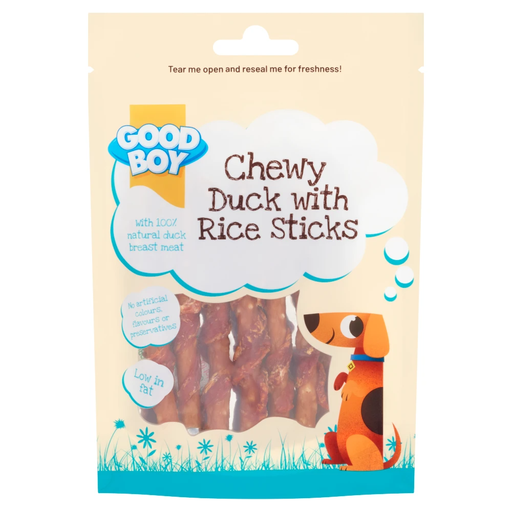
Why This Fits Their Persona: Suitable for owners prioritising a rawhide-free recipe, duck flavour and a lighter chew for dogs over four months.
The stated recipe is rawhide-free and contains no artificial colours, flavours or preservatives, rather than relying only on broad “natural” wording.
Duck breast is listed at 79%, with 32% crude protein and 3% fat; rice sticks add crunch.
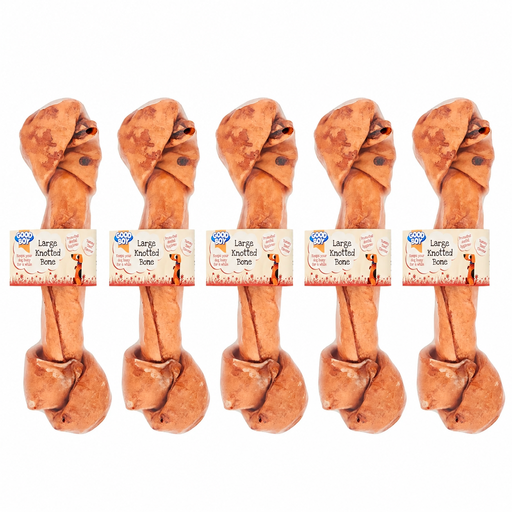
Why This Fits Their Persona: A multipack format for medium and large dogs that enjoy firm chewing and need regular boredom-relief activities.
The pack specifies five 100g knotted bones and provides warnings for dogs that swallow treats without chewing.
Five individually described 100g chews, with a knotted shape intended to encourage chewing and engagement.
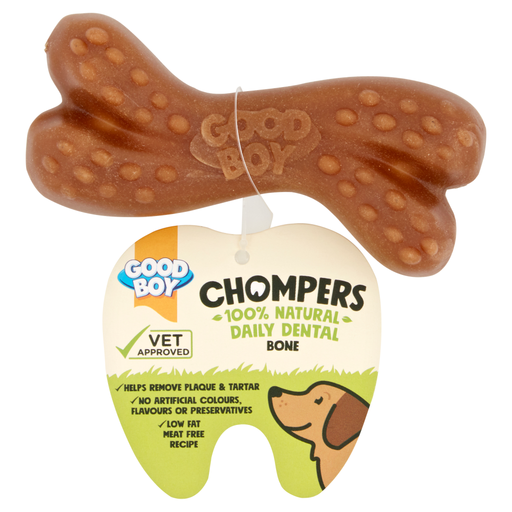
Why This Fits Their Persona: A meat-free, low-fat choice for owners looking to add a chew to an adult dog’s routine while avoiding rawhide.
The composition is clearly listed as vegetable-based, with feeding guidance of one chew daily and suitability from four months.
Meat-free recipe, 2% fat and ingredients including dried mint, parsley and aloe vera.
We have compiled a complete, real-time list of products that fully satisfy these strict selection criteria and UK safety regulations.
Before giving any Good Boy dog treats, check the following:
Many products are marked as unsuitable for puppies under four months. Some have additional age or weight restrictions, so check the individual label. Puppy-safe dog treats over four months still need to be appropriately sized and supervised.
Lifespan depends on the chew’s size, texture and your dog’s chewing behaviour. Rawhide twists, pressed bones and knotted bones generally provide a firmer chewing format than soft sausages or small training rewards. Replace a chew when it becomes small, damaged or easy to swallow.
Some options have relatively low stated fat levels, including Duck and Calcium Bones at 1%, Chicken with Rice Sticks at 1.5% and Duck Twister at 2%. However, total calories and portion size still matter. Use low-fat dog treats sparingly and adjust meals if necessary, following advice from your veterinary practice for specific dietary needs.