
24/7 Customer Support

Free returns

Same-day & Next-day Delivery

Quality Guaranteed

Unlock Your Welcome Offers: FREE Delivery | Up to 80% OFF | Free 30-day JoyPlus trial
Download the APP
When a household item breaks or a DIY project hits a snag, reaching for a reliable adhesive is often the first step. The Gorilla Glue range is a familiar sight in many UK homes, but with various formulas available—from clear to super glue to epoxy—choosing the correct one can be confusing. Using the wrong type can lead to a weak bond or a messy finish.
This guide is designed to help you understand the key differences between the main types of Gorilla Glue. We will outline their specific strengths and intended uses, enabling you to select the right product for your repair, craft or construction task with confidence.
Before you buy, consider these three factors to ensure you get the performance you need.
The first step is to identify the surfaces you need to join. While many adhesives are multi-purpose, some are formulated for specific materials. For instance, a flexible craft glue might be perfect for paper and fabric, but you'll need a more robust glue for plastic or metal. Porous surfaces like wood and unglazed ceramic absorb glue differently than non-porous surfaces like glass or metal. Checking the product's compatibility list is crucial for creating a lasting bond.
Adhesives offer a trade-off between how quickly they set and the ultimate strength of the bond. A fast setting glue, such as a cyanoacrylate-based super glue, is ideal for small, quick repairs where you can hold the pieces together for less than a minute. For larger or more structural jobs, a heavy duty adhesive like an epoxy adhesive is often a better choice. It may take longer to cure fully, but it provides superior strength and gap-filling properties.
Where will the bonded item be used? For projects exposed to the elements, moisture or temperature fluctuations, a water-resistant glue is essential. Many adhesives are suitable for indoor use only, while others are specifically designed to withstand outdoor conditions. Always check if the product is rated for exterior use, especially for garden repairs, outdoor furniture or items used in bathrooms and kitchens.
Here are our recommendations from the Gorilla Glue range, each suited to different tasks and materials.
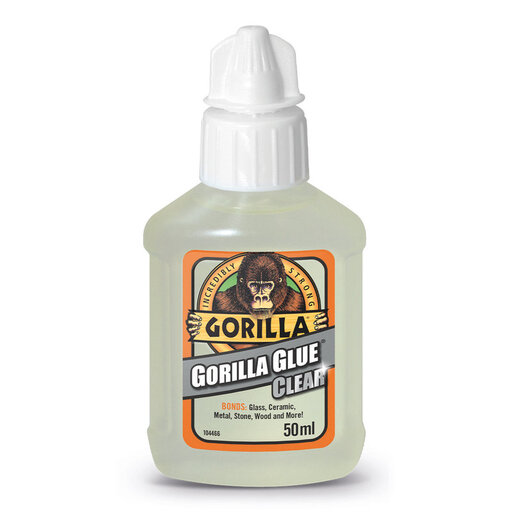
Why It Stands Out This adhesive’s main advantage is its formulation. As a clear glue, it dries transparently without foaming or expanding, making it an excellent choice for projects where the final appearance is important. It provides a strong, permanent bond that remains flexible, allowing for slight movement without cracking.
Pros
Who is it for? This is a great all-rounder for crafters and DIY enthusiasts who need a strong, invisible bond. It's particularly useful for repairing glassware, fixing jewellery or any project where a clean, professional finish is a priority.
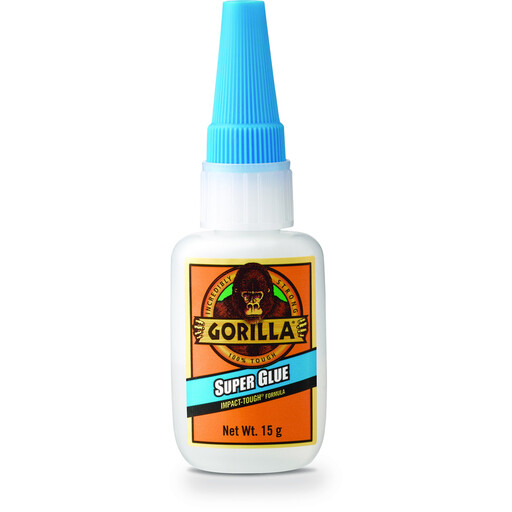
Why It Stands Out When speed is essential, this super glue delivers. It sets in just 10-45 seconds, eliminating the need for clamping. Its formula is reinforced for increased impact resistance and strength, meaning it can withstand knocks and drops better than many standard cyanoacrylate adhesives. The anti-clog cap is a practical feature that helps prevent the nozzle from drying out between uses.
Pros
Who is it for? Ideal for homeowners and anyone needing to perform quick, on-the-spot repairs. It excels at fixing broken ceramic mugs, reattaching rubber soles on shoes or mending small plastic components where a rapid, strong glue is required.
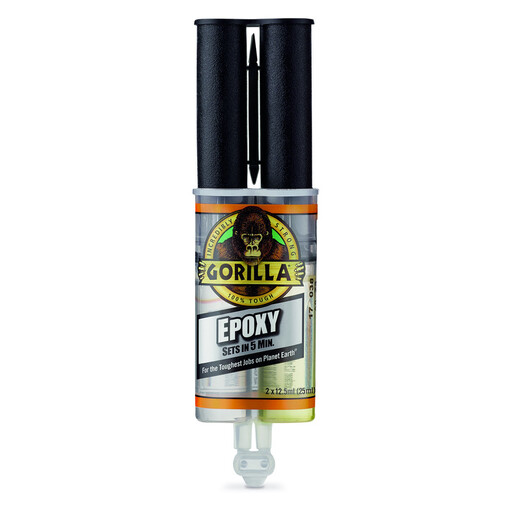
Why It Stands Out For the most demanding jobs, this two-part epoxy adhesive offers exceptional strength and durability. The syringe dispenses the resin and hardener evenly, which, when mixed, create a permanent, waterproof and gap-filling bond. It sets in five minutes and dries crystal clear, providing a tough finish that can be sanded and painted once fully cured.
Pros
Who is it for? This is the go-to choice for serious DIY projects and tough repairs. It's perfect for bonding difficult materials like metal to plastic, repairing large cracks in rigid materials or any application where maximum strength and gap-filling capabilities are non-negotiable.
If your project involves specific materials like large glass panels or you're exploring other specialised options, a different type of adhesive might be what you need. We've curated a selection of adhesives suitable for various applications.
Discover more in our Glass adhesive category.
Which type of Gorilla Glue offers the strongest bond? The term "strongest" depends on the application. For sheer tensile strength and structural rigidity, the Gorilla Two-Part Epoxy Adhesive is typically the choice for heavy-duty tasks. It creates an incredibly tough, gap-filling bond. For resisting sudden impacts and drops on smaller items, the Gorilla Super Glue with its Impact Tough formula is highly effective.
Is Gorilla Glue fully waterproof? Many Gorilla Glue products are described as water-resistant, which means they can withstand intermittent exposure to moisture, making them suitable for many indoor and outdoor repairs. The two-part epoxy and the original polyurethane formula offer high levels of water resistance once fully cured. For applications involving continuous submersion in water, it is always best to check the product's specific technical data sheet to ensure suitability.
How can I choose the right glue for plastic? "Plastic" is a broad term for many different polymers. Some Gorilla Glue products, like the two-part epoxy, are formulated to bond well with a wide range of plastics. However, certain plastics like polyethylene (PE) and polypropylene (PP), often used in car parts and food containers, can be difficult to glue. For these materials, you may need a specialised plastic primer or an adhesive designed specifically for them. Always check the product label for material compatibility.