
24/7 Customer Support

Free returns

Same-day & Next-day Delivery

Quality Guaranteed

Unlock Your Welcome Offers: FREE Delivery | Up to 80% OFF | Free 30-day JoyPlus trial
Download the APP
As a dog owner, there's nothing more concerning than seeing your companion struggle with digestive issues, itchy skin or general discomfort. If you've noticed these signs, you're not alone. Many UK dog owners are exploring nutritional solutions, and choosing the right food can feel overwhelming. One option that many find helpful is a grain-free diet, which can be gentler on a dog's system.
This guide is designed to help you navigate the options for grain free dog food for sensitive stomachs. We will look at what makes a good hypoallergenic food, explain some key terms you'll see on the packaging and offer some practical recommendations to help you make an informed choice for your pet.
Before selecting a product, understanding what to look for can make all the difference. Here are a few key points to consider when comparing different foods.
The foundation of any good hypoallergenic dog food in the UK is its ingredient list. Look for a high-quality, named animal protein source (like salmon or turkey) listed as the first ingredient. This indicates that meat is the primary component. For dogs with sensitivities, single-protein recipes can be particularly beneficial as they make it easier to identify and avoid potential triggers. Also, check for easily digestible carbohydrates like sweet potato or peas, which provide energy without the grains that can sometimes cause irritation.
Not all dry dog foods are made the same way. You might come across terms like cold pressed dog food or "lightly baked."
Beyond the main ingredients, certain additives can provide extra support for a sensitive dog. Prebiotics such as Fructo-oligosaccharides (FOS) and Mannan-oligosaccharides (MOS) help to promote healthy gut bacteria. Omega-3 and Omega-6 fatty acids, often from sources like salmon oil or linseed, are vital for maintaining healthy skin and a glossy coat, which is particularly important if your dog's sensitivity manifests as skin irritation.
Here are a few standout grain-free options that align with the principles of high-quality, natural nutrition for dogs with sensitive systems.

Why It Stands Out: This Forthglade dog food uses a gentle cold-pressing technique to retain the natural goodness of its ingredients. With 29.5% salmon as the primary protein, it's a rich source of Omega-3. The recipe is also suitable for all life stages, from two months old, making it a versatile choice for those seeking a high-quality grain free puppy food.
Pros:
Who is it for?
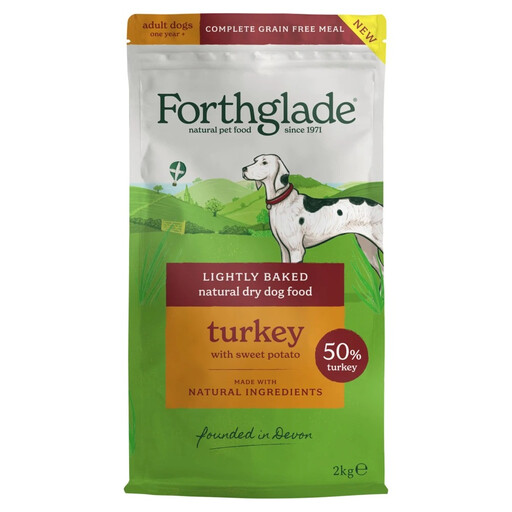
Why It Stands Out: This recipe is gently baked to lock in flavour and nutrients, creating a crunchy, satisfying kibble. It's a turkey and sweet potato dog food with a high protein content from 50% turkey. The inclusion of botanicals like chicory root and yucca extract is specifically aimed at supporting digestive health and reducing odours.
Pros:
Who is it for?

Why It Stands Out: Formulated specifically for dogs with sensitive tummies, this food from Naturo is 100% natural and hypoallergenic. It contains 50% turkey and easily digestible potato, with added Omega 3 and 6 from sunflower and salmon oils to promote healthy skin and a shiny coat. It's a straightforward, balanced option free from common irritants.
Pros:
Who is it for?
Every dog is unique, and what works for one may not be the perfect fit for another. If these recommendations aren't quite what you're looking for, or if you'd like to explore a wider variety of flavours and formulas, we have more to see.
Discover our full collection of Natural Grain Free Dog Food to find the ideal match for your dog's needs.
1. How do I know if my dog has a sensitive stomach? Common signs of a sensitive stomach can include inconsistent or loose stools, excessive flatulence, occasional vomiting after meals and a lack of appetite. Skin issues like itching and redness can also be linked to food sensitivities. If you notice any of these signs, it is always a good idea to consult your vet to rule out other health issues.
2. Is grain-free food always the right choice for dogs? Grain-free food is not a necessity for all dogs, but it can be an excellent solution for those with a specific intolerance or allergy to grains like wheat, corn or soy. The most important factor is the overall quality and digestibility of the ingredients. For many dogs with sensitive digestion, a high-quality, grain-free formula provides a noticeable improvement.
3. How should I switch my dog to a new food? A gradual transition is crucial to avoid digestive upset. Start by mixing a small amount of the new food (around 25%) with your dog's old food (75%). Over 7 to 14 days, gradually increase the proportion of the new food while decreasing the old until you have fully switched over. Always ensure fresh drinking water is available.