
24/7 Customer Support

Free returns

Same-day & Next-day Delivery

Quality Guaranteed

Unlock Your Welcome Offers: FREE Delivery | Up to 80% OFF | Free 30-day JoyPlus trial
Download the APP
Navigating the world of dog food can feel overwhelming. With aisles full of bags all promising the perfect diet, it's easy to get lost in the marketing clutter. The term "grain-free" is particularly prominent, but choosing the right grain-free dog food involves more than just picking a bag without wheat or corn. As a Joybuy Product Recommendation Officer, my role is to help you see past the hype and focus on what truly matters for your dog's nutrition.
Many well-meaning owners fall into a few common traps when shopping. Let's look at how to avoid them.
Before you make a choice, understanding a few core parameters will empower you to select a food that genuinely suits your dog's needs.
The ingredients are listed by weight, so the first few items make up the bulk of the food. For a high-quality diet, look for:
The choice between wet dog food and dry kibble often comes down to your dog's preferences and specific needs.
A hypoallergenic dog food is designed to minimise the risk of triggering an allergic reaction. While many are grain-free, the concept is broader. These diets often use:
If you suspect your dog has an allergy, a grain-free diet is a good starting point, but a specifically hypoallergenic formula may be required.
To help you find a starting point, here are a few options from our catalogue, matched to different owner and dog profiles.
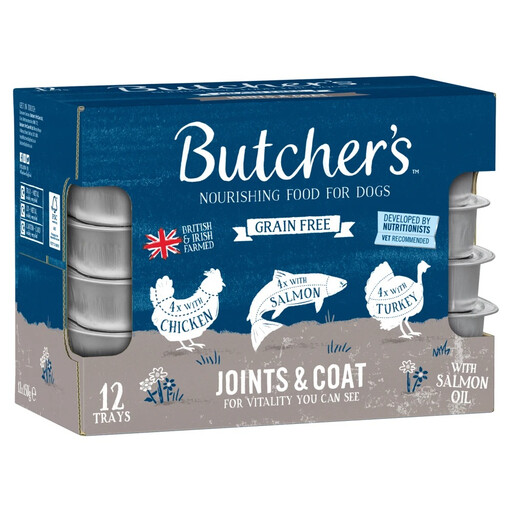
Why This Fits Their Persona: This is for the owner of an active or ageing dog who is looking for targeted nutritional support. Instead of buying separate supplements, this food integrates joint and coat care directly into their daily meals.
It moves beyond a vague "natural" claim by including specific functional ingredients like salmon oil (for Omega-3) and green-lipped mussel, a natural source of glucosamine and chondroitin.
A complete wet food diet that provides targeted support for two common concerns: joint mobility and skin/coat condition. Made with British and Irish farmed meat.
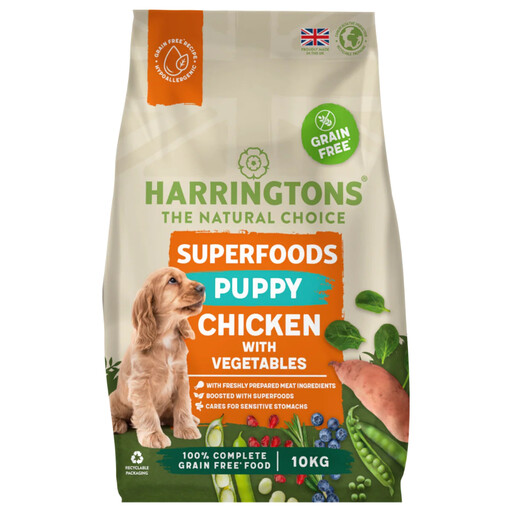
Why This Fits Their Persona: Ideal for owners bringing a new puppy home who want to start them on a high-quality, grain-free diet from the beginning. The formula is specifically designed for a puppy's high energy and growth requirements.
It avoids the protein quality trap by using meat as the number one ingredient, delivering 30% protein for healthy growth. It also replaces grains with nutritious sweet potato and peas.
A complete, hypoallergenic dry food with smaller kibble for puppy mouths. Contains salmon oil for Omega-3 and a blend of superfoods to support immune health.
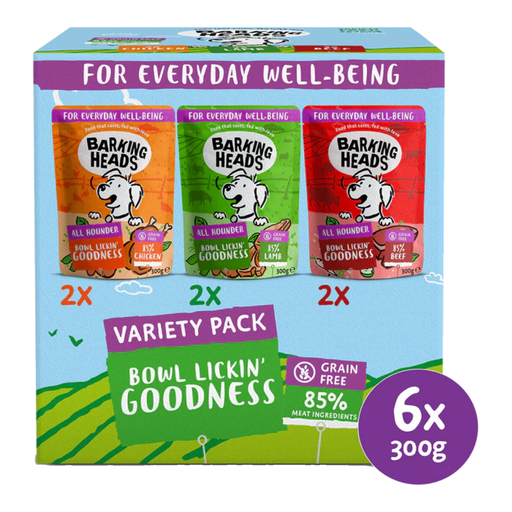
Why This Fits Their Persona: This is for the discerning owner who prioritises a diet rich in real meat. The variety pack is also perfect for keeping fussy eaters interested at mealtimes with a rotation of chicken, lamb and beef flavours.
It completely avoids the vague "natural" label by stating its composition clearly: "85% Chicken (60% Fresh Deboned Chicken, 25% Chicken Broth)". This transparency confirms the quality and quantity of the meat.
An exceptionally high meat content from fresh, deboned sources. The slow-cooking process helps retain nutrients and flavour and the formula is enhanced with vegetables and botanicals.
We have compiled a complete, real-time list of products that fully satisfy these strict selection criteria and UK safety regulations.
The key is to transition slowly to avoid digestive upset. Start by mixing a small amount of the new food (around 25%) with their old food (75%). Over the course of 7 to 10 days, gradually increase the proportion of the new food while decreasing the old until you are feeding 100% of the new diet.
Not necessarily. It is most beneficial for dogs that have a diagnosed grain allergy or a sensitivity that causes issues like skin irritation or an upset stomach. For most other dogs, high-quality grains can be a healthy part of their diet. If you are unsure or suspect your dog has a food allergy, it is always a good idea to consult with your vet.
Grain-free specifically means the food does not contain any grains like wheat, corn, barley or rice. Hypoallergenic dog food is a broader term for a diet formulated to minimise the chances of an allergic reaction. This is often achieved by using a limited number of ingredients or a "novel" protein (one the dog has not eaten before) and it may or may not also be grain-free.