
24/7 Customer Support

Free returns

Same-day & Next-day Delivery

Quality Guaranteed

Unlock Your Welcome Offers: FREE Delivery | Up to 80% OFF | Free 30-day JoyPlus trial
Download the APP
As a Joybuy Product Recommendation Officer, my role is to help you navigate the crowded pet food market. Choosing the right food for your dog, especially if they have sensitivities, can feel overwhelming. Many UK dog owners are turning to grain-free wet dog food to support their pet's digestion and overall well-being. However, not all options are created equal. This guide will help you identify common purchasing pitfalls and understand the key features to look for before you buy.
Navigating the dog food aisle can be tricky. Marketing language often obscures what is actually inside the tray or tin. Here are three common traps to avoid to ensure you are getting value and quality for your companion.
To make an informed choice, focus on these three non-negotiable factors. They are the true indicators of a quality wet dog food for sensitive stomachs.
This is arguably the most critical distinction. A complete dog food is formulated to provide all the nutrients your dog needs for a balanced daily diet. In contrast, a 'complementary' food is designed to be a topper or mixer and is not nutritionally sufficient on its own. For a primary food source, always ensure the packaging explicitly states it is a "complete meal" or "complete food".
The ingredients list is your most reliable source of information. Look for a high percentage of a specific, named meat source (e.g., "Duck (75%)") listed as the first ingredient. This transparency is a sign of a quality recipe. Be cautious of vague terms like "meat derivatives," which do not specify the source or quality of the protein. A high percentage of named meat ensures your dog is getting the protein they need to thrive.
For dogs with digestive issues or skin irritations, a hypoallergenic dog food can be beneficial. This term generally means the food is formulated without common allergens. Check the label to ensure it is free from:
A simple, clean ingredient list is often the best indicator of a food suitable for sensitive dogs.
Based on the criteria of clear labelling, high-quality ingredients and complete nutrition, here are some recommendations matched to different owner needs.
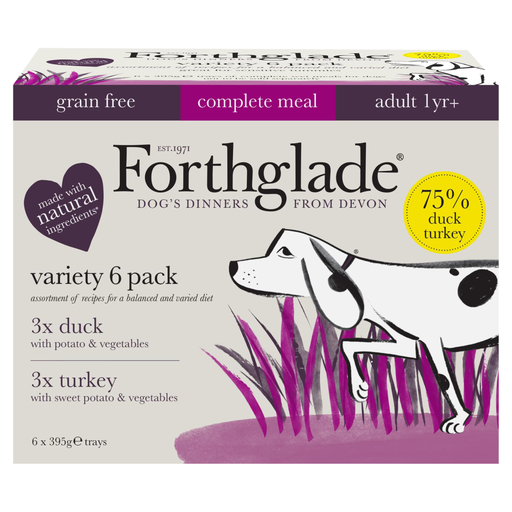
Why This Fits Their Persona: Ideal for owners new to grain-free diets. This smaller dog food multipack offers two different proteins (duck and turkey), allowing you to see which your dog prefers without committing to a large case of a single flavour.
The ingredients list is transparent, stating 75% named meat (duck or turkey). It is explicitly a complete meal and uses wholesome vegetables instead of grain fillers.
Hypoallergenic recipe gentle on sensitive stomachs. Includes glucosamine and chondroitin for joint support.
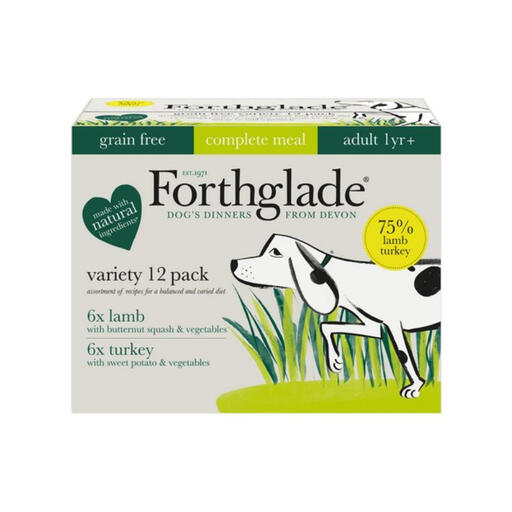
Why This Fits Their Persona: For the owner who already knows their dog thrives on a grain-free diet and wants to buy in bulk. This 12-tray pack offers better value and ensures you are always stocked with a high-quality, reliable meal.
This food avoids the "natural" ambiguity with a clear composition: 75% lamb or turkey. It is a nutritionally complete food, not a complementary filler, and is genuinely hypoallergenic.
Excellent value in a 12-pack format. The recipes are gently steamed to retain nutrients and flavour, making them highly palatable.
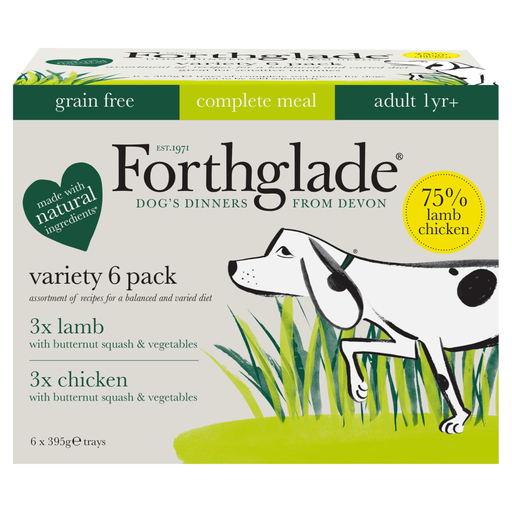
Why This Fits Their Persona: Perfect for owners of picky eaters or those who like to rotate proteins. This pack contains both lamb and chicken recipes, helping to keep mealtimes interesting and potentially reducing the risk of developing new food sensitivities.
This pack avoids low-quality fillers by using butternut squash and vegetables alongside a 75% meat content. It is a complete and balanced meal, not just a tasty but incomplete topper.
Features two distinct protein sources (lamb and chicken) in one pack. The recipe includes botanicals and chicory root extract to aid digestion.
We have compiled a complete, real-time list of products that fully satisfy these strict selection criteria and UK safety regulations.
Here are answers to a few common questions UK dog owners have about grain-free wet food.
A gradual transition is key to avoiding digestive upset. Start by mixing a small amount of the new food (around 25%) with their old food (75%). Over 7-10 days, gradually increase the proportion of the new food while decreasing the old food until you have fully switched over.
Neither is inherently "better"; they simply have different benefits. Wet food is highly palatable and has a high moisture content, which is great for hydration. Dry kibble can be more convenient to store and can help with dental hygiene through chewing. Many owners find success by feeding a combination of both.
The correct amount depends on your dog's age, weight, breed and activity level. Always refer to the feeding guide on the product's packaging as a starting point. If you are mixing wet and dry food, remember to reduce the portion of each to avoid overfeeding. If you have any concerns about your dog's weight or health, it is always a good idea to consult your vet.