For grand strategy games, choose the screen format that fits your maps and desk, then look for features that could replace equipment you would otherwise plug in. An ultrawide with built-in speakers may avoid a separate powered speaker setup; USB-C charging can free a compatible laptop’s charger socket, but neither feature removes the monitor’s own mains lead. Check laptop video and charging compatibility before relying on one cable, and remember that a desktop PC still needs its own power connection.
Who this setup suits
Laptop strategy players short on sockets
If your laptop supports video output and charging over USB-C, a suitable monitor may let you put its separate charger away. Check the laptop’s video-output support and charging requirements against the monitor before making that your plan.
Desktop players simplifying a crowded desk
Your PC and monitor still need mains power, but built-in speakers could replace a separate powered speaker setup. A monitor with a KVM switch may also help you share controls when you use a second computer.
Players who want room for maps and menus
A 3440 × 1440 ultrawide has more horizontal pixels than a 2560 × 1440 QHD screen, which may suit a map alongside persistent panels. Check how your games display at the chosen aspect ratio and whether the wider screen fits your desk.
What matters when choosing
Start with what could actually free a socket in your setup, then decide how much horizontal screen space you can accommodate. Treat refresh rate as a separate choice for the other games you play.
| Concern |
What to check |
Who this matters to |
| Sockets and cables |
Check USB-C video support and Power Delivery wattage against your laptop. Look for built-in speakers if you would otherwise use powered speakers. |
If I play on a laptop, I want to leave its charger unplugged without losing video output; if I use a desktop, I may want to avoid a separate speaker plug. Around 46% of consumers put connection and peripheral consolidation first. |
| Map and menu space |
Compare aspect ratio and resolution, then measure the available desk width; a 21:9 screen needs a different fit from a 16:9 screen. |
I want room to keep a strategy map and its panels visible, provided the screen fits where I sit. Horizontal workspace is the primary concern for around 36% of consumers. |
| Display fit and mixed gaming |
Compare screen size, stand adjustment and refresh rate with your desk and the games you play. |
I need a display that fits my desk and also suits the faster-paced games in my library, even if it gives me less map width. Around 18% of consumers prioritise that balance. |
Common buying mistakes
-
Assuming any USB-C port enables one-cable use
A USB-C connector alone does not establish that the laptop can send video through it or accept the monitor’s charging output.
Check the laptop’s video-output and charging specifications alongside the monitor’s stated Power Delivery wattage. Do not infer a wattage from a listing that says only USB-C.
-
Expecting a monitor to remove every mains lead
The monitor needs wall power, and a desktop gaming PC still needs its own power lead. Charging a compatible laptop or replacing powered speakers addresses only those particular plugs.
Count the devices you actually plug in, then favour integrated features only where they replace something in your setup.
-
Comparing screen diagonal alone
A 34-inch 21:9 display and a 27-inch 16:9 display offer different workspace shapes and occupy different amounts of desk width.
Compare resolution and aspect ratio, and measure the space available before choosing an ultrawide for its horizontal room.
-
Letting refresh rate settle the socket question
A higher refresh rate may matter for mixed gaming, but it does not establish whether a monitor has suitable charging, speakers or multi-device controls.
Set your connection and desk-fit requirements first, then compare refresh rates among displays that meet them.
Brands to consider for these monitor features
LG
Worth considering when you want a 34-inch ultrawide that combines several desk connections and peripherals.
- LG UK lists the 34BA75QE-B with a 3440 × 1440 screen, 90W USB-C Power Delivery and built-in speakers, as well as RJ45 and KVM functions.
- Those are features of the 34BA75QE-B, not a specification shared by every LG monitor. Check charging compatibility with your laptop.
Samsung
Relevant if you want a curved ultrawide with built-in audio and controls for more than one source.
- Samsung Business UK describes the S65UC as a 34-inch 21:9 display with built-in speakers, USB-C connectivity and a KVM switch.
- If you need it to replace a particular laptop charger, confirm its Power Delivery output in the model’s product information or manual.
Dell
Relevant if a more compact display and laptop hub take priority over an ultrawide view.
- Dell UK lists the U2724DE with a 27-inch QHD screen, 120Hz refresh rate, Thunderbolt 4 and 90W Power Delivery.
- Dell lists no speakers for that configuration, so plan how you will hear game audio if you want to avoid a separate powered speaker setup.
Joybuy monitor options
These monitors offer different ways to approach the same desk decision: wide displays for maps and panels, or a 16:9 screen with built-in audio. Check each model’s connections and your available desk space before counting on it to replace a charger or another powered device.
 No image available
Acer X Predator X49X 49-inch QD-OLED monitor
Consider this 32:9 screen if you want an especially wide single display for maps and panels and have room for it on your desk.
The listed variant has a 1800R curve and 240Hz refresh rate. Check its physical dimensions before buying, and confirm USB-C video and charging compatibility if you plan to use it with a laptop.
View on Joybuy
 No image available
LG UltraGear 34GX900A-B 34-inch OLED monitor
The 34-inch WQHD format is an option if you want an ultrawide view without moving to a 49-inch screen.
The listed variant has a 240Hz refresh rate. Check its USB-C charging output against your laptop’s needs. For long sessions with static game panels, follow the model’s OLED screen-care instructions.
View on Joybuy
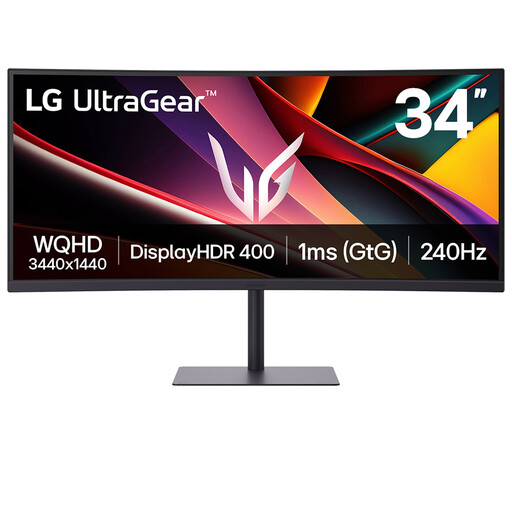 No image available
LG UltraGear 34G630A-B 34-inch VA monitor
Its 34-inch WQHD format suits a desk where horizontal workspace matters more than keeping to a smaller 16:9 screen.
The listed variant has a 240Hz refresh rate. If reducing laptop cables is your priority, check its USB-C video and charging specifications against your laptop rather than relying on the screen format.
View on Joybuy
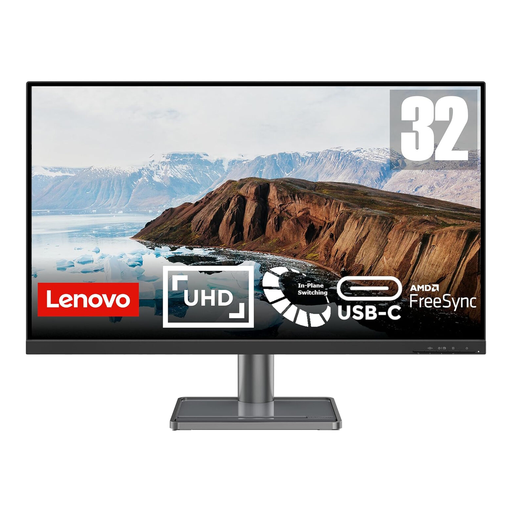 No image available
Lenovo L32p-30 31.5-inch 4K IPS monitor
Consider this 16:9 display if you want a large 4K screen rather than the wider shape of an ultrawide.
USB-C appears in the listed variant name. Check its Power Delivery output and your laptop’s video and charging requirements before planning to remove a separate charger; measure the desk space it needs, too.
View on Joybuy
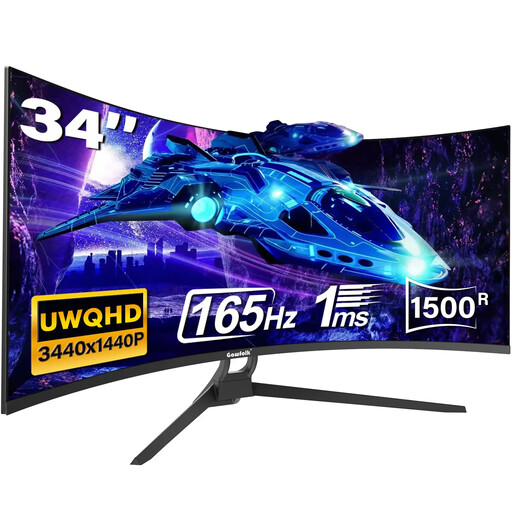 No image available
Gawfolk 34-inch UWQHD curved monitor, 165Hz
This 21:9 screen is an option when horizontal map and menu space is the main reason to change monitors.
The listed variant has a 1500R curve. Its title mentions Type-C, while the detailed port list names HDMI and DisplayPort; confirm the exact USB-C functions and audio arrangements before treating it as a way to reduce powered devices.
View on Joybuy
Questions about monitors and sockets
Can a USB-C monitor free a plug socket?
Yes, if it can charge your compatible laptop while receiving its video signal, you may be able to leave the laptop’s separate charger unplugged. The monitor still needs mains power, and it does not replace a desktop PC’s power lead.
What does my laptop need for a one-cable setup?
Your laptop needs compatible video output over USB-C and must accept the monitor’s available Power Delivery output. Check both devices’ specifications: the presence of USB-C ports alone does not establish that video and charging will work together.
Is a 34-inch ultrawide or a 27-inch QHD screen more useful for grand strategy games?
Choose a 3440 × 1440 ultrawide if extra horizontal room for maps and panels matters to you and the screen fits your desk. A 2560 × 1440 27-inch display takes a more compact approach; check how your games present their interface at either aspect ratio before deciding.


