
24/7 Customer Support

Free returns

Same-day & Next-day Delivery

Quality Guaranteed

Unlock Your Welcome Offers: FREE Delivery | Up to 80% OFF | Free 30-day JoyPlus trial
Download the APP
Choosing granola and breakfast cereal for a UK household can look simple until you compare ingredient lists, portion sizes, allergens and pack formats. A cereal that appears economical may contain a small number of portions, while a “high-protein” or “wholegrain” front label may not suit your actual breakfast routine.
As the Joybuy Product Recommendation Officer, I focus on practical details that help shoppers look beyond packaging claims and select a product that fits their budget, dietary needs and daily habits.
A family-size cereal box or breakfast cereal multipack may offer a lower cost per 100g, but only if the household will eat it before the flavour and texture deteriorate. Granola can lose its crunch after opening, especially when stored in a warm or humid kitchen.
Compare:
For occasional eating, a 400g pack may create less waste. For families or regular cereal eaters, an 800g multipack can be more practical.
Granola is commonly baked with sugar, syrup, honey or dried fruit to create clusters and sweetness. Chocolate granola and fruit-and-nut granola can also contain several energy-dense ingredients, including oils, seeds and nuts.
Check the nutrition panel per 100g rather than relying only on phrases such as “natural”, “wholesome” or “made with oats”. For example, the supplied Fuel 10K Chunky Granola Chocolate Loaded lists 20g of sugars and 459 kcal per 100g, while Jordans Simply Granola lists 17g of sugars and 418 kcal per 100g. These figures do not make either product unsuitable; they simply help you decide how much to serve and how often it fits your routine.
Breakfast cereals can contain or handle wheat, oats, barley, milk, soya, peanuts, almonds and other nuts. A fruit and nut granola may include several varieties, while chocolate cereal may contain milk or soya even when the product name highlights cocoa.
Always check the current packaging for:
This is particularly important when buying for children, shared households or anyone managing a food allergy.
Look at the ingredient order: ingredients are generally listed by weight. A product with wholegrain oats or wholegrain wheat near the beginning may be more aligned with shoppers seeking a wholegrain breakfast cereal.
The range varies considerably. Jordans Simply Granola contains 81% wholegrain oat flakes, while Fuel 10K Chunky Granola Chocolate Loaded contains 55% wholegrain oats. These are useful objective comparisons, but the overall choice should also reflect sugar, fat, fibre and portion size.
For a high-fibre cereal, check the fibre value per 100g. The Xiao Tian Fruit & Nut Oat Crunch lists 22.9g of dietary fibre per 100g, while Fuel10K Peanut Granola lists 6.1g per 100g. The products also have different formats and ingredients, so compare like with like.
If you are looking for protein granola, Fuel10K Peanut Granola lists 17.2g of protein per 100g. This can appeal to fitness-focused shoppers, but the stated portion is 50g, so the amount consumed in one bowl matters.
A useful approach is to compare:
Crunchy granola works well as a yoghurt topping or cereal for breakfast or snacking, while lighter flakes may be easier to eat with milk. Products containing clusters, chocolate pieces or dried fruit should be kept sealed in a cool, dry place.
For a busy working week, choose a format that suits the routine:
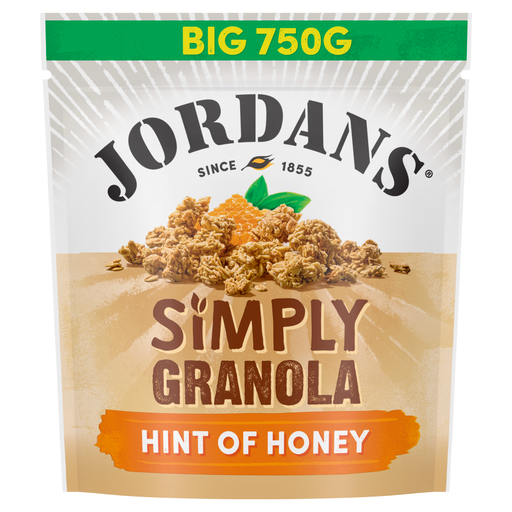
Why This Fits Their Persona: The 750g format suits regular weekday breakfasts, shared cupboards and shoppers who want a straightforward honey and oat option.
The label identifies wholegrain oat flakes at 81%, while the nutrition panel gives clear per-portion values for portion control.
750g pack; 81% wholegrain oat flakes; suitable for vegetarians according to the supplied product information.
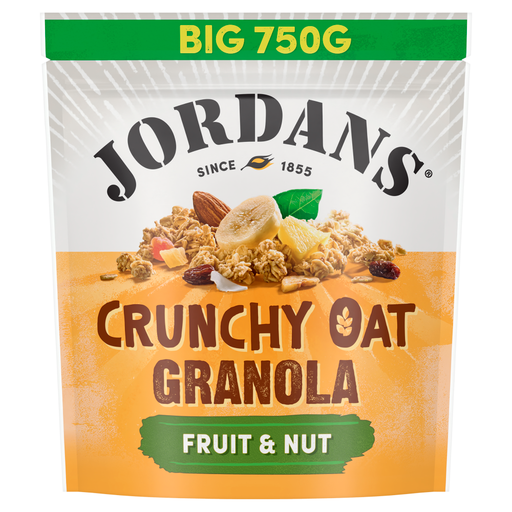
Why This Fits Their Persona: A suitable match for shoppers who prioritise varied texture and want dried fruit, coconut, seeds and almonds in one bowl.
The ingredient list specifies 66% wholegrain oat flakes and 17% dried fruit, rather than relying only on front-of-pack flavour language.
750g format; 10g protein per 100g; includes dried fruit, almonds and sunflower seeds.
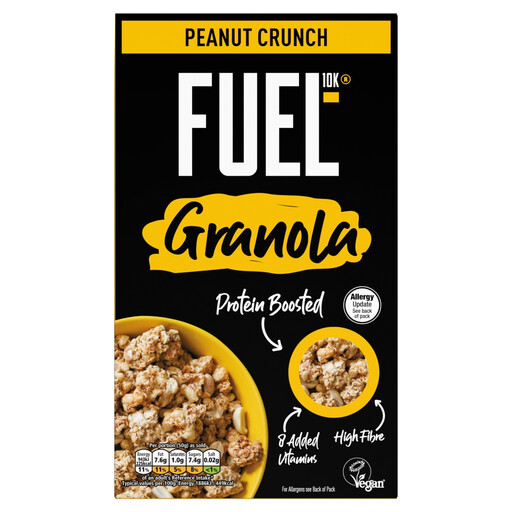
Why This Fits Their Persona: Designed for shoppers seeking a protein granola format for busy mornings, gym-bag snacks or yoghurt-based meals.
Its nutrition panel states 17.2g protein and 6.1g fibre per 100g, making the nutritional positioning easier to verify.
17.2g protein per 100g; contains wholegrain oats and wheat flakes; supplied information states vegan suitability.
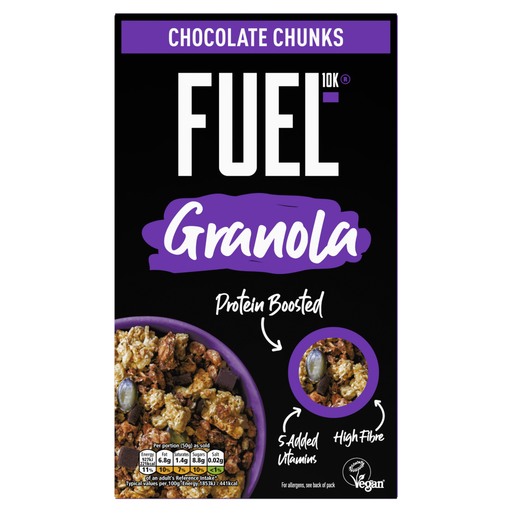
Why This Fits Their Persona: A 400g option for shoppers who want crunchy granola with cocoa and chocolate pieces for breakfast or snacking.
The label states 55% wholegrain oats and 20g sugars per 100g, helping chocolate-oriented shoppers judge the trade-off clearly.
400g pack; chunky oat clusters; contains 7g fibre and 8g protein per 100g.
We have compiled a complete, real-time list of products that fully satisfy these strict selection criteria and UK safety regulations.
Yes. Granola can be served with milk, yoghurt or fruit, or eaten dry as a snack. Because it is often energy-dense, check the serving guidance and avoid treating a handful as equivalent to a measured bowl.
Reseal the original bag or transfer the cereal to an airtight container. Store it in a cool, dry cupboard away from steam and direct sunlight. Check the best-before information on the packaging and discard the product if its smell, appearance or texture seems unusual.
It can reduce the price per 100g, but compare the actual pack weights and portion counts. A multipack is most useful for households that regularly eat the same cereal and can store it correctly before opening.