Single-portion granola makers
If your seed amounts are written in whole grams, a stated 1 g graduation and a quick way to zero a small bowl are more relevant to the task than a high maximum capacity.


For a single serving of granola with seeds measured in whole grams, start with a digital scale that states a 1 g graduation and has a tare function, so you can zero your bowl before adding ingredients. Choose a scale with a bowl if containing loose seeds matters more than compact storage. If your recipe calls for fractions of a gram, check the exact model's graduation rather than assuming a standard kitchen scale can display them.
If your seed amounts are written in whole grams, a stated 1 g graduation and a quick way to zero a small bowl are more relevant to the task than a high maximum capacity.
If you would rather keep seeds in a container while weighing, consider a scale with an included bowl or a reversible bowl-and-platform design. Check how that container is cleaned and stored.
If a recipe specifies fractions of a gram, check the graduation stated for the exact scale. A digital display alone does not establish that it can show those amounts.
For one-person granola, check the recipe's smallest required amount before choosing between a compact platform and a bowl design. Maximum capacity answers a different question from the scale's displayed graduation.
| Concern | What to check | Who this matters to |
|---|---|---|
| Whole-gram portions | Check the exact model's stated graduation and whether it can tare a bowl between ingredients. | When I add several seeds to one serving, I want to read each whole-gram amount without including the bowl's weight. Around 50% of consumers put portion control and quick zeroing first. |
| Containing loose seeds | Check whether a bowl is included, whether it works with tare and how its care instructions differ from those for the scale. | Loose seeds are easier for me to handle when I can weigh them in a container rather than on a bare platform; for around 25% of consumers, containment is the primary concern. |
| Storage and clean-up | Compare the model's dimensions and its instructions for wiping the platform or cleaning a removable bowl. | I have little space to store a scale and want to clear away stray seeds after use. Compact storage and clean-up come first for around 25% of consumers. |
A scale's 3 kg or 5 kg capacity describes its maximum load, not the smallest amount it displays. A model marked in 1 g steps should not be assumed to show fractions of a gram.
Check graduation separately from capacity, especially if your recipe specifies sub-gram amounts.
A flat platform and a scale supplied with a bowl offer different ways to handle loose seeds. The bowl also changes what you need to store and clean.
Decide whether you will use your own small bowl, an included removable bowl or a reversible bowl-and-platform design.
A stated graduation tells you what the display is designed to show; it does not establish how consistently a particular scale measures repeated loads.
If consistency is particularly important, look for an applicable independent test using calibrated weights and repeat readings, as described by Which? for its kitchen-scale testing.
Salter's Aquatronic is a compact platform-scale approach for measuring ingredients in your own bowl.
Beurer's KS 25 suits shoppers who want a dedicated bowl for loose ingredients.
Joseph Joseph's SwitchScale offers a reversible bowl-and-platform arrangement.
These kitchen scales are choices to consider for measuring seeds for a single serving. Compare each model's stated graduation and bowl or tare arrangement with the way you prepare your granola.
 No image available
Consider this 1L variant if you prefer to weigh seeds in a container. Before choosing it for sequential additions, check the bowl arrangement, stated graduation, tare function and cleaning instructions for the exact model.
 No image available
The stainless-steel variant is worth considering if you prefer a platform-style scale for your own bowl. Check its dimensions, stated graduation and tare function before relying on it for a small worktop or successive seed additions.
 No image available
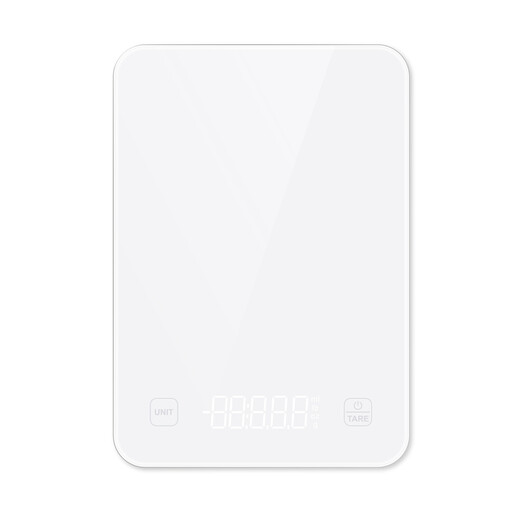
For a whole-gram recipe, compare the stated 1 g precision with the amounts you need to display; the 10 kg figure is its capacity, not a measure of small-portion accuracy. Check tare if you plan to zero a bowl, and confirm app compatibility if you intend to use its Bluetooth feature.
Not necessarily: 5 kg describes the maximum load, whereas the stated graduation and tare function are more useful checks for a small seed portion. Salter specifies 5 kg for its Aquatronic model and Beurer specifies 3 kg for the KS 25, but capacity alone does not tell you whether either can display fractions of a gram.
Put your bowl on the scale and use tare to reset the display before adding the first ingredient. If you want to measure the next seed separately in the same bowl, reset it again; confirm that the particular scale offers tare or add-and-weigh before buying it for this routine.
Follow the cleaning instructions for each part of the exact model. Salter describes its Aquatronic scale as wipe-clean, while Beurer describes dishwasher use for the KS 25 bowl as limited; neither statement makes the complete scale dishwasher-safe.
No. Graduation describes the displayed step size, not the consistency of repeated measurements. If that distinction matters for your recipe, look for a relevant independent test: Which? describes using calibrated weights and repeat readings when testing kitchen scales.