Who this is for

Budget households managing diabetes

For shoppers buying larger cereal packs who want to compare price per 100g and a realistic serving, while checking total carbohydrate rather than relying on a front-of-pack sugar claim alone. Diabetes UK advises checking the detailed back-of-pack carbohydrate information.

Granola buyers reducing sugar

For people who want crunchy oat-and-nut granola but need to compare documented sugars, total carbohydrate and allergens before choosing a lower-sugar or no-added-sugar option.

Carbohydrate-counting cereal shoppers

For people using basal-bolus insulin or another diabetes plan where carbohydrate in a measured serving is important. Diabetes UK explains that carbohydrate counting can help match insulin doses to carbohydrate intake.

What to check before buying

Compare the exact pack in the same order each time: nutrition per 100g, nutrition for the bowl you expect to eat, then pack size and allergens.

Priority What to check Your needs
Total carbohydrate Compare carbohydrate per 100g for like-for-like products. Check the carbohydrate amount for the stated serving and weigh your usual bowl if it differs. I need the carbohydrate figure for the amount I will actually eat, not just a sugar claim on the front of the pack.
Sugars and claims Read sugars per 100g and per serving. Check the ingredient list for items such as syrup, honey, sugar and dried fruit. I want to distinguish a documented lower-sugar value from a no-added-sugar claim, because sugars can still come from ingredients.
Pack value Calculate price divided by net grams, then multiply by 100. Compare the result across single packs and multipacks, and consider the best-before date and storage. I want enough usable cereal for the household without assuming that a bigger pack or lower ticket price is automatically better value.
Allergens Read the exact ingredient list, allergen declaration and any precautionary wording. Check each flavour separately. I need to know whether the specific pack contains cereals with gluten, nuts or relevant cross-contact warnings before stocking up.

Common buying mistakes

  • Assuming wholegrain or natural means low in sugar

    Granola can contain syrup, honey, sugar, dried fruit or oil alongside wholegrain oats and nuts. Dorset Cereals Nutty Granola lists 13.1g sugars per 100g, while Diabetes UK notes that cereals which appear healthy can still contain high amounts of free sugars.

    Compare total sugars, carbohydrate, fibre and serving size on the exact label rather than using wholegrain wording as a substitute for the nutrition panel.

  • Buying a no-added-sugar pack without checking total sugars and carbohydrate

    No-added-sugar products can still contain sugars from ingredients such as dried fruit. Jordans No Added Sugar Granola Triple Nut lists 9.5g sugars and 47g carbohydrate per 100g.

    Use the claim as a starting point, then compare total sugars and carbohydrate per 100g and per your planned bowl before buying a larger pack.

  • Comparing value packs by headline price rather than net weight and usable servings

    Pack sizes vary, so a lower total shelf price does not show which option costs less per 100g. GOV.UK guidance requires pre-packed foods to show net quantity, allowing a consistent unit-price calculation.

    Calculate price per 100g for each pack or multipack, then estimate servings from net weight divided by your measured portion.

    A pack that is not used before its best-before date can remove any apparent unit-price saving.

  • Overlooking nuts and gluten when stocking up

    Several researched granolas contain oats, barley, rye, wheat and tree nuts. Jordans advises people with a nut allergy not to eat its Low Sugar Granola because the production location handles a variety of nuts.

    Read the exact ingredient list, allergen declaration and precautionary wording before ordering a large pack. Do not assume another flavour or brand has the same allergen profile.

Relevant granola brand references

Jordans

A UK granola range with standard, low-sugar and no-added-sugar variants, including Low Sugar Granola Almond and Hazelnut and No Added Sugar Granola Triple Nut.

  • The researched products provide nutrition panels per 100g and per stated serving for direct comparison.
  • Low Sugar Almond and Hazelnut lists 2.9g sugars per 100g, while No Added Sugar Triple Nut lists 9.5g sugars per 100g; claim wording does not replace a full label check.
  • Both researched variants contain cereals containing gluten and nuts, and the Low Sugar product carries a production-site nut-allergy warning.

Rude Health

A granola range that includes Nutty Low Sugar Granola alongside sweeter and fruit-led options.

  • The manufacturer describes Nutty Low Sugar Granola as a wholegrain product with oats, almonds and hazelnuts.
  • Check the pack for current sugars, carbohydrate and fibre values before making a value comparison.
  • The product contains gluten-containing grains and nuts, with a may-contain statement.

Dorset Cereals

A granola range based on toasted wholegrain oats with nuts, fruit and seeds; the researched Nutty Granola is a 450g nut-and-oat option.

  • Dorset Nutty Granola has a detailed panel listing 13.1g sugars, 61.9g carbohydrate and 6.2g fibre per 100g.
  • Its golden syrup, oats, rye and tree nuts mean it should not be assumed to be lower in sugar or suitable for all allergen needs.

Lizi's

A granola specialist with low-sugar, high-fibre, high-protein, organic and gluten-free options in its range.

  • Lizi's states that its range includes low-sugar options and recipes suitable for vegans and vegetarians.
  • Check the exact variant for carbohydrate, sugars, pack size and allergen information before choosing a value pack.

Nature's Path

An organic cereal and granola brand with gluten-free, grain-free and protein options in its UK-facing granola range.

  • The brand offers an organic granola collection with several recipe styles.
  • Check the current product label for the exact formulation, nutrition values, pack size and allergen information.

Joybuy product options

Joybuy options for the breakfast-cereal routes discussed here: a no-added-sugar muesli alternative and a fruit-and-nut granola value-pack option.
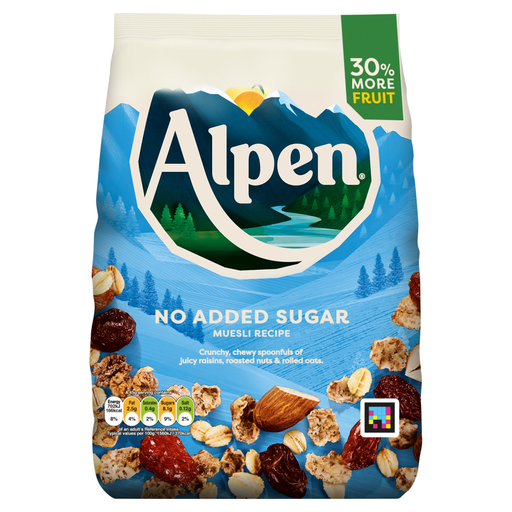
Alpen No Added Sugar Muesli 950g

Alpen No Added Sugar Muesli 950g

A non-granola breakfast-cereal option for comparing a 950g pack against your usual measured serving.

Stated nutrition per 100g: 65g carbohydrate, 18g sugars and 8g fibre.

Contains wheat, oats, milk, almonds and hazelnuts, and may contain other tree nuts. Check the current price per 100g and the serving panel before buying.

Joybuy
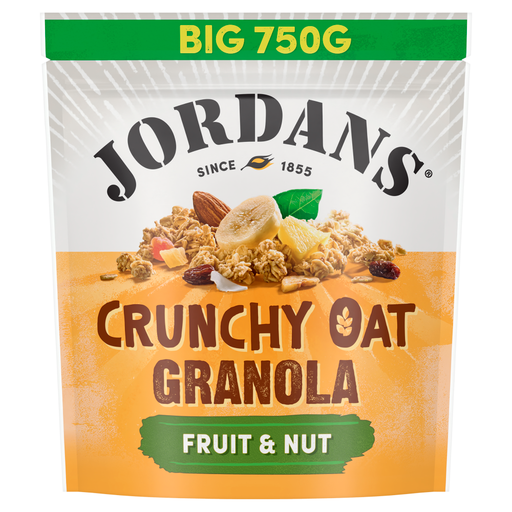
Jordans Crunchy Oat Granola Fruit and Nut 750g

Jordans Crunchy Oat Granola Fruit & Nut 750g

A fruit-and-nut granola option with a stated 45g serving for portion and unit-price comparisons.

The record states 65g carbohydrate and 24g sugars per 100g; the 45g portion contains 29g carbohydrate and 11g sugars. The pack is listed as approximately 16 portions with a resealable closure.

Contains oats and almonds and may contain peanuts, other nuts and cereals containing gluten. Check the current price per 100g before stocking up.

Joybuy

Frequently asked questions

How do I check whether a larger granola pack is actually better value?

Compare the current shelf price per 100g rather than the total ticket price. Calculate price divided by net grams, then multiply by 100, and compare the nutrition panel per 100g and for your measured serving. GOV.UK guidance requires pre-packed solid foods to show net mass in grams or kilograms.

Is a low-sugar granola automatically suitable when managing diabetes?

No. Diabetes UK states that all carbohydrates raise blood glucose levels, and front-of-pack traffic lights do not show carbohydrate. Check total carbohydrate and sugars per 100g and per the portion you plan to eat, then use your individual diabetes plan.

Does no added sugar mean that a granola has no sugar?

No. Jordans No Added Sugar Granola Triple Nut states that it has no added sugar or artificial sweeteners, but its manufacturer panel lists 9.5g sugars per 100g and 4.3g sugars per 45g serving. Check the total sugars line rather than relying only on the claim.

What should I do if I count carbohydrate or use mealtime insulin?

Use the carbohydrate amount for your measured serving rather than a marketing claim. Diabetes UK says carbohydrate counting can help people using basal-bolus insulin match insulin doses to the carbohydrate they eat and drink; follow the plan and dose-adjustment advice from your diabetes team.

Are granola allergens shown on UK packs?

Pre-packed food requires mandatory labelling information, and the researched granolas include allergen declarations for cereals containing gluten and nuts. Check every exact pack and any may-contain wording, as recipes and production-site warnings can differ by flavour and product version.