Use pre-grated Cheddar as part of a carbohydrate-led meal, not as the main food before or during a run. The British Dietetic Association identifies carbohydrate as the main fuel for exercising muscles, while Tesco lists just 0.6g carbohydrate per 30g of its mature grated Cheddar. If you want to reduce fat, compare the exact standard and reduced-fat packs: Waitrose lists less fat in its reduced-fat version, but the same salt per 30g in both.
Who is this for?
Runners planning meals around training
If you are deciding whether grated cheese can take the place of carbohydrate-rich food, keep the two roles separate. British Dietetic Association guidance puts carbohydrate at the centre of exercise fuelling; cheese can instead be a topping in a meal.
Shoppers comparing standard and reduced-fat Cheddar
Compare the amount you would use, including fat, saturates and salt. Waitrose’s reviewed standard and reduced-fat grated Cheddars differ in fat per 30g but list the same salt per 30g.
People preparing meals ahead
Pre-grated cheese can be added to pasta, potatoes or toast without grating a block. Check the ingredients and milk allergen declaration, then choose a pack size you can use within its instructions after opening.
What should you check?
Decide when the meal will be eaten before comparing cheeses; then read the nutrition information for the portion you expect to use.
| Priority | What to check | Your needs |
|---|
| Food before a run |
Check carbohydrate and fat per serving. The British Dietetic Association advises a low-fat, high-carbohydrate snack or light meal two to three hours before exercise; Tesco lists 0.6g carbohydrate per 30g of its mature grated Cheddar. |
For a meal before training, I need carbohydrate-rich food rather than cheese as the main component. |
| Meal after training |
Build the meal around a carbohydrate food such as pasta, potatoes, bread or rice. If adding cheese, check its protein and carbohydrate values for the portion used. |
After a run, I want cheese as a topping without letting it replace the carbohydrate part of my meal. |
| Standard or reduced fat |
Compare the same serving size and the per-100g values. Waitrose lists 10.3g fat and 6.4g saturates per 30g of its standard mature grated Cheddar, versus 7.0g fat and 4.3g saturates for its reduced-fat version; both list 0.53g salt. |
When I want less fat, I can compare reduced-fat and standard packs without assuming their salt or other values change in the same way. |
| Portion size |
Check both per-serving and per-100g figures, particularly when packs use different serving sizes. The NHS explains that pre-packed food labels provide per-100g nutrition information and sometimes per-portion figures. |
My usual topping may be larger or smaller than the pack’s stated serving, so I want a comparison that reflects the amount I will use. |
| Ingredients and storage |
Read the ingredient and allergen lists and follow the opened-pack instructions. Tesco and Asda list potato starch in their reviewed grated Cheddars; the reviewed Waitrose and Asda packs instruct use within three days of opening. |
If I prepare several meals from one bag, I need to check its milk declaration and whether I can use it within the pack’s storage instructions. |
Common buying mistakes
-
Treating cheese as running fuel
Tesco lists only 0.6g carbohydrate per 30g of its mature grated Cheddar. The British Dietetic Association identifies carbohydrate as the main fuel for exercising muscles.
Make carbohydrate-rich food the base of a training meal and add cheese as a topping, rather than relying on it as the main food before or during a run.
-
Assuming reduced fat means less of everything
Waitrose lists less fat and fewer saturates per 30g in its reviewed reduced-fat grated Cheddar than in its standard version, but both list 0.53g salt per 30g.
Compare the exact packs for the values that matter to your meal, including carbohydrate if you are choosing food around training.
-
Comparing different stated portions
A pack’s serving figures describe that serving, not necessarily the amount added to a meal. Different stated portions can obscure a direct comparison.
Use the per-100g values to compare packs, then check the figures for the amount you plan to add.
-
Opening a large bag without a meal plan
The reviewed Waitrose and Asda grated Cheddars instruct shoppers to use them within three days of opening.
Choose a pack size that fits your planned meals and follow its current refrigeration and opened-pack instructions.
Brand and retailer references
These examples show why the label on the particular cheese matters more than a retailer or brand name alone.
Tesco
Tesco lists several grated Cheddar varieties, including mature and reduced-fat options.
- Its reviewed mature grated Cheddar lists 7.5g protein, 0.6g carbohydrate, 10.3g fat, 6.4g saturates and 0.53g salt per 30g.
- Its ingredient list includes potato starch and declares milk; check the current pack when choosing a variant.
Sainsbury's
A Sainsbury's listing for Coleraine Medium Grated Cheddar provides a product-specific comparison point.
- That Coleraine product lists 7.8g protein, 9.6g fat and 6g saturates per 30g.
- Its instruction to use within three days of opening applies to that product; check any other pack separately.
Asda
Asda’s reviewed grated mature British Cheddar has ingredient and storage information relevant to meal planning.
- The product lists mature Cheddar and potato starch as ingredients, and 25g protein per 100g.
- Its pack instructs shoppers to refrigerate it and use it within three days of opening.
M&S
M&S lists a lighter mature grated British Cheddar alongside other grated Cheddar options.
- The reviewed lighter product lists 22.1g fat, 27.9g protein and 0.8g carbohydrate per 100g.
- Its instructions say to eat it within three days of opening; its carbohydrate value does not make it a substitute for the carbohydrate in a training meal.
Waitrose
Waitrose lists standard mature and reduced-fat mature grated Cheddar in comparable product ranges.
- Its reviewed reduced-fat product lists 7.0g fat per 30g, compared with 10.3g for its reviewed standard product.
- Both reviewed products list 0.53g salt per 30g and instruct use within three days of opening.
Cracker Barrel
Cracker Barrel’s official US product range describes formats including blocks, slices and cubes.
- Those US product descriptions cannot establish the ingredients or nutrition of a particular UK pre-grated cheese. Compare a UK pack’s own label before choosing it for a training meal.
Joybuy product options
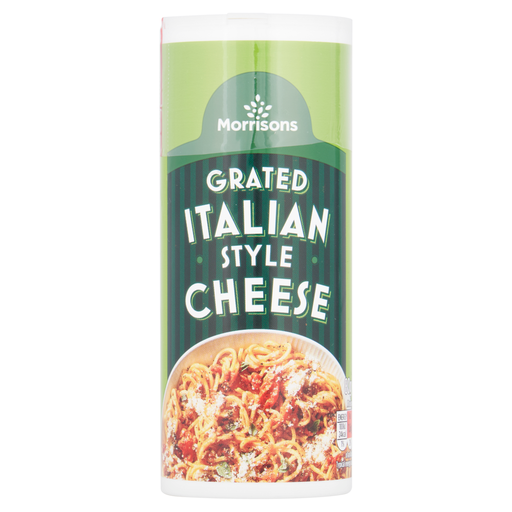
This grated Italian-style cheese is an option to consider as a topping for a pasta-based meal. If you specifically want hard cheese, check the cheese type on the pack.
 No image available
Morrisons Grated Italian Style Cheese 80g
Consider this 80g grated cheese as a topping for a pasta-based meal, rather than the meal’s main carbohydrate component. Check the pack for egg and milk allergens, and confirm its cheese type if you need hard cheese.
View on Joybuy
Frequently asked questions
Can grated Cheddar be my main food before or during a training run?
No: grated Cheddar is not a substitute for carbohydrate-rich running fuel. The British Dietetic Association identifies carbohydrate as the main fuel for exercising muscles and advises a low-fat, high-carbohydrate snack or light meal two to three hours before exercise; Tesco lists 0.6g carbohydrate per 30g of its mature grated Cheddar.
Should I choose reduced-fat grated Cheddar for a training meal?
Choose it if reducing fat in that meal is your priority, but compare the exact products. Waitrose lists 7.0g fat per 30g of its reviewed reduced-fat grated Cheddar versus 10.3g in its standard version; both list 0.53g salt per 30g. Neither replaces the carbohydrate component of the meal.
Why should I check the ingredients in pre-grated cheese?
The ingredient list tells you what is in the particular product, beyond its cheese name. The reviewed Tesco and Asda grated Cheddars list potato starch alongside Cheddar; check the current pack if an added ingredient matters to your choice.
How long can I keep a bag after opening it?
Follow the storage and opened-pack instructions on your bag, rather than relying on its unopened best-before date. The reviewed Waitrose and Asda grated Cheddars instruct refrigeration and use within three days of opening.
Is dairy Cheddar suitable for someone with a milk allergy?
No. The Food Standards Agency identifies milk as an ingredient in cheese, and the reviewed Cheddar products declare milk. Read the allergen declaration on the particular pack rather than relying on its brand or cheese variety.


