
24/7 Customer Support

Free returns

Same-day & Next-day Delivery

Quality Guaranteed

Unlock Your Welcome Offers: FREE Delivery | Up to 80% OFF | Free 30-day JoyPlus trial
Download the APP
Gravy granules are a practical cupboard staple for roast dinners, sausages and mash, pies, chips, casseroles and weekday meals. Add boiling water, stir and you have a smooth sauce in minutes, without making a stock from scratch.
However, choosing the right jar or sachet is not simply a matter of picking the most familiar name. Pack size, flavour profile, salt content and allergen information can all affect whether the product suits your household. This guide explains the main buying pitfalls and compares suitable options for different UK cooking habits.
A product labelled beef, chicken or lamb may deliver a meat-style flavour without containing a large quantity of meat ingredients. For example, some products list flavourings, vegetable protein or extracts prominently, with meat powder appearing in a relatively small percentage.
This is not necessarily a problem, but it matters if you are looking for a particular taste or checking whether a product suits a vegetarian or vegan meal. Read the ingredients and dietary statement rather than relying only on the picture on the front of the pack.
Gravy powder and gravy granules can show nutrition per 100g, per 100ml prepared or per 50ml portion. These figures are not directly interchangeable. A product may appear high in salt per 100g but be used in small quantities, while a larger serving can change the final amount in your bowl.
For a like-for-like comparison, check the prepared portion, then consider how much gravy you normally pour over a meal. Reduced-salt options may be useful for shoppers who want to lower the amount in each prepared serving, but they are not automatically low-salt foods. Always follow the current packaging information.
A 190g jar may be convenient for occasional Sunday lunches, but households serving gravy several times a week could use a larger 450g or 500g pack more efficiently. Conversely, a large container may sit open in the cupboard for months if you only make gravy at Christmas or for occasional roasts.
Check the approximate number of servings, storage instructions and best-before date. Keep the lid tightly closed and store the product in a cool, dry place away from direct sunlight and heat.
Choose the flavour according to the dishes you cook most often:
For a more traditional roast flavour, some shoppers may prefer a gravy mix containing herbs or meat extracts. A sachet such as Schwartz Roast Turkey Gravy Mix is a different format from standard granules and is intended for a specific poultry-centred meal.
Most instant gravy products use around four heaped teaspoons or approximately 20g with 280ml of boiling water. The exact ratio varies, so follow the instructions on the individual pack.
For a smoother result:
Some gravy powder products require a cold-water paste before boiling in a saucepan. This can take slightly longer but allows you to add meat juices, stock or cooking juices during preparation.
Common ingredients in gravy products include wheat, gluten and soya. Some recipes may also contain barley, milk or celery. Check the bold allergen information every time, particularly if buying a different flavour or pack size.
Do not assume that beef-style or chicken-style gravy contains meat, and do not assume that a vegetarian product is free from wheat or soya. Packaging can change, so the label supplied with your purchase should take priority over older online descriptions.
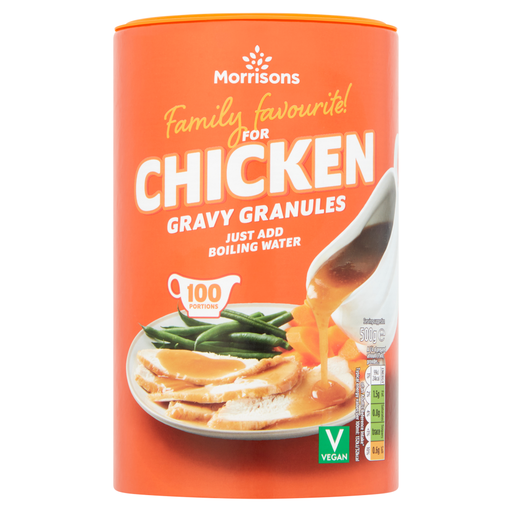
Why This Fits Their Persona: The 500g format suits families, shared houses and regular weekday cooking where a smaller jar may run out quickly.
The larger quantity reduces the risk of repeatedly buying small jars for frequent meals. The label states that it is suitable for vegetarians, although it contains wheat and soya.
500g pack; simple boiling-water preparation; suitable for vegetarian meals according to the supplied product information.

Why This Fits Their Persona: A suitable choice for shoppers who want a beef-focused gravy for Sunday roasts, steak and ale pie or bangers and mash.
The ingredients specify beef extract powder at 1%, so shoppers can make an informed decision rather than assuming the product is made mainly from beef.
230g pack; designed for beef dishes; preparation uses approximately 280ml of boiling water and adjustable granule quantity.

Why This Fits Their Persona: It is intended for shoppers comparing standard and reduced-salt chicken gravy options for regular family meals.
The supplied description states 25% less salt than the brand’s standard chicken gravy granules. Compare the prepared serving on the current label before purchase.
Reduced-salt recipe compared with the stated standard version; low-fat and low-sugar claims are provided in the product description.

Why This Fits Their Persona: Onion flavour works across sausages, vegetable pies, nut roasts and roast dinners when different diners need one shared gravy.
The supplied information describes it as suitable for vegetarians and vegans, while clearly listing wheat and soya allergens for checking.
Onion powder and dried onion are listed ingredients; quick preparation; suitable for a range of meat-free dishes.
We have compiled a complete, real-time list of products that fully satisfy these strict selection criteria and UK safety regulations.
They serve a similar purpose but use different formats. Granules are generally mixed directly with boiling water, while gravy powder may require a cold-water paste and saucepan heating. Always follow the preparation instructions for the product you buy.
The unopened shelf life is shown on the pack. After opening, keep the container sealed, dry and away from heat. Quality can decline if moisture enters the jar, so use the product by the stated best-before guidance and check for changes in smell, colour or texture.
Yes. Most instant gravy products are designed to be prepared with water alone. Meat juices, stock or cooking liquid can be added for a deeper flavour, but check the salt level before adding extra stock. For vegetarian or vegan meals, use a suitable vegetable stock and verify the product’s dietary information first.