Adults buying a versatile plain pot
If the yoghurt needs to work with breakfast, toppings, dips or cooking, compare the per-100g label and choose a pot size you can use within its storage instructions.


For an adult’s first food shop, a plain, unsweetened pot is a flexible starting point; compare fat, saturates, sugars and protein per 100g rather than assuming that “Greek” or “Greek-style” tells you what is in it. If “first food” means a baby’s first solids, the decision changes: NHS guidance identifies pasteurised, full-fat, plain or unsweetened yoghurt as suitable from around 6 months, when the baby is ready for solids. A fruit-blended pouch should not be mistaken for a plain yoghurt pot.
If the yoghurt needs to work with breakfast, toppings, dips or cooking, compare the per-100g label and choose a pot size you can use within its storage instructions.
Check both figures on the exact variant. For example, M&S lists 10g protein, 0.2g fat and 0.1g saturates per 100g for its Authentic Greek Yogurt 0% Fat; those figures do not describe its other yoghurts.
If this shop is for a baby, use the NHS guidance for weaning rather than an adult lower-fat preference. From around 6 months, when the baby is ready for solids, check for a pasteurised, full-fat, plain or unsweetened yoghurt.
Decide who will eat the yoghurt first, then compare like-for-like nutrition figures and the instructions on the particular pack.
| Priority | What to check | Your needs |
|---|---|---|
| Fat level | Compare fat and saturates per 100g on the exact variant. M&S lists 0.2g fat and 0.1g saturates for its 0% authentic Greek yoghurt, but 10g fat and 6.7g saturates for its Greek-style natural yoghurt. | I’m choosing for an adult and want to compare a lower-fat pot with a richer one. If I’m buying for a baby starting solids, NHS guidance points instead to pasteurised, full-fat, plain or unsweetened yoghurt from around 6 months. |
| Protein | Read protein alongside fat, saturates and sugars, using the same per-100g basis. Tesco lists 9g protein and 5g fat per 100g for FAGE Total 5%; M&S lists 10g protein and 0.2g fat for its 0% authentic Greek yoghurt. | For an adult meal, I want to know how much protein the particular pot provides without choosing on that figure alone. |
| Plain or flavoured | Check the product name, ingredients and total sugars per 100g. “Greek-style” does not tell you whether a product is plain or fruit-blended. | I’d rather add my own fruit or toppings, so an unsweetened plain pot suits this shop better than a ready-flavoured pouch. |
| Storage and allergens | Read the use-by date, refrigeration directions, opened-life instruction and milk allergen declaration on the pack. Tesco lists five days after opening for its FAGE Total 5% 950g pot; M&S lists three days for its Greek-style natural pot. | A large pot only works for my household if we can refrigerate it and finish it within that product’s instructions. |
Fat and saturated-fat figures can differ sharply between products with similar-sounding names. NHS food-label guidance classifies more than 5g saturates per 100g as high; M&S lists 6.7g per 100g for its Greek-style natural yoghurt.
Compare the per-100g panel for the actual pot, including sugars, protein and salt, before deciding which variant fits the eater and meal.
A lower-fat adult yoghurt is not automatically the right starting point for a baby. NHS guidance identifies pasteurised, full-fat, plain or unsweetened yoghurt as suitable from around 6 months.
Check that the baby is ready for solids and confirm the yoghurt’s pasteurisation, fat level and ingredients on its current pack.
Opened-life directions differ: M&S lists three days for its Greek-style natural pot, while Tesco lists five days for the FAGE Total 5% 950g pot.
Choose a size your household can use in time, and follow the particular pack’s refrigeration and use-by instructions.
An unfinished pot may mean food is wasted.
Yeo Valley names cultures used in its Greek-style yoghurts, but a culture listing does not establish a particular outcome for an individual.
Use culture information to identify the product, not as a substitute for checking its ingredients, allergens and nutrition.
These ranges illustrate why the exact yoghurt and variant matter more than a brand name alone.
Its plain yoghurt range includes different fat levels, so check the variant rather than carrying one pot’s figures over to another.
Its Greek-style natural yoghurt is a separate option to compare with strained Greek yoghurts.
Its listed range includes own-label Greek-style and 0% Greek-style pots as well as branded yoghurts.
Its listed products include authentic strained Greek yoghurt and Greek-style natural yoghurt at different fat levels.
Tesco lists Müller Light Greek Style flavoured multipacks, which serve a different shopping purpose from a plain multi-use pot.
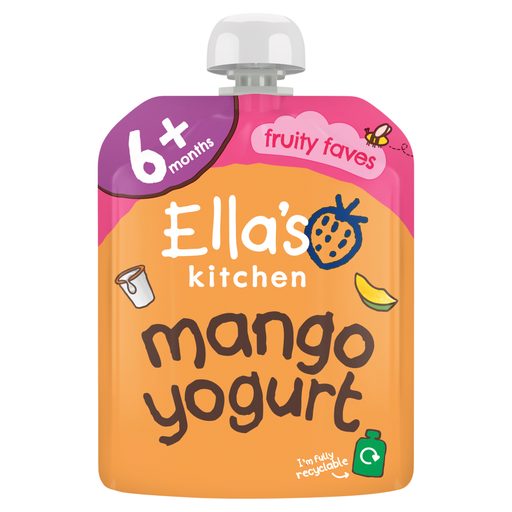
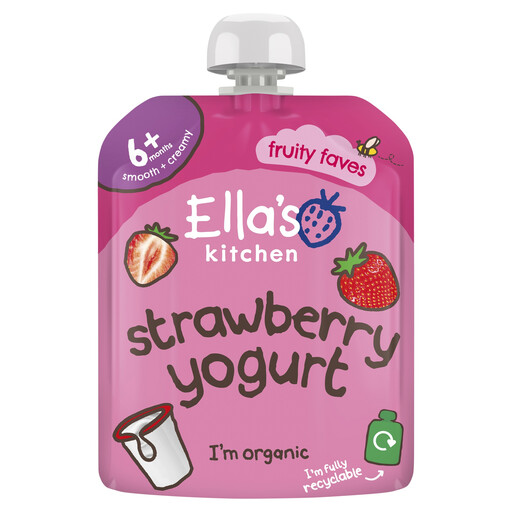
These fruit-blended yoghurt pouches are options to examine if the first shop is for a baby starting solids. They are not plain yoghurt pots for an adult household shop; check the current pack against the NHS guidance for weaning before choosing one.
 No image available
This 90g mango yoghurt pouch is presented for babies aged 6 months and over, rather than as a plain yoghurt pot. If choosing yoghurt for weaning, check the current pack for pasteurisation, full-fat classification and milk allergens; serve according to its instructions rather than letting a child feed directly from the pouch, and keep the cap away from young children.
 No image available
This 90g strawberry yoghurt pouch is presented for babies aged 6 months and over; it is fruit-blended, not a plain yoghurt pot. Before choosing it for weaning, confirm pasteurisation, full-fat classification and milk allergens on the current pack. Follow its serving directions under adult supervision and keep the cap away from young children.
The names alone do not establish a pot’s nutrition. Compare fat, saturates, sugars and protein per 100g on the exact products: M&S lists 10g fat and 6.7g saturates for its Greek-style natural yoghurt, while its 0% authentic Greek yoghurt lists 0.2g fat and 0.1g saturates.
Yes, under the conditions in NHS weaning guidance: from around 6 months, when a baby is ready for solids, pasteurised, full-fat, plain or unsweetened yoghurt is suitable. Check the actual pack, including its milk allergen declaration; a fruit-blended pouch is not the same product as plain yoghurt.
Choose a large pot only if you can keep it refrigerated and use it within that product’s opened-life instruction. M&S lists three days after opening for its Greek-style natural yoghurt, while Tesco lists five days for the FAGE Total 5% 950g pot; read the pack you buy.
GOV.UK distinguishes use-by dates, which relate to food safety, from best-before dates, which relate to quality. Follow the pack’s storage directions and do not treat its opened-life instruction as interchangeable with those of another yoghurt.