Parents of children under 2
The NHS recommends full-fat yoghurt up to age 2. For a child who can have dairy, a plain option leaves you free to add fruit to suit their taste.


For a child who can have dairy, start with a small pack of plain, unsweetened Greek or Greek-style yoghurt and add soft fruit if they prefer the flavour that way; neither label guarantees a mild taste. The NHS recommends full-fat yoghurt up to age 2, so check the fat level before choosing for a younger child. If the child follows a clinically directed cow’s-milk-free diet, do not choose dairy yoghurt; check the current label and any nursery or school food policy before serving or packing it.
The NHS recommends full-fat yoghurt up to age 2. For a child who can have dairy, a plain option leaves you free to add fruit to suit their taste.
A plain yoghurt in a small pack lets you see how the child responds before choosing a larger format. Fruit can be added separately; a Greek or Greek-style label alone cannot predict whether the child will find it mild.
Check the setting’s food policy and the current milk allergen declaration. The NHS advises an insulated box with an ice pack for nursery lunchboxes when refrigeration is unavailable.
Start with the child’s age and dairy requirements, then choose between a plain base you can adapt and a ready-flavoured product.
| Priority | What to check | Your needs |
|---|---|---|
| Taste and format | Check whether the yoghurt is plain or fruit-blended. Try a small pack where possible; Greek-style and strained do not guarantee a mild flavour. | I want to test a simple tea-time option without assuming my child will like its tanginess. I can add soft fruit to plain yoghurt separately. |
| Age and fat level | Check the fat description on the current pack. The NHS recommends full-fat yoghurt up to age 2; do not assume a fruit-blended pouch meets that description. | For a child under 2 who can have dairy, I need to identify a full-fat option. For an older child, that age-specific recommendation does not settle the choice on its own. |
| Ingredients | Read the full ingredient list, not just a front-of-pack sugar statement. Müller lists aspartame, flavourings and modified maize starch in its Light Greek Style Strawberry product. | If I want to choose the fruit and flavour myself, a plain yoghurt gives me a base to adapt. If I choose a flavoured one, I want to know what is in that particular product. |
| Milk and packed snacks | Check the current allergen label and the setting’s policy. The Food Standards Agency identifies milk as an allergen commonly present in yoghurt; the NHS advises an insulated box and ice pack where a nursery lunchbox cannot be refrigerated. | I need a snack that follows the child’s allergy plan and the nursery or school rules. Dairy yoghurt is not an option for a child following a clinically directed cow’s-milk-free diet. |
A plain yoghurt may still taste tangy to a particular child; M&S describes its Greek-Style Natural Yogurt as tangy.
Try a small pack first and add soft fruit if the child prefers that flavour.
The NHS recommends full-fat yoghurt up to age 2. A 0% label does not meet that age-specific choice.
Check the child’s age and the product’s fat description rather than treating the same option as suitable for every age.
Müller Light Greek Style Strawberry lists aspartame, flavourings, modified maize starch and milk despite its 0% added-sugar statement.
Read the ingredients if you want a simple base or need to check whether a flavoured product suits the child.
A dairy yoghurt can contain milk proteins. For a child on a cow’s-milk-free diet advised by a clinician, yoghurt is among the foods to avoid, according to University Hospitals Birmingham NHS Foundation Trust.
Follow the child’s individual advice and check the current allergen label rather than relying on front-of-pack wording.
These examples show how plain, child-portioned and flavoured products differ; check the current pack before choosing one for a child.
FAGE Total 5% is a plain strained yoghurt made with milk, cream and live yoghurt cultures.
Müller Light Greek Style Strawberry is a flavoured Greek-style product, not a plain yoghurt.
Little Yeos Greek Style Natural comes in portioned pots and is aimed by Yeo Valley at babies and toddlers.
Tesco’s Greek and Greek-style listings include plain own-label formats alongside other brands and flavoured products.
Sainsbury’s lists both Greek Style Natural Yogurt and Taste the Difference Authentic Greek Yogurt.
M&S lists an unsweetened Greek-Style Natural Yogurt and a separate Authentic Greek Yogurt 0%.
These two Greek-style yoghurt pouches are fruit-blended options for young children, rather than plain yoghurts to which you can add fruit yourself. Check the current pack’s fat description before using either to meet the NHS full-fat recommendation for children under 2.
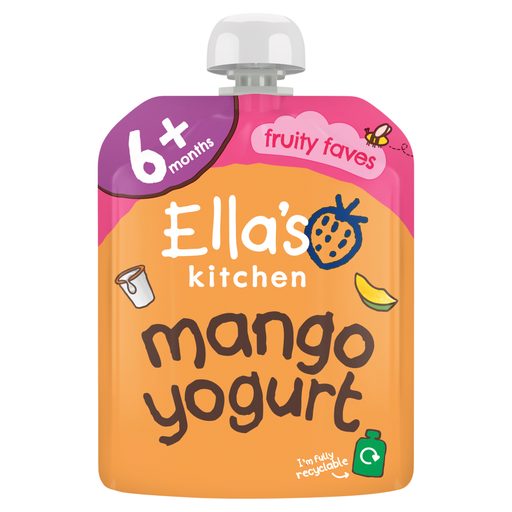 No image available
A 90g mango-flavoured Greek-style yoghurt pouch for babies from 6 months who can have dairy. It is fruit-blended rather than a plain base, so you cannot adjust the fruit separately; check the current pack’s fat description if choosing for a child under 2.
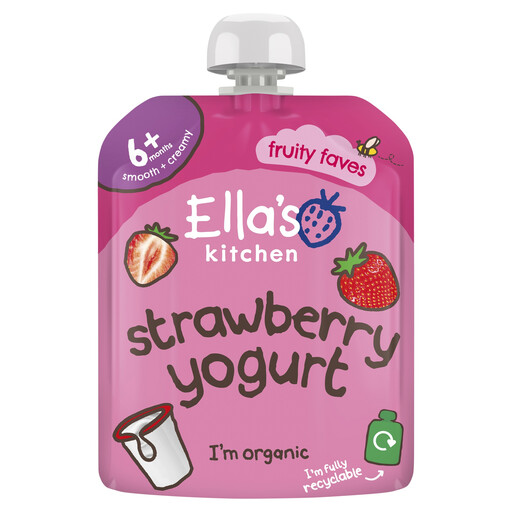 No image available
A 90g strawberry-flavoured Greek-style yoghurt pouch for babies from 6 months who can have dairy. It is not a plain yoghurt for adding fruit separately; check the fat description for an under-2 and keep the pouch cap away from children under 36 months, as the product directions warn.
For a child who can have dairy, plain unsweetened yoghurt with sliced banana is one snack example given by the NHS. Choose a portion appropriate to the child and check the current ingredients and allergen label.
The NHS recommends full-fat yoghurt up to age 2. For an older child, that age-specific advice no longer decides the choice by itself; check the product label and consider the child’s wider diet and taste preferences.
No: those descriptions cannot predict whether a particular child will like the flavour. M&S describes its unsweetened Greek-Style Natural Yogurt as tangy, so try a small pack and add fruit separately if preferred.
Check the setting’s current food policy and any allergy requirements first. For a nursery lunchbox without refrigeration, the NHS advises an insulated box with an ice pack to keep food cool.
Do not choose dairy Greek yoghurt for a child following a cow’s-milk-free diet advised by a doctor, allergy nurse or dietitian. University Hospitals Birmingham NHS Foundation Trust includes yoghurt among foods to avoid on that diet; follow the child’s individual plan and check the current label.