Families choosing a plain snack base
Plain yoghurt with chopped whole fruit offers a way to adjust the flavour at home without adding honey or choosing a sweetened yoghurt. The NHS includes fruit with yoghurt among its homemade snack ideas.


For a half-term snack, start with a small serving of plain, unsweetened Greek or Greek-style yoghurt if the child accepts its taste; chopped whole fruit can add sweetness without honey or a flavoured yoghurt base. Natural yoghurt can be tangy, while ready-flavoured options may contain sugar, honey or sweeteners, so check the ingredients and let the child try a small portion before committing to a larger pack. Check milk allergens and follow the storage instructions on the pack you buy.
Plain yoghurt with chopped whole fruit offers a way to adjust the flavour at home without adding honey or choosing a sweetened yoghurt. The NHS includes fruit with yoghurt among its homemade snack ideas.
A thick or creamy yoghurt can still taste tangy. If a child is unsure about natural yoghurt, try a small serving before buying a large tub; a fruit-flavoured option is a different recipe, not a guarantee of mildness.
Lactose-free Greek-style dairy yoghurt may meet a lactose-free requirement, but it is not a substitute for a milk-free product. Check the exact allergen statement if milk allergy is a concern.
Choose a flavour and format the child is likely to use, then compare the exact ingredients, nutrition information and storage directions rather than relying on words such as “Greek” or “0%”.
| Priority | What to check | Your needs |
|---|---|---|
| Ingredients and sugars | Read the ingredient list for honey, sugar and sweeteners. Compare sugars per 100g between products, alongside their ingredients; that figure alone does not distinguish milk sugars from added sugar. | I would rather add chopped whole fruit to plain yoghurt than choose a honey or sweetened base. The NHS identifies honey as a free sugar and distinguishes it from the sugar in plain yoghurt. |
| Taste and texture | Try a small serving before choosing a large tub. Do not use fat level, a thick texture or “Greek-style” as a promise that the flavour will be mild. | A child in my household may dislike tangy yoghurt. M&S describes its unsweetened Greek-style natural yoghurt as traditionally tangy, so I would check acceptance with the actual product. |
| Pack format | Check the serving size and whether the pack can be refrigerated and used within its opened-pack instructions. Compare shared tubs with individual portions for the way you plan to serve them. | For bowls at home, I can serve from a shared tub; for separate snacks, individual portions may be easier to organise. Neither format tells me whether the recipe contains added sugar. |
| Milk and lactose | Read the milk allergen statement on the exact pack. Check a lactose-free claim against the dietary need rather than treating it as a milk-free claim. | If milk allergy is involved, a lactose-free dairy yoghurt will not do. The Arla Greek-style LactoFREE product described by Sainsbury’s contains cow’s milk and states that it is unsuitable for people with milk allergies. |
| Storage | Follow the pack’s refrigeration directions and its stated period for use after opening. Check any serving instructions that apply to a pouch or pot. | If snacks will be spread across several half-term days, I need a pack size we can use within its instructions. The checked M&S 0% Greek yoghurt and Sainsbury’s Greek-style natural yoghurt both state use within three days of opening. |
These descriptions do not settle the taste or ingredient question. The Müller Light lemon pots listed by Sainsbury’s state 0% added sugar but contain aspartame; the checked Yeo Valley honey pots contain honey and sugar.
Read the ingredients and nutrition panel for the exact flavour. If you want to control what is added, try plain yoghurt with chopped whole fruit.
A lactose-free yoghurt can still contain cow’s milk. The checked Arla Greek-style LactoFREE yoghurt explicitly says it is unsuitable for people with milk allergies.
For a milk allergy, check the allergen statement and follow the child’s medical advice rather than substituting a lactose-free dairy product.
Natural Greek or Greek-style yoghurt may be tangy even when it looks thick and creamy. An opened tub also has product-specific storage instructions.
Offer a trial portion first, then choose a pack size you can use within its stated opened-pack period.
A larger tub may go to waste if the child dislikes it or it cannot be used within that period.
A flavour name or headline claim does not tell you everything about sugars, sweeteners, milk or storage.
Before serving, check the current pack’s ingredients, allergen information, nutrition panel and storage directions.
These ranges illustrate different recipes and pack formats; a brand name alone does not establish how mild a particular yoghurt will taste.
Tesco lists Fage Total Greek Recipe Yogurt in 0% and 5% fat versions, with 150g, 450g and 950g formats.
The Müller Light Greek Style Luscious Lemon product listed by Sainsbury’s comes as four 115g flavoured pots.
The range includes natural and flavoured Greek-style yoghurts. Yeo Valley describes its Little Yeos natural six-pack as whole-milk yoghurt with no added sugar or flavourings.
Tesco lists Greek and Greek-style yoghurts in different tub sizes, including its Finest Greek Yoghurt 1kg.
Sainsbury’s Greek Style Natural Yogurt comes in a 500g shared tub; its listed ingredient is Greek Style Natural Yogurt (cow’s milk).
M&S lists both a 0% fat authentic Greek yoghurt and an unsweetened Greek-style natural yoghurt.
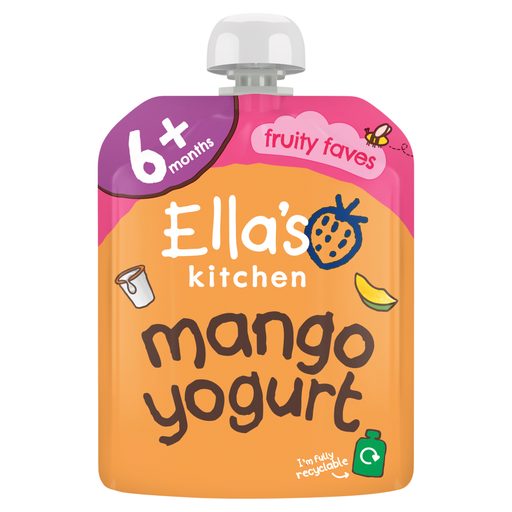
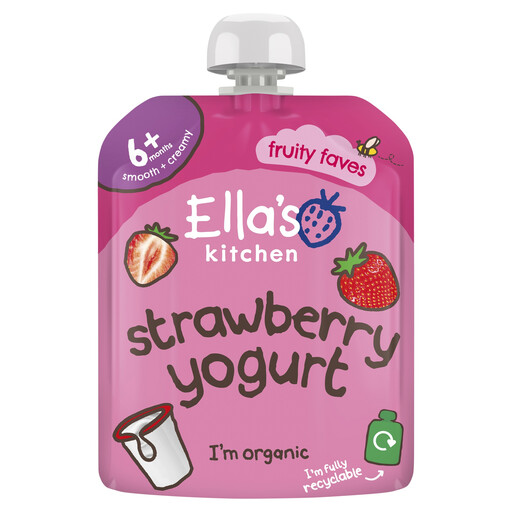
These 90g Ella’s Kitchen fruit-and-Greek-style-yoghurt pouches offer individual snack portions, rather than the plain yoghurt tub route discussed above. Their fruit flavours do not guarantee that a child will find them mild; both carry a 6+ months age marking and need their serving warnings checked.
 No image available
A mango-and-yoghurt option in a 90g pouch for a separately served snack; try a small portion rather than assuming the fruit flavour will suit the child.
Contains milk. The cap is a choking hazard for children under 36 months: serve from a bowl or spoon rather than letting a child suck from the pouch. Refrigerate after opening and use within 24 hours.
 No image available
A strawberry-and-yoghurt option in a 90g pouch for an individual snack; the flavour name alone cannot establish whether a child will find it mild.
Contains milk. The pouch cap is a choking hazard for children under 36 months, and adult supervision is specified when serving directly from the pouch. Refrigerate after opening and use within 24 hours.
No: taste and sugar content need separate checks. M&S describes an unsweetened Greek-style yoghurt as tangy, while flavoured recipes can contain honey, sugar or sweeteners. Read the exact ingredients and nutrition panel, and trial a small portion if taste is the deciding factor.
Yes, if the child accepts its flavour. The NHS includes yoghurt with fruit among homemade snack ideas and distinguishes the sugar in plain yoghurt from free sugars such as honey. Chopped whole fruit lets you adjust the serving without choosing a flavoured yoghurt base.
Not if it still contains milk. The Arla Greek-style LactoFREE yoghurt listed by Sainsbury’s is made with cow’s milk and says it is unsuitable for people with milk allergies. Check the exact product’s allergen statement and follow the child’s medical advice.
Follow the instructions on that tub rather than applying another product’s timeframe. The checked M&S 0% Greek yoghurt and Sainsbury’s Greek-style natural yoghurt both specify refrigeration and use within three days of opening.
No. The NHS identifies honey as a free sugar, and the Yeo Valley honey Greek-style multipack listed by Sainsbury’s contains both honey and sugar, with 13.4g sugars per 100g. Compare its ingredients with a plain product if added sugars affect your choice.