Carers of toddlers under 2
The NHS recommends full-fat yoghurt up to age 2. If yoghurt is part of breakfast, check its fat content as well as whether it is plain or flavoured.


For a toddler under 2, start with a plain, unsweetened full-fat yoghurt: the NHS recommends full-fat yoghurt up to age 2. For an older child, compare the fat content and ingredients on the current pack rather than choosing by the words ‘Greek-style’ alone. A fruit-and-yoghurt pouch is a different breakfast choice from a plain yoghurt base.
The NHS recommends full-fat yoghurt up to age 2. If yoghurt is part of breakfast, check its fat content as well as whether it is plain or flavoured.
When comparing full-fat and lower-fat yoghurt, read the fat content and ingredients for the particular product rather than treating every Greek or Greek-style yoghurt as the same.
Dairy yoghurt contains milk. Check the current ingredients and allergen declaration for the product you intend to serve, including when its packaging or recipe changes.
Start with the child’s age, then compare the recipe and label of the exact yoghurt you plan to serve.
| Priority | What to check | Your needs |
|---|---|---|
| Fat content | Read whether the product is full-fat, lower-fat or 0%. The NHS recommends full-fat yoghurt up to age 2. | For a child under 2, I’m looking for a full-fat option. For an older child, I want to compare the labelled fat content. |
| Recipe | Check whether it is plain and unsweetened or contains fruit, sweeteners, flavourings or other added ingredients. Read the full ingredients list, not just the front of the pack. | A plain yoghurt lets me choose what to serve alongside it; a flavoured yoghurt or fruit blend is a different recipe. |
| Milk allergen | Check the current ingredients and allergen declaration. The Food Standards Agency identifies yoghurt as a food containing milk. | If milk allergy is a concern in our household, I need the label for the exact product before serving it. |
| Serving format | Compare a tub with a portioned pot or pouch. For a pouch, check the age marking and feeding directions on its pack. | I may want yoghurt to serve with other breakfast foods, or a portion that can be squeezed into a bowl. |
Plain full-fat yoghurt and a fat-free flavoured yoghurt differ in fat content and recipe. The NHS full-fat recommendation matters when choosing for a child under 2.
Check the fat declaration and full ingredients list for the particular product.
A description you read previously may not reflect the pack you are about to serve, particularly when ingredients or allergens matter.
Read the current tub or pouch label before serving it.
A fruit yoghurt can carry a no-added-sugar description and still have a different ingredient list from plain yoghurt.
Check the whole recipe to see whether it matches the breakfast you intend to make.
‘Pre-grated’ describes a cheese format, not a characteristic of Greek yoghurt. It cannot help distinguish yoghurt recipes.
Compare yoghurt by fat content, ingredients, allergens and serving format instead.
These brand and retailer examples illustrate why the exact variant matters; check its current pack when making a choice.
Tesco Groceries lists Fage Total Greek yoghurt in 0% and 5% variants.
Yeo Valley Organic describes its Little Yeos Greek Style Natural yoghurt as made with whole milk and no added sugar or flavourings.
Tesco Groceries lists several Greek and Greek-style yoghurt options, including Fage Total, Yeo Valley and Tesco ranges.
Marks & Spencer describes both strained Greek yoghurt and unsweetened Greek-style natural yoghurt.
Müller UK & Ireland describes its Light Greek Style Strawberry product as fat-free yoghurt with sweetener.
These fruit-and-Greek-style-yoghurt pouches are portioned options for a young child’s breakfast, not plain yoghurt bases. Check each pack’s fat declaration when choosing for a child under 2.
 No image available
A fruit-and-yoghurt pouch rather than a plain yoghurt base. The 90g product is marked 6+ months; its described blend includes mango, apple and banana and contains milk. Check the current pack for its fat classification and follow its directions to serve the yoghurt onto a spoon or into a bowl.
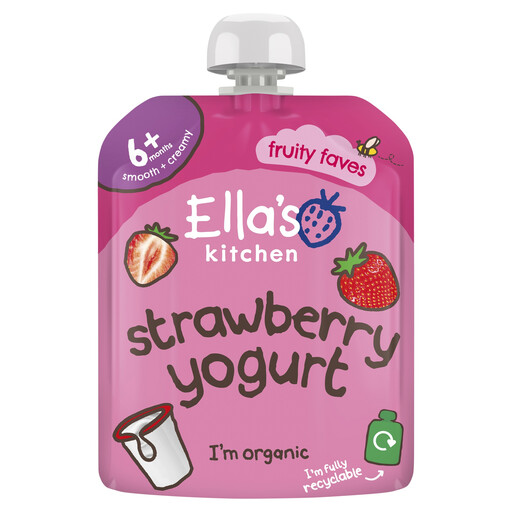 No image available
A strawberry, banana and apple yoghurt blend rather than plain yoghurt. The 90g product is marked 6+ months and contains milk. Check the current pack for its fat classification and follow its feeding directions, including adult supervision when serving it into a bowl.
Yes. If choosing yoghurt for a child under 2, look for a full-fat option in line with NHS guidance. Check whether the particular product is plain or a flavoured blend, and what you plan to serve alongside it.
For a child under 2, the NHS recommends full-fat yoghurt. For an older child, you can compare full-fat and lower-fat products by reading their fat declarations and complete ingredient lists rather than choosing solely by a ‘0%’ description.
Dairy Greek and Greek-style yoghurt contains milk, which the Food Standards Agency identifies as an allergen. For a child with a milk allergy, check the current label and follow the child’s existing individual allergy advice.
For food prepacked for direct sale in the UK, labelling requirements in force since 1 October 2021 include a full ingredients list with regulated allergens emphasised, according to the Food Standards Agency and Food Standards Scotland. Read that label for the particular item; for yoghurt sold without a pack, ask the business for its allergen information.
Follow the refrigeration and use-after-opening instructions on the specific tub or pouch. Check them again when switching products rather than assuming the same directions apply to every yoghurt.