Choose organic green tea or matcha after supper if you want that tea flavour and are not trying to avoid caffeine. Organic labelling and caffeine are separate questions: the Department for Environment, Food & Rural Affairs sets conditions for organic claims in the UK, while the European Food Safety Authority identifies tea leaves as a natural caffeine source. If you are drinking close to bed and caffeine affects your sleep, a herbal infusion explicitly labelled caffeine-free is the more cautious choice, in line with NHS Borders sleep guidance.
Who is each option for?
Shoppers looking for an organic green-tea label
If organic production is your priority, look for an explicit organic claim on the exact product rather than relying on words such as “natural”. Department for Environment, Food & Rural Affairs guidance says UK organic labelling depends on production rules and certification by an approved control body.
After-supper drinkers avoiding caffeine
Organic green tea does not meet a caffeine-avoidance need simply because it is organic. The European Food Safety Authority identifies tea leaves as a caffeine source, and NHS Borders advises avoiding caffeinated hot drinks close to bed. Look for a herbal infusion explicitly labelled caffeine-free if that is the deciding requirement.
Shoppers interested in matcha
Matcha powder and green-tea-and-matcha bags offer different ways to prepare a tea-leaf drink. Compare the ingredients and the current pack, particularly if you need to establish caffeine status before choosing one for the evening.
What should you check?
Organic green-tea bags
Choose when: You want a straightforward green-tea drink with an explicit organic claim and do not need to avoid caffeine.
Trade-off: Organic labelling does not change the fact that tea leaves are a natural caffeine source, as the European Food Safety Authority explains.
Organic matcha or a green-tea blend
Choose when: You specifically want matcha powder or a bagged blend containing matcha.
Trade-off: Neither an organic claim nor the word “matcha” establishes that a tea-leaf drink is caffeine-free; check the exact product before evening use.
Caffeine-free herbal infusion
Choose when: Avoiding caffeine close to bed matters more to you than drinking green tea.
Trade-off: A herbal infusion is a different drink, so check both its flavour and its organic and caffeine-free labels against your requirements.
Once you have chosen the type of drink, check the exact pack for the claims and ingredients that matter to you.
| Priority |
What to check |
Your needs |
| Organic claim |
Look for “organic” on the exact product and check its current label and certification information. Department for Environment, Food & Rural Affairs guidance sets conditions for using the claim in the UK. |
I want organic status to be explicit, not suggested by packaging or a natural-sounding description. |
| Caffeine and timing |
Check whether the exact drink is labelled caffeine-free or decaffeinated; do not infer either from “organic”. The European Food Safety Authority identifies tea leaves as a caffeine source, while NHS Borders advises avoiding caffeinated hot drinks close to bed. |
If I am drinking shortly before bed, avoiding caffeine matters more to me than choosing green tea. |
| Ingredients and format |
Compare a plain green-tea bag, matcha powder and a green-tea-and-matcha blend by their stated ingredients and preparation instructions. For a herbal alternative, check that the ingredients match the flavour you want. |
I may want a simple green-tea bag, or I may prefer to prepare matcha; either choice needs a separate caffeine decision. |
Mistakes to avoid
-
Reading “organic” as “caffeine-free”
Organic labelling concerns production and certification, not caffeine content. Tea leaves are a natural caffeine source, according to the European Food Safety Authority.
If caffeine avoidance matters close to bed, check the exact pack for a caffeine-free claim and consider a herbal infusion instead of standard green tea.
-
Overlooking contradictory caffeine wording
A Tesco Groceries description of Pukka Organic Supreme Matcha Green identifies green tea and matcha but also calls the blend naturally caffeine-free. That wording does not give a clear basis for choosing it to avoid caffeine.
Check the current pack and manufacturer information before treating that specific blend as caffeine-free.
-
Assuming whole-leaf tea is organic
Leaf format and brewing guidance do not establish organic status. Teapigs describes its Mao Feng green tea as naturally caffeinated; its organic status needs to be checked for that exact product.
If organic certification is essential, look for an explicit claim and current certification information rather than relying on the style of tea.
Brand and retailer references
These named products illustrate the label and format checks; the references do not establish that every product from a brand has the same ingredients or claims.
Clipper
Tesco Groceries lists Clipper Organic Fairtrade Green Tea in an 80-bag pack and identifies its ingredient as organically grown green tea.
- A single stated tea ingredient makes this product straightforward to compare with blends.
- Its organic claim does not establish that it is caffeine-free.
Pukka
Tesco Groceries describes Pukka Organic Supreme Matcha Green as a blend of organic green teas and matcha.
- The named product offers a bagged green-tea-and-matcha format.
- The retailer description also uses caffeine-free wording; check the current pack before choosing it to avoid caffeine.
Twinings
Twinings lists its 30g organic matcha powder with an ingredient statement of 100% organic matcha powder.
- The powder format is distinct from a standard green-tea bag.
- Organic matcha is tea-leaf based; do not treat it as a caffeine-free evening drink.
Teapigs
Teapigs describes its Mao Feng green tea as naturally containing caffeine and provides brewing guidance for that product.
- Its product information makes the caffeine consideration explicit.
- Check the exact pack for an organic claim if organic status is a requirement.
Tesco
Tesco Groceries provides the referenced listings for the Clipper green-tea bags and Pukka green-tea-and-matcha blend.
- The listings let shoppers compare the named products’ stated ingredients and formats.
- Use the current pack to resolve any label question, particularly the Pukka blend’s caffeine wording.
Joybuy product options
These options cover a green-tea bag for shoppers seeking an organic claim and a peppermint herbal infusion for those considering a different after-supper drink. Check each current pack against your organic and caffeine requirements.
 No image available
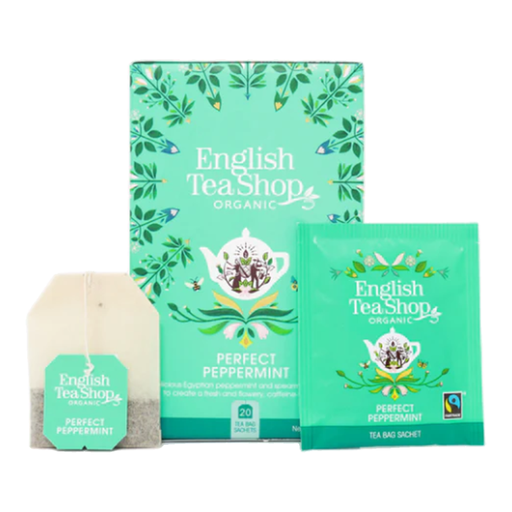
English Tea Shop Organic Perfect Peppermint, 20g
A peppermint herbal infusion rather than green tea, for shoppers willing to change flavour after supper. The title states organic and the pack size is 20g; check the current label for certification and a caffeine-free statement if either is essential to your choice.
View on Joybuy
 No image available
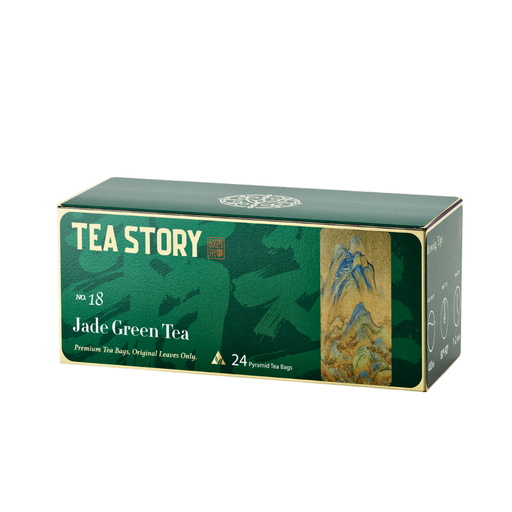
TEA STORY Jade Green Tea ECOCERT Organic Spring First Flush, 24 × 2g pyramid bags
A bagged green-tea option for shoppers who want an explicit organic claim; the product title states ECOCERT Organic and specifies 24 pyramid bags of 2g each. Check current certification information if organic status is decisive, and establish its caffeine status before choosing it for a drink close to bed.
View on Joybuy
Questions about evening green tea
What does “organic” mean on green tea sold in the UK?
It is a regulated product claim, not a description of caffeine content. Department for Environment, Food & Rural Affairs guidance says a product labelled organic must meet the applicable organic-production rules and that the product and its suppliers must be certified by an approved organic control body. Check the claim and certification information for the exact tea you plan to buy.
Is organic green tea caffeine-free?
No: organic status does not establish that a green tea is caffeine-free. The European Food Safety Authority identifies tea leaves as a natural caffeine source, so check the exact product for an explicit caffeine-free or decaffeinated statement if that distinction matters.
Should I choose green tea immediately before bed after supper?
If you are avoiding caffeine close to bed, standard green tea is not the cautious choice. NHS Borders advises avoiding caffeinated hot drinks near bedtime because they can make people feel more awake and disrupt sleep; look for a herbal alternative explicitly labelled caffeine-free if you still want a hot drink.
What if a green-tea-and-matcha listing says “caffeine-free”?
Check the current pack before relying on that statement. A Tesco Groceries description of Pukka Organic Supreme Matcha Green identifies green tea and matcha ingredients while also using naturally caffeine-free wording, so that listing alone is not a clear basis for choosing the blend to avoid caffeine.


