Hosts serving several guests
Individually portioned tea bags let guests prepare their own cups without measuring leaves. For a shared loose-leaf brew, plan for a teapot or infuser as well as storage between meetings.


For loose-leaf green tea kept between book-club meetings, choose an opaque, well-sealing caddy rather than a clear display jar: Rare Tea Company advises protecting tea from light, air and moisture. Tea bags make individual cups simpler to prepare; if some guests want to reduce caffeine, offer a clearly labelled decaffeinated option and check its pack information rather than assuming it is caffeine-free.
The choice depends on whether guests will make their own cups or share a loose-leaf brew.
Individually portioned tea bags let guests prepare their own cups without measuring leaves. For a shared loose-leaf brew, plan for a teapot or infuser as well as storage between meetings.
If you keep opened leaves between meetings, an opaque, airtight caddy follows Rare Tea Company’s advice to limit exposure to light, air and moisture. You will also need a way to strain the leaves when serving.
A clearly labelled decaffeinated green tea is easier to distinguish from standard green tea. Check the exact pack information; decaffeinated does not mean caffeine-free.
Decide how guests will make their tea, then choose storage and pack sizes that fit what you expect to use between meetings.
| Priority | What to check | Your needs |
|---|---|---|
| Loose-leaf storage | Check that the caddy closes securely and blocks light. Choose a size suited to the amount of tea you expect to keep open; Rare Tea Company advises limiting exposure to air, moisture and sunlight. | I want to keep loose-leaf tea between meetings without leaving it in a clear jar on display. |
| Individual servings | Check the number of bags and the preparation instructions on the pack. An infuser or teapot is needed for loose leaves but not for individually portioned bags. | Guests may make cups at different times, so I would rather not measure and clear away leaves for every serving. |
| Caffeine choice | Look for an explicit decaffeinated label and check the exact pack information. Do not treat decaffeinated green tea as caffeine-free. | I want guests who are reducing caffeine to be able to identify a separate option. |
| Brewing instructions | Follow the directions for the tea you buy: Tesco lists three minutes in 200ml water for Twinings’ 80-bag green tea, while Clipper Tea Shop advises cooling boiled water for a minute before a one-to-three-minute infusion of its 80-bag green tea. | If I am serving more than one tea, I want the instructions for each pack close at hand. |
A jar left in the light does not provide the light-blocking storage Rare Tea Company recommends for tea.
Choose an opaque caddy with a secure closure, and check that its capacity suits the amount of tea you will keep open.
Guests need a way to contain and remove the leaves, which adds a preparation and clearing-up step to each cup or shared pot.
Use bags for straightforward self-service, or arrange and try an appropriate infuser or teapot before the meeting.
An infuser or teapot may need to be obtained separately.
Tea contains caffeine, and a decaffeinated label does not establish that a drink is caffeine-free.
Keep the options clearly identified and check the caffeine information on the exact pack before serving.
These brands offer different tea formats and blends; check the specific product rather than assuming every tea in a range has the same ingredients or preparation method.
An option when choosing between individually portioned green tea and loose-leaf Sencha.
A bagged option for buyers seeking the organic and Fairtrade details stated for its Pure Green Tea.
Its UK green-tea range includes mao feng, jasmine pearls, popcorn tea and green tea with mint.
A choice to examine when guests want green-tea blends with matcha and other botanicals.
Its UK range includes herbal, chai and flavoured tea selections.
These options cover a tea canister for loose-leaf storage and bagged green teas for individual servings, including a labelled decaffeinated choice.
 No image available
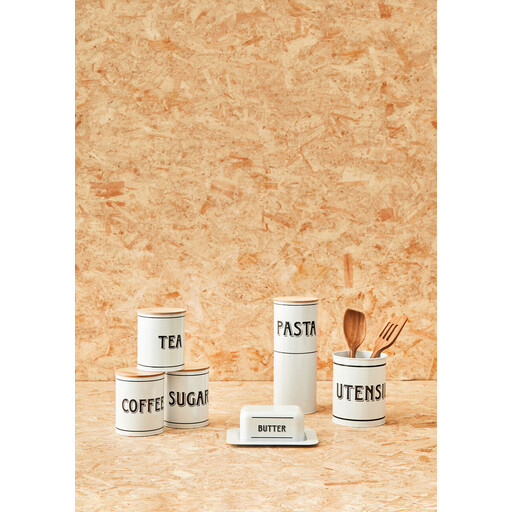
A canister to consider for storing loose-leaf tea between meetings. Check its usable capacity, how securely it closes and its food-contact suitability before relying on it for tea storage.
 No image available
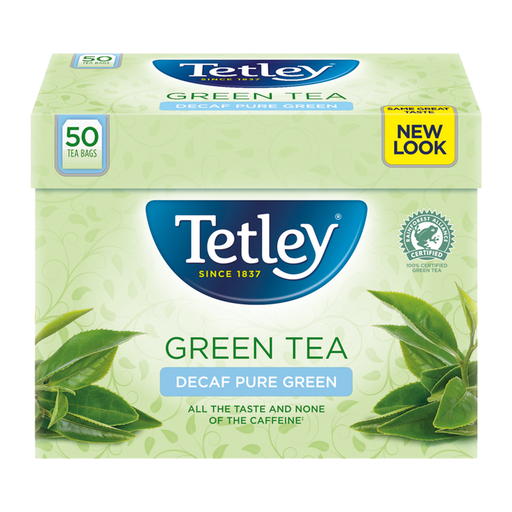
The 50 individually portioned bags provide a clearly labelled alternative to standard green tea. Joybuy describes this Tetley product as decaffeinated to 0.2%; do not interpret that wording as caffeine-free, and check the exact pack for caffeine information and brewing directions.
 No image available
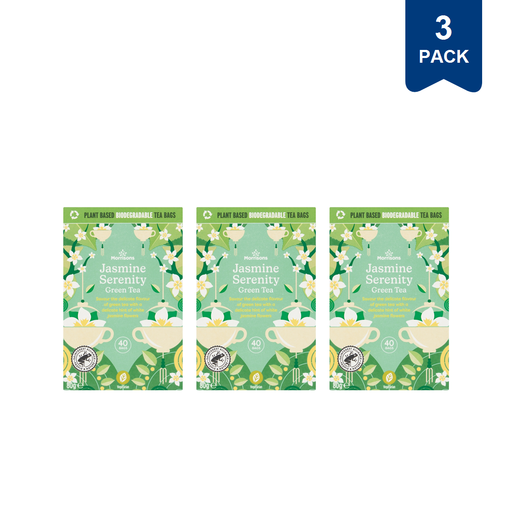
Individually portioned jasmine green-tea bags suit guests making separate cups. This selection contains three packs of 40 bags; follow the pack’s brewing directions and check how to store an opened box.
A clear jar left on display is not the storage choice Rare Tea Company recommends: its guidance calls for an airtight caddy that blocks sunlight. For tea kept between meetings, choose an opaque caddy and check that it closes securely.
Choose a caddy that comfortably holds the amount of loose tea you expect to keep open between meetings. Check its usable capacity as well as its closure rather than choosing by its outside dimensions alone.
Follow the instructions on each pack. Tesco lists a three-minute infusion in 200ml water for Twinings’ 80-bag green tea; Clipper Tea Shop advises cooling boiled water for a minute before infusing its Pure Green Tea for one to three minutes.
A labelled decaffeinated option helps guests who want to reduce caffeine distinguish it from standard green tea. Check the exact pack information and do not assume decaffeinated means caffeine-free.