For a matcha-led cup at brunch, choose matcha powder if you can whisk drinks for the group; matcha-containing tea bags make individual servings easier, but their composition varies. Keep a conventional green tea alongside it for guests who prefer a lighter cup, and offer a clearly labelled decaffeinated option when needed. Follow the exact pack instructions: the UK Tea & Infusions Association advises water around 80°C for green tea.
Who is each option for?
Hosts making matcha the main drink
If you want a distinctly matcha-led serving and can prepare cups with a whisk, powder fits the plan. Twinings’ 100% matcha powder is one example; check the method on the pack you buy before planning how many cups to make at once.
Hosts serving different flavour preferences
Put a matcha option beside conventional pure green tea so guests can choose between styles. Clipper describes its pure green tea as light and delicate; that description is more useful for planning an alternative than assuming everyone wants the same intensity.
Hosts who prefer individual servings
Tea bags let guests choose and brew separate cups without whisking powder. If a bag is labelled matcha, check its ingredients: Twinings lists 15% matcha in Super Green Matcha, while Pukka states 2% for Supreme Matcha Green.
What matters when choosing?
Matcha powder
Choose it when: You want a matcha-led drink and can prepare cups by whisking powder.
Trade-off: Measuring and whisking take more host attention than putting out tea bags.
Matcha green-tea bags
Choose them when: Guests need convenient individual cups with a green-tea-and-matcha blend.
Trade-off: The word “matcha” does not tell you how much matcha a blend contains or how strong it will taste.
Conventional green tea
Choose it when: You want a separate pure-green-tea choice for guests who may not want matcha.
Trade-off: A pure-green-tea label alone does not establish an extra-bold flavour; check the tea’s description and brewing directions.
| Priority |
What to check |
Your needs |
| Tea composition |
Check whether the pack contains matcha powder, a matcha blend or conventional green tea. Twinings lists 100% matcha for its powder and 15% matcha for Super Green Matcha bags; Pukka states 2% for Supreme Matcha Green. These figures describe ingredients, not a measured flavour ranking. |
I’d like a distinctly matcha-led cup, but I don’t want to choose a bag solely because “matcha” appears on the front. |
| Serving format |
Check the pack count for individual cups, or the preparation method and quantity needed if you plan to whisk powder. Twinings instructs users to whisk 1 g of its matcha powder with 70 ml of water cooled to 70–80°C; follow the directions for the product you buy. |
For a larger group, I’d rather let people make separate cups. For a smaller gathering, I can prepare matcha myself. |
| Brewing |
The UK Tea & Infusions Association advises water around 80°C for green tea and says to read the pack instructions. Check the time for the exact tea: Clipper specifies a 1–3 minute infusion for its pure green tea. |
I want to make several cups consistently, rather than leaving bags in longer without checking their directions. |
| Guest choices |
Look for explicit decaffeinated labelling if a guest needs that option; Twinings and Clipper list decaffeinated green teas in their UK ranges. Check the current pack ingredients when serving guests with dietary restrictions. |
Not everyone at brunch will want matcha or a caffeinated green tea, so I’d put clearly labelled alternatives beside the main choice. |
What should you avoid assuming?
-
Assuming every matcha-labelled product makes the same cup
Twinings lists its powder as 100% matcha and its Super Green Matcha bags as 15% matcha; Pukka states 2% for Supreme Matcha Green. Those ingredient differences do not, on their own, rank the products by tasted strength.
Decide whether you want whisked matcha or a steeped blend, then read the ingredients of the exact pack.
-
Trying to force a stronger cup by steeping indefinitely
Preparation guidance differs by tea. The UK Tea & Infusions Association advises water around 80°C for green tea, while Clipper specifies a 1–3 minute infusion for its pure-green-tea bags.
Start with the product’s water and timing instructions. If you want a different flavour profile, compare tea styles rather than disregarding the brewing directions.
-
Treating mild flavour as a sign of decaffeination
Flavour descriptions do not identify whether a tea is decaffeinated. Twinings and Clipper both list green teas explicitly labelled decaffeinated.
Offer a separately labelled decaffeinated pack when a guest asks for one, and leave its packaging available to check.
-
Planning servings from an old product listing
Tesco notes that food products may be reformulated, so an earlier listing may not reflect the pack you serve.
Before buying for the group, check the current pack count, ingredients and allergen information on the exact product.
Relevant brand ranges
Twinings
Its UK green-tea range includes matcha powder, matcha-containing bags, pure green tea and decaffeinated pure green tea.
- Twinings lists its powder as 100% matcha and Super Green Matcha bags as 84% green tea and 15% matcha, making the format and ingredient difference clear.
- A matcha-labelled bag is not equivalent in composition or preparation to the brand’s powder.
Pukka
Supreme Matcha Green is a bagged green-tea-and-matcha blend offered in 20- and 40-bag formats.
- Pukka states that the blend contains 2% matcha; its 40-bag format is described as individually wrapped sachets.
- Choose it as a steeped blend, not as a substitute for pure matcha powder.
Teapigs
Its green-tea range includes Mao Feng, jasmine pearls, popcorn tea and green tea with mint.
- The range offers different named tea styles and flavour directions for a brunch selection.
- Teapigs describes its green tea as bold, but that brand description does not establish a cross-brand strength ranking.
Clipper
Its UK selection includes pure, matcha and decaffeinated green-tea options.
- Clipper describes its Fairtrade Organic Pure Green 80-bag tea as light and delicate and gives a 1–3 minute infusion time.
- That description makes it a choice to consider alongside a matcha-led drink, rather than evidence of extra-bold flavour.
Tesco
Its own-label green tea provides a straightforward bagged format; the listed pack contains 20 bags and 50 g of tea.
- Tesco’s listing gives a 3–5 minute infusion time, which guests can follow at a self-serve table.
- Tesco warns that formulations and allergen information can change, so check the physical pack before serving.
Joybuy green tea options
These options cover bagged green tea, matcha for host-prepared drinks and bagged matcha genmaicha. Choose among them by the serving style and flavour direction you want for brunch.
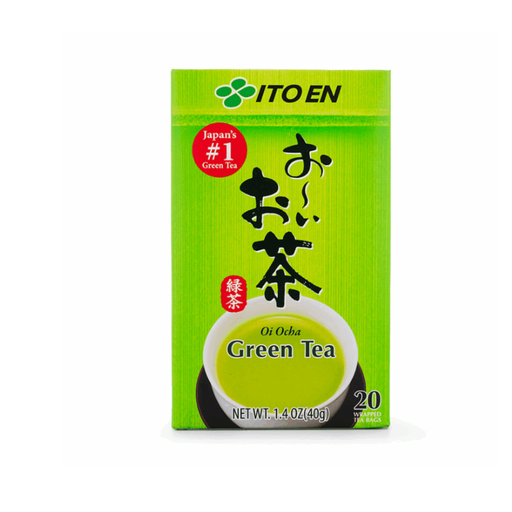 Image unavailable
ITOEN OH-I OCHA Green Tea Bags, 40g (20 bags)
The bagged format allows individual servings at brunch. The product description calls the taste rich and bold, but that wording is not a like-for-like strength comparison; check the pack’s brewing directions before serving.
View on Joybuy
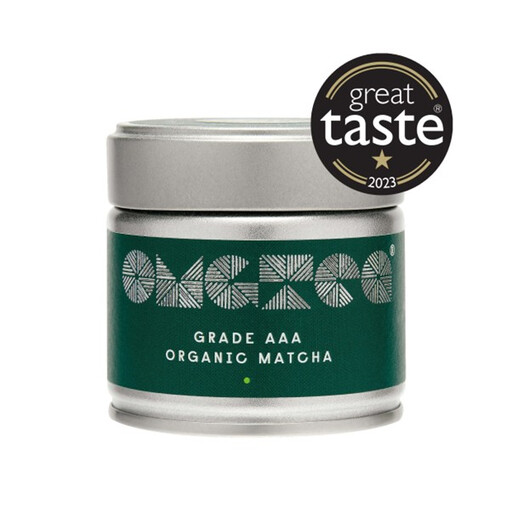 Image unavailable
OMGTea AAA Organic Matcha Green Tea, 30g
Consider this matcha format if you plan to prepare drinks for guests rather than leave out tea bags. Check the pack’s preparation directions and work out how much you need for the group before buying.
View on Joybuy
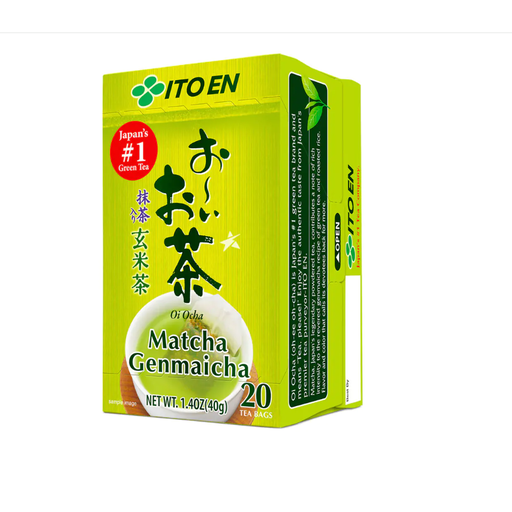 Image unavailable
Itoen Oi Ocha Japanese Matcha Genmaicha, 40g (20 bags)
The 20-bag format suits individual cups for guests interested in a genmaicha style. Do not assume that matcha in the name makes it equivalent to whisked matcha powder; check the ingredients and brewing instructions on the pack.
View on Joybuy
Questions about serving green tea
How can I make green tea for brunch without over-steeping it?
Choose the tea style you want, then follow that pack’s brewing method rather than extending the infusion without guidance. The UK Tea & Infusions Association advises water around 80°C for green tea; Twinings gives a separate method for its matcha powder of whisking 1 g with 70 ml of water cooled to 70–80°C.
Will a matcha tea bag make the same drink as matcha powder?
No: a matcha-containing tea bag is steeped, while matcha powder is whisked into the drink. Twinings lists its powder as 100% matcha and its Super Green Matcha bags as 15% matcha; Pukka states 2% matcha for Supreme Matcha Green. Those ingredient figures help identify the formats but do not provide a measured taste ranking.
What can I offer guests who do not want the matcha option?
Put out a conventional pure green tea, and add a clearly labelled decaffeinated green tea if a guest needs one. Clipper describes its pure green tea as light and delicate; both Clipper and Twinings list decaffeinated green-tea options in their UK ranges.
What should I check before serving green tea to guests with dietary restrictions?
Check the ingredients and allergen information on the current physical pack for each tea you serve, and keep the packs available to guests. Tesco notes that food formulations and product information can change, so an earlier online listing should not replace that check.


