If a fuller tea flavour matters more than a pure-green ingredient list, consider a green-and-black blend: Twinings lists 70% green tea and 30% black tea in its blend and describes the black tea as full-flavoured. For a cup that remains entirely green tea, check the product’s flavour description rather than assuming it will taste bold; if avoiding caffeine is the deciding requirement after dinner, choose a product labelled caffeine-free herbal tea instead of green tea or matcha.
Who is each tea route for?
Dinner-time drinkers wanting more body
If pure green tea tastes too delicate for the cup you want with dinner, a green-and-black blend is worth considering. Twinings describes the black-tea component of its blend as full-flavoured, but the blend is not 100% green tea.
Drinkers who want pure green tea
If the ingredient list matters more to you than an assertive flavour, compare pure-green products by their stated flavour and brewing instructions. Clipper describes its pure green tea as light and delicate, while Teapigs describes its Mao Feng as delicate.
Evening drinkers avoiding caffeine
Green tea and matcha naturally contain caffeine, according to Pukka. If your after-dinner drink needs to be caffeine-free, check for an explicitly labelled caffeine-free herbal infusion rather than relying on a green-tea name.
What should you check before buying?
Start with the flavour and ingredient list you want, then check how the specific tea is prepared and whether caffeine fits your evening routine.
| Priority | What to check | Your needs |
|---|
| Flavour and ingredients |
Check whether the pack contains pure green tea, green tea with matcha, or green tea blended with black tea. Twinings lists its Green Tea & Black Tea Blend as 70% green tea and 30% black tea; Pukka describes Supreme Matcha Green as smooth. |
I want a fuller tea note, and I’m comfortable with black tea in the blend. If I want only green tea, I’ll choose by the stated flavour rather than assume that every pure-green product tastes bold. |
| Brewing |
Follow the instructions for the product you buy. Teapigs recommends 80°C water and three minutes for Mao Feng; Clipper advises cooling boiled water for a minute and infusing its pure green tea for 1–3 minutes. |
A thin cup would disappoint me, but I don’t want to rely on prolonged steeping as a promise of stronger flavour. |
| Caffeine |
Check whether the product is explicitly labelled caffeine-free if avoidance matters. Pukka says green tea and matcha naturally contain caffeine and identifies its herbal range separately as caffeine-free. |
For a late dinner, I may prefer a caffeine-free herbal drink to either green tea or matcha. |
| Pack and sourcing |
Compare the number of bags and ingredient lists. If sourcing credentials matter, check the exact pack: Clipper identifies its pure green tea as organic and Fairtrade. |
I want a pack format that suits how often I drink tea, or a particular sourcing credential, without treating either as a measure of flavour intensity. |
What can lead to the wrong cup?
-
Assuming pure green tea will taste the fullest
Clipper calls its pure green tea light and delicate, and Teapigs describes Mao Feng as delicate. Twinings instead describes the black tea in its green-and-black blend as full-flavoured.
Decide whether 100% green tea is a requirement before choosing by flavour description. A green-and-black blend is a different ingredient choice, not a stronger version of pure green tea.
-
Treating matcha as caffeine-free
Pukka says both green tea and matcha naturally contain caffeine. A matcha-green blend therefore does not meet a caffeine-free requirement.
If avoiding caffeine after dinner is essential, choose a product explicitly labelled caffeine-free herbal tea.
-
Steeping longer to force a bolder flavour
Preparation guidance differs between products: Teapigs recommends 80°C water and three minutes for Mao Feng, while Clipper gives a 1–3 minute infusion range for its pure green tea.
Begin with the instructions on your pack. If you adjust the brew, change one variable at a time rather than treating longer steeping as a guaranteed route to the flavour you want.
Brand and retailer references
These examples illustrate different ingredient and flavour routes; a brand’s wider range need not share the characteristics of the product described here.
Twinings
Its Green Tea & Black Tea Blend offers a choice for someone open to black tea alongside green tea.
- Twinings lists the blend as 70% green tea and 30% black tea and describes the black tea as full-flavoured.
- The blend is not 100% green tea; Tesco also lists a separate Twinings product with a 100% green-tea ingredient list.
Clipper
Its Organic Fairtrade Pure Green Tea is an option when a pure-green ingredient list and stated sourcing credentials matter.
- Clipper lists organic pure green tea as the ingredient and identifies the product as Fairtrade.
- Clipper describes this tea as light and delicate, rather than bold.
Pukka
Its Supreme Matcha Green provides a matcha-green route; its caffeine-free herbal teas are a separate choice.
- Pukka describes Supreme Matcha Green as a smooth blend of green teas and matcha.
- Pukka says green tea and matcha naturally contain caffeine, so its matcha blend is not the caffeine-free route.
Teapigs
Its pure Mao Feng green tea suits someone interested in a product with specific lower-temperature brewing guidance.
- Teapigs lists pure Mao Feng green tea and recommends 80°C water for a three-minute brew.
- Teapigs describes the flavour as delicate, not bold.
Tesco
Its grocery listings offer a way to examine own-label and branded green teas by pack format and ingredient list.
- Tesco lists own-label green tea alongside products from Twinings, Clipper and Teapigs, as well as decaffeinated green-tea options.
- A retail listing or pack size does not establish how pronounced a tea will taste.
Green-tea options on Joybuy
These Itoen tea bags offer roasted green tea, green tea with roasted rice and matcha, plain green tea, and green tea with matcha. Compare their stated ingredients and flavour descriptions for a dinner-time cup; the selection does not establish which tastes strongest.
 No image available
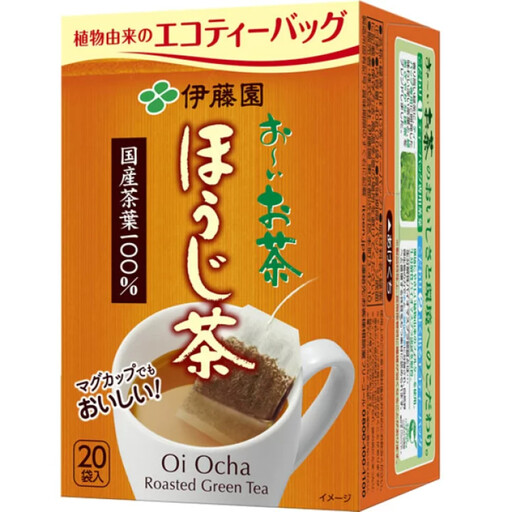
Itoen Oi Ocha Hojicha Premium Roasted Green Tea, 20 bags
Consider this for a roasted green-tea character with dinner: the product description calls its flavour toasty and slightly nutty, not comparatively stronger than other teas. The pack is labelled 20 portions of 1.8g. If caffeine intake matters, check the pack information rather than treating its low-caffeine wording as a measured amount.
View on Joybuy
 No image available
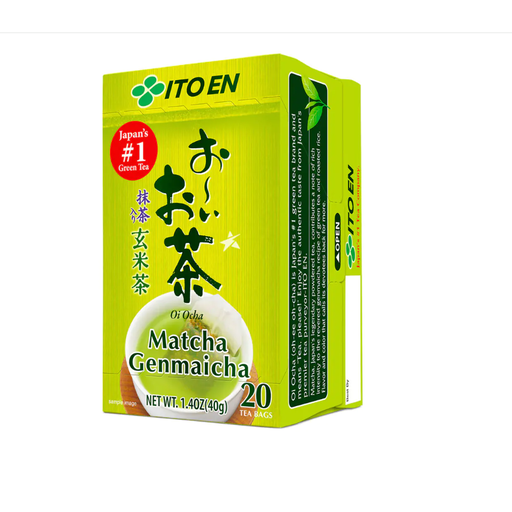
Itoen Oi Ocha Japanese Matcha Genmaicha, 20 bags, 40g
Choose this route if the combination of roasted rice, green tea and matcha appeals to you; the product description characterises the cup as nutty. It is a blend, not pure green tea, and the 40g pack contains 20 bags. Check the pack if caffeine or brewing instructions affect your choice.
View on Joybuy
 No image available
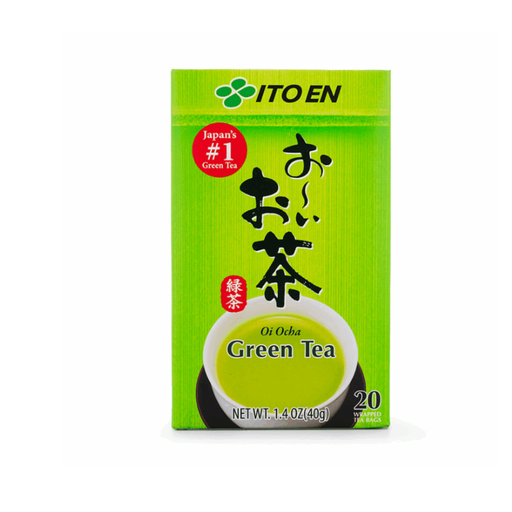
Itoen OH-I OCHA Green Tea Bags, 20 bags, 40g
This is the plain-green-tea option in the selection. Its product description calls the flavour rich and bold, but that wording is not a measured comparison with the other teas. The 40g pack contains 20 tea bags; check the pack for brewing and caffeine details if they matter to you.
View on Joybuy
 No image available
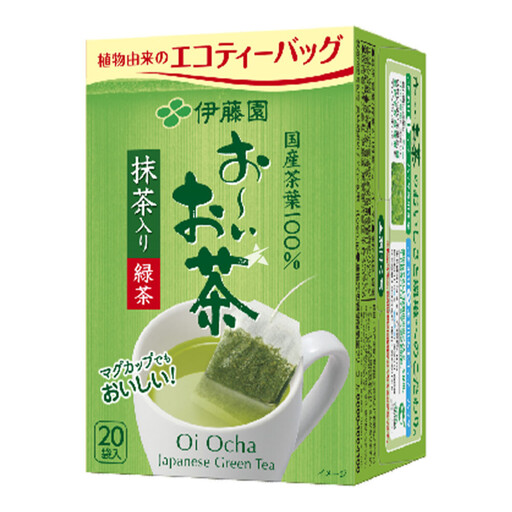
Itoen Oi Ocha Eco Green Tea with Matcha, 20 bags
This option combines green tea with matcha for someone who wants matcha character in a tea-bag format. The pack is labelled 20 portions of 1.8g. Neither the blend name nor its flavour description establishes a comparative strength level; check the pack if ingredient proportions or caffeine affect your decision.
View on Joybuy
Questions about dinner-time green tea
Does stronger-tasting green tea contain more caffeine?
Flavour strength is not a caffeine measurement. Pukka says green tea and matcha naturally contain caffeine; check caffeine information for the specific product if the amount affects your choice.
What should I choose for a fuller tea flavour with dinner?
Consider a green-and-black blend if you are happy for the drink not to be 100% green tea. Twinings lists its blend as 70% green tea and 30% black tea and describes the black tea as full-flavoured.
How should I brew a pure green tea?
Use the instructions for the tea you bought rather than one rule for every green tea. Clipper advises cooling boiled water for a minute and infusing its pure green tea for 1–3 minutes; Teapigs recommends 80°C water and three minutes for its Mao Feng.
Does green tea count towards caffeine intake during pregnancy?
Yes. The NHS says that during pregnancy you should have no more than 200mg of caffeine a day from all sources, including tea. Check the caffeine information for your chosen drink and account for other sources rather than judging intake by flavour.
What if I want no caffeine after dinner?
Choose a product explicitly labelled caffeine-free herbal tea instead of assuming green tea or matcha meets that requirement. Pukka identifies a separate caffeine-free herbal range and says green tea and matcha naturally contain caffeine.


