Shoppers seeking a more noticeable flavour
If delicate plain green tea leaves you wanting a different flavour, consider lemon, mint, matcha or roasted varieties. Their flavour descriptions do not tell you how much caffeine they contain.


If you want more noticeable flavour at elevenses, choose the kind of flavour you mean: a matcha blend, a roasted green tea or a lemon-flavoured tea offers a different cup from plain green tea. None of those descriptions establishes which tea has the strongest tea-leaf flavour or the most caffeine. Before changing products, brew your tea according to its pack instructions; the UK Tea & Infusions Association recommends water at around 80°C for green tea.
If delicate plain green tea leaves you wanting a different flavour, consider lemon, mint, matcha or roasted varieties. Their flavour descriptions do not tell you how much caffeine they contain.
If you want the taste of unflavoured green tea, check the product description and try its recommended brewing method before deciding that a particular tea is too mild.
If caffeine affects your elevenses choice, check the exact product label. Teapigs says its Mao Feng green tea naturally contains caffeine, while decaffeinated options are separately identified in some ranges.
Start with the flavour you want, then check the brewing directions, caffeine label and format of the exact product.
| Priority | What to check | Your needs |
|---|---|---|
| Flavour profile | Read the exact tea’s tasting description. Distinguish added lemon or mint flavour, a matcha blend and roasted notes from the flavour of plain green tea; none establishes a common strength ranking. | I want a flavour that stands out more at elevenses, rather than a claim that one tea is the strongest. |
| Brewing | Follow the time on the pack. The UK Tea & Infusions Association recommends water at around 80°C for green tea; Teapigs specifies 80°C and three minutes for its Mao Feng. | Before I rule out a tea as too mild, I want to prepare it as its maker directs. |
| Caffeine | Check the exact pack for its caffeine information or an explicit decaffeinated label. Do not infer caffeine content from a matcha, roasted or flavoured name. | If I am limiting caffeine, I need the label of the tea I will actually drink. |
| Format and ingredients | Compare tea bags with powder that needs preparation, and check ingredients when a blend matters to you. For a whole-leaf bag, read the named product’s flavour description too: Teapigs calls its Mao Feng light and delicate. | A bag suits a straightforward break; I would choose a powder only if I am happy to prepare it. |
A prominent lemon or roasted note is not the same thing as a stronger plain-tea flavour. Brand descriptions also differ: Twinings calls its Pure Green Tea mellow, while Teapigs calls Mao Feng light and delicate.
Decide which flavour you want, then read the description of the exact variant. Do not use a flavoured name or the presence of matcha to infer caffeine content.
The UK Tea & Infusions Association gives different water-temperature guidance for the two: around 80°C for green tea and 90–98°C for black tea.
Use the green tea’s pack instructions for steeping time, and try that method before switching to another variety.
Teapigs explicitly says its Mao Feng naturally contains caffeine. A light flavour description does not establish that a tea is decaffeinated.
When caffeine matters to your choice, look for an explicitly decaffeinated product and check its current pack information.
These brand examples show different flavour and format routes; their descriptions apply to the named products, not every tea in a range.
Twinings offers plain, flavoured and decaffeinated green-tea choices.
Clipper’s green-tea range includes plain and flavoured options, including lemon and mint.
Pukka’s range includes green-tea blends with matcha.
Teapigs offers green tea in its whole-leaf pyramid Tea Temple format.
Tesco’s own-label range includes plain green tea and green tea with lemon.
These options cover plain, roasted, matcha-and-rice-blended and lemon-flavoured routes for elevenses. Choose by flavour and preparation format rather than treating their different descriptions as a strength ranking.
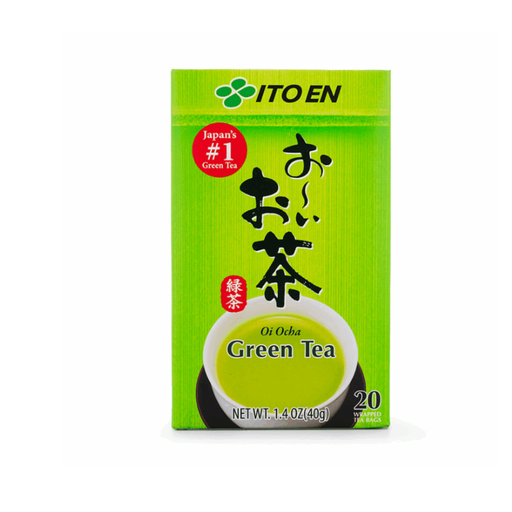 No image available
A plain green-tea bag option for elevenses. The product description calls its taste rich and bold, but that wording is not a measured comparison with other teas. Check the pack for brewing directions and caffeine information if either affects your choice.
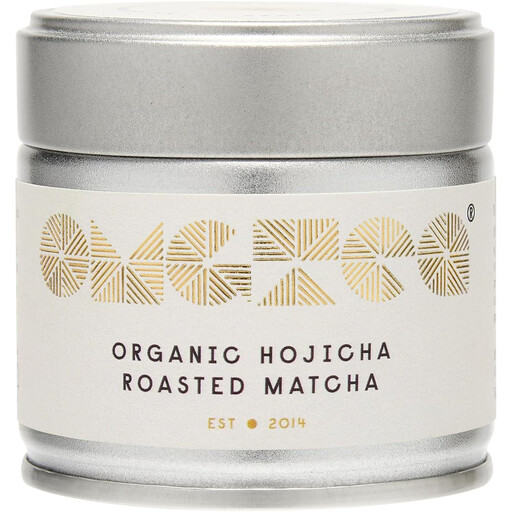 No image available
Consider this powder if you want a roasted matcha drink rather than a tea bag. Its product description mentions nutty notes and preparation with hot water or milk; it needs whisking or frothing. Roasted flavour is not evidence that it tastes stronger than other green teas.
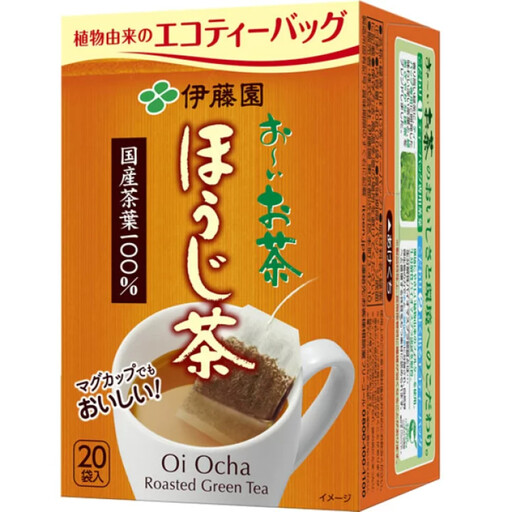 No image available
A roasted green-tea bag option if you prefer the toasty, slightly nutty profile described for this tea. Roasting offers a different flavour, not a demonstrated increase in brew strength. Check the pack’s brewing and caffeine details if they matter to you.
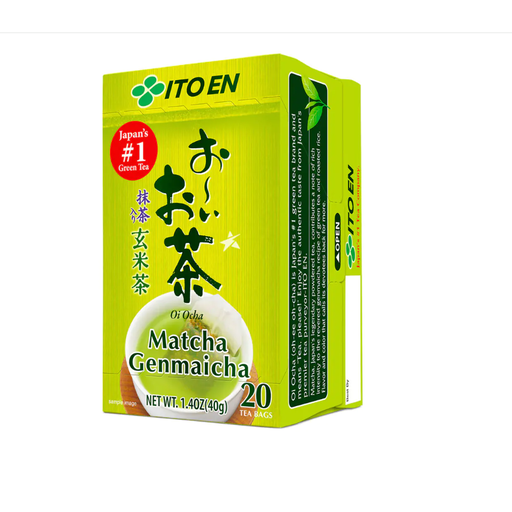 No image available
A bagged green-tea blend for an elevenses cup with roasted-rice and matcha notes rather than a plain-green-tea profile. The blend’s name does not establish greater tea-leaf strength. Check the pack for its brewing directions and caffeine information.
 No image available
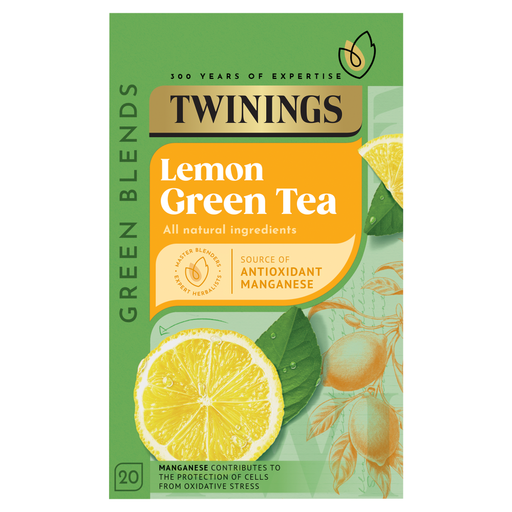
Choose this bagged tea if a lemon note appeals more than plain green tea. Its lemon flavour is not evidence of stronger tea-leaf flavour, and the product description calls the drink light. Check the pack for brewing directions and caffeine information if needed.
Follow the time on its pack and use water at around 80°C, as recommended for green tea by the UK Tea & Infusions Association. Directions can be product-specific: Teapigs recommends 80°C and a three-minute brew for its Mao Feng Tea Temple.
Not necessarily. Pukka describes Supreme Matcha Green as a smooth green-tea-and-matcha blend; that identifies its flavour route, not how its strength compares with plain green teas. Choose it if that blend appeals to you, rather than relying on the ingredient name as a strength measure.
Do not assume it is. Teapigs says its Mao Feng naturally contains caffeine, and some brands identify decaffeinated green-tea options separately. Check the exact product’s current label when caffeine matters to your choice.