For an unattended hotel-room tea tray, individually wrapped green-tea bags are the clearer choice: hospitality supplier Out of Eden specifically offers a tag-and-envelope pack for this use. A caddy can instead hold tea at a staff-managed drinks point, where someone can check its contents and replenish it. Keep flavoured tea as a labelled additional choice rather than assuming every guest wants it in place of plain green tea.
Who is choosing the tea?
The right pack depends on whether a guest takes tea from an unattended bedroom tray or from a drinks point maintained by staff.
Hotel and B&B room-tray buyers
Guests need an identifiable single serving they can prepare without opening a shared container. Out of Eden describes its individually wrapped Twinings tag-and-envelope bags as suitable for hospitality and self-catering properties.
Breakfast-room and meeting-space managers
A caddy may suit a shared drinks point when staff can inspect, replenish and identify the tea. Tesco lists a Clipper 80-bag pack supplied with a caddy; that pack format does not, by itself, establish that each bag is wrapped for a bedroom tray.
Operators offering additional tea choices
Flavoured or whole-leaf green tea can sit alongside a plain option if guests can identify the blend and follow its preparation instructions. The teapigs Mao Feng instructions, for example, specify 80°C water and a three-minute brew.
What matters when choosing a format?
Decide where guests will take the tea before choosing its container. Then check the serving format, ingredients and brewing instructions on the particular product.
Wrapped bags for bedroom trays
Choose when: Guests select and prepare tea from an unattended tray; Out of Eden offers individually wrapped Twinings tag-and-envelope bags for hospitality use.
Allow for: Each serving has its own envelope, so check the pack count and how you will replenish rooms.
Caddy for a managed drinks point
Choose when: Staff can maintain a shared breakfast-room or meeting-space station; Tesco lists Clipper green-tea bags in an 80-bag caddy pack.
Allow for: A caddy still needs someone to check its contents and keep the product information available; it does not establish that the bags are individually wrapped.
| Priority | What to check | Your needs |
|---|
| Bedroom serving |
Check whether each bag has its own envelope and whether guests can identify and remove it easily. Confirm the pack count for room replenishment. |
I want a single serving that can sit on an unattended room tray without guests taking tea from a shared open container. |
| Caddy use |
Check whether the caddy is for staff-managed storage or guest self-service, and how staff will identify and replenish its contents. |
At a staffed drinks point, I can keep an eye on a shared container. That is different from leaving one in each bedroom. |
| Tea choice |
Read the ingredient list to distinguish plain green tea from flavoured blends. Pukka describes Mint Matcha Green as a blend of mint, sencha and matcha. |
I would keep a plain choice identifiable while offering a clearly labelled flavour as an additional option. |
| Preparation |
Check the product’s water-temperature and infusion instructions against the facilities guests have. teapigs specifies 80°C water and three minutes for Mao Feng. |
If a room has only a boiling kettle, I need to consider how guests will follow instructions calling for cooler water. |
| Product information |
Keep the current pack or supplier details available when refilling a caddy or changing a blend. Check ingredients and caffeine information on the selected tea. |
I want staff to be able to answer a guest’s question about what is in the tea, rather than relying on the caddy label alone. |
What should you avoid?
-
Assuming a caddy makes tea ready for a bedroom tray
Tesco’s Clipper caddy listing describes an 80-bag pack, while Out of Eden specifically describes individually wrapped Twinings bags for hospitality use. The container and the individual serving are separate decisions.
For unattended rooms, check each bag’s wrapping. Reserve a shared caddy for a point that staff can maintain.
-
Overlooking the brewing instructions
teapigs recommends 80°C water and a three-minute brew for Mao Feng. A kettle that only boils water does not give guests that temperature directly.
Check the chosen tea’s instructions and the room equipment before putting it on the tray; provide clear preparation guidance where needed.
-
Treating every green tea as caffeine-free or identical
Twinings states that green tea naturally contains caffeine. Ingredients also differ between plain green teas and blends such as Pukka Mint Matcha Green.
Read the current label, identify flavoured choices clearly and check any alternative offered to a guest who wants to avoid caffeine.
-
Discarding the pack details when filling a caddy
Once bags are moved from their original pack, guests and staff may have less information at hand about the product being served.
Retain the current label or supplier specification and make the relevant ingredient and allergen information accessible. The Food Standards Agency’s guidance addresses allergen-information duties for retail and catering food businesses.
Which brands offer relevant formats?
These examples show different packaging and flavour routes; a brand name alone does not tell you whether a particular pack suits an unattended room tray.
Twinings
Pure Green appears in both a single-envelope format from Twinings and a tag-and-envelope 20-pack that Out of Eden describes for hospitality use.
- Out of Eden describes the 20-pack bags as individually wrapped.
- Check the exact pack format when ordering; the hospitality description does not apply automatically to every Twinings green-tea pack.
Clipper
Clipper lists a 250-envelope catering green tea, while Tesco lists an 80-bag Clipper pack with a caddy.
- The envelope and caddy listings give buyers distinct formats for portioned service and managed storage.
- Do not assume bags in the Tesco caddy pack are individually wrapped for room trays.
teapigs
Mao Feng Green Tea is sold in tea temples and has specific brewing guidance.
- teapigs specifies 80°C water and a three-minute brew, giving staff clear instructions to pass on.
- Check whether guests can follow that temperature guidance with the equipment provided.
Pukka
Mint Matcha Green offers a flavoured choice made with field mint, spearmint, sencha and matcha, according to Pukka.
- Its named ingredients make it distinguishable from a plain green tea on a tea menu.
- Label it as a blend rather than assuming it will suit someone asking for plain green tea.
Joybuy green-tea options
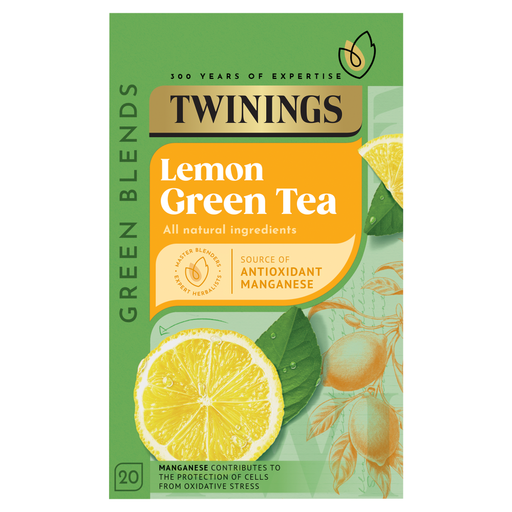
This lemon-flavoured tea is an additional green-tea choice to consider for guests. Check the individual packaging before choosing it for an unattended bedroom tray.
 No image available
Twinings Lemon Green Tea 20 Pack
The listed ingredients include green tea and natural lemon flavouring, making this a flavoured option rather than a plain green tea. The title identifies a 20-pack of tea bags. Before using it on an unattended room tray, confirm whether each bag is individually wrapped; check the pack for its brewing instructions.
View on Joybuy
Common questions
Should an unattended hotel room have a green-tea caddy?
Use individually wrapped bags for the guest-facing tray rather than relying on a shared caddy. Out of Eden describes its wrapped Twinings tag-and-envelope pack for hospitality use; a caddy is more appropriate where staff can maintain a shared drinks point.
Do all green teas need the same brewing instructions?
No. Follow the instructions for the tea you buy: teapigs specifies 80°C water and a three-minute brew for Mao Feng. Check whether guests can follow the chosen instructions with the room’s kettle and any guidance you provide.
Can I assume green tea is caffeine-free?
No. Twinings states that green tea naturally contains caffeine. If a guest asks to avoid it, check the current label of any alternative before offering it.
What product information should stay with a refilled caddy?
Keep the current packaging or supplier specification identifiable so staff can check the ingredients and allergen information for the tea inside. The Food Standards Agency’s guidance says retail and catering food businesses must provide allergen information and follow applicable labelling rules.
How should I hold tea between room replenishments?
Keep it dry and follow the storage directions on the selected pack. If staff transfer bags to a caddy, retain the original product information so they can identify what is being served when the caddy is topped up.


