Households making green tea regularly
If several people use tea bags, pack count is a useful starting point. Clipper and Twinings each list an 80-bag plain green tea option; check whether that quantity fits how often your household drinks it.


For a household that regularly makes individual cups of green tea, start by comparing boxed tea bags and their pack counts. A jar is more useful if you choose loose leaf or want to organise tea after opening; either way, follow the pack’s storage directions and keep its date and preparation information. Choose a smaller whole-leaf or flavoured pack for those preferences rather than assuming it will serve the household in the same way as a large box of plain tea bags.
If several people use tea bags, pack count is a useful starting point. Clipper and Twinings each list an 80-bag plain green tea option; check whether that quantity fits how often your household drinks it.
If you are happy to measure tea for each cup, a jar may help organise loose leaf. Twinings advises one teaspoon per cup for its 100g Pure Sencha loose tea; keep the pack’s storage and preparation information when decanting.
Clipper lists an organic, Fairtrade 80-bag pure green tea. If the form of the tea matters more than bag count, teapigs describes its Tea Temples as whole-leaf pyramid bags. Check the claim on the exact pack you choose.
Decide whether the household wants plain, flavoured or decaffeinated tea, then compare quantities within the same format. Consider a jar after choosing between bags and loose leaf.
| Priority | What to check | Your needs |
|---|---|---|
| Pack quantity | Compare bag counts with bag counts: Clipper and Twinings list 80-bag plain green teas, while teapigs lists 50 Mao Feng Tea Temples. Check how many separate packs a multipack contains. | Several of us make green tea regularly, so I want enough bags without buying more than we expect to use while the tea remains at its best. |
| Storage | Follow the exact product’s storage directions. Clipper instructs buyers to keep its tea in a cool, dry place; retain the pack’s date and preparation details if decanting. | I want tea to fit neatly in the cupboard, but a jar is only useful to us if it helps with loose leaf or opened packs. |
| Preparation | Check whether the tea comes in individual bags or needs measuring. Twinings advises one teaspoon per cup for its 100g Pure Sencha loose tea; allow for an infuser or teapot. | Tea bags fit our routine when different people make their own cups. If we choose loose leaf, we are happy to measure it. |
| Flavour and claims | Check whether the exact pack contains plain or flavoured green tea, and read any organic or Fairtrade statement on that pack. These describe different characteristics from whole-leaf format. | Some of us prefer plain tea; others may want a flavour. I do not want a format or certification claim to stand in for the ingredient choice. |
| Caffeine preference | If reduced caffeine matters, look for a product explicitly described as decaffeinated and check its label. Do not read “decaffeinated” as “caffeine-free”. | We need to know which bags are decaffeinated before adding them to a shared household supply. |
A jar has a clearer role for loose leaf than for tea bags already divided into portions.
Choose bags or loose leaf first. Add a clean, dry jar if it helps you organise the tea, and keep the pack’s date and preparation details.
Eighty conventional tea bags, 50 pyramid bags and 100g of loose tea are different quantities and formats; a loose-leaf pack does not state a fixed bag count.
Compare bag counts between similar bagged products. For loose leaf, also consider measuring and preparation equipment.
Wellbeing language does not tell you whether a tea is plain or flavoured, bagged or loose, or suited to the household’s preparation routine.
Use the exact pack’s ingredients, format and stated certifications to make that choice rather than assuming a health effect.
The original pack carries details you may need later, including its date and storage directions.
Keep the box or photograph its label. Store decanted tea according to the product’s directions; a jar does not override them.
These brand examples illustrate pack formats and stated product characteristics, not a claim that every product from a brand is alike or available on Joybuy.
Clipper lists an 80-bag Organic Fairtrade Pure Green Tea for households looking for plain bagged tea.
Twinings lists 80-bag Pure Green Tea and Green Tea & Lemon, alongside a separate 100g Pure Sencha loose-leaf product.
teapigs lists Mao Feng green tea in a 50-Tea-Temple pack and describes its pyramid Tea Temples as containing whole leaves.
Pukka presents green-tea blends for households choosing flavours rather than a plain-tea supply.
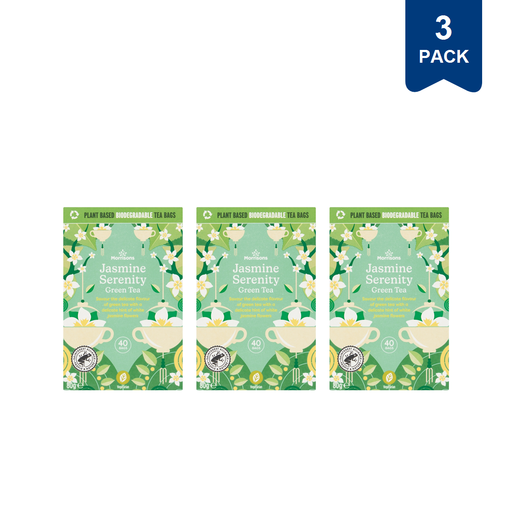
These bagged options cover a jasmine-flavoured multipack and a decaffeinated pack for different household preferences. A storage jar is optional for either; neither product is loose-leaf tea.
 No image available
Three packs of 40 tea bags provide 120 bags for a household choosing jasmine-flavoured green tea. This is not a plain-green or loose-leaf option; the product information directs storage in a cool, dry place.
 No image available
This 50-bag pack is a decaffeinated green-tea option for a household checking caffeine information on the exact product. Decaffeinated does not mean caffeine-free. The product information says to store it in a cool, dry place and check the packaging for its best-before date.
No. Boxed tea bags can remain in their packaging. A clean, dry jar may help organise loose leaf or an opened pack, but follow the tea’s storage directions and retain its date and preparation details.
Check the exact pack’s date, quantity, ingredients, warnings where relevant, and storage and preparation directions. If you decant the tea, keep the packaging or a photograph of its label so those details remain available.
Choose bags if ready-divided portions fit the household’s routine. Choose loose leaf if measuring tea suits you: Twinings advises one teaspoon per cup for its 100g Pure Sencha, and you will need an infuser or teapot to prepare it.
Do not assume so. If caffeine content matters to your household, check the wording and details on the exact decaffeinated product rather than treating the two terms as interchangeable.
No. They describe different characteristics. Clipper labels its named 80-bag pure green tea organic and Fairtrade, while teapigs describes its Tea Temples as whole-leaf pyramid bags. Check which statement appears on the particular pack you plan to buy.