Home workers fitting tea between meetings
A short break makes brewing instructions worth checking. Decide whether you want the flavour of pure green tea or an added note such as mint, lemon, jasmine or ginger.


Choose pure green tea if you want the tea itself to shape the flavour, or a mint, lemon, jasmine or ginger blend if you prefer a distinct added note. A mixed selection lets you try several flavours; if limiting caffeine matters more, look for a decaffeinated product and check the exact label. Matcha and blends containing guarana call for particular attention to ingredients and preparation.
A short break makes brewing instructions worth checking. Decide whether you want the flavour of pure green tea or an added note such as mint, lemon, jasmine or ginger.
Green tea contributes to caffeine intake, while decaffeinated products and blends containing ingredients such as guarana call for different checks. Consider the tea alongside other caffeine sources during your day.
If you are unsure which flavour you would repeat, a mixed green-tea box lets you try several varieties before choosing a single blend.
Start with the flavour you would enjoy at lunch, then check caffeine, brewing instructions and the full ingredient list on the product you choose.
| Priority | What to check | Your needs |
|---|---|---|
| Flavour | Compare pure tea with mint, lemon, jasmine and ginger blends. A mixed box offers several flavours; matcha-led and roasted-rice blends are different choices again. | I would rather choose between a plain tea flavour and a particular added note than buy a blend based on its name alone. If I am undecided, I can try several flavours in one box. |
| Caffeine | Check whether the exact product is labelled decaffeinated or contains ingredients such as guarana. Twinings estimates around 30–40 mg per 200 ml cup for its green tea, with variation from growing and brewing; that figure does not describe every blend. | Lunch-time tea is one part of my daily caffeine intake, so I want to consider it alongside coffee, other drinks and supplements. A decaffeinated label matters if reducing caffeine is my priority. |
| Preparation | Read the water-temperature and infusion directions. Teapigs specifies 80°C water and at least three minutes for its Mao Feng tea; Twinings specifies freshly boiled water and three minutes for its Green Tea & Mint bags. | Between meetings, I need a method that fits the time and equipment I have. I may prefer a ready-to-drink option when I do not want to brew tea at lunch. |
| Ingredients | Compare the complete ingredient lists, not just the front-of-pack flavour names. Clipper lists organically grown green tea as the ingredient in its Pure Green product, while botanical blends can contain several herbs and flavourings. | Sometimes I want a single-ingredient tea; at other times, an added flavour is the point. If sourcing claims or particular botanicals matter to me, I will check the selected pack. |
Clipper Pure Green lists only organically grown green tea, whereas Yogi Tea Green Energy lists green tea with guarana and other botanicals. Those are different choices even though both contain green tea.
Read the full ingredient list if you want plain tea or need to avoid a particular added ingredient.
Green tea naturally contains caffeine, and Yogi Tea states that Green Energy contains caffeine and guarana. Twinings’ estimate for its own green tea cannot be used as the amount in every blend.
Choose a product explicitly labelled decaffeinated when reducing caffeine is the aim, and consider tea alongside other caffeine sources. Food Standards Scotland and the Food Standards Agency advise counting caffeine from tea as part of total intake.
Teapigs recommends 80°C water and at least three minutes for Mao Feng, while Twinings directs users to brew its Green Tea & Mint bag in freshly boiled water for three minutes.
Check the chosen product’s directions before deciding whether its preparation fits a short lunch break.
These brand examples show different flavour, ingredient and preparation routes; check the particular product rather than assuming every tea in a range is alike.
Its green-tea range includes pure, flavoured and decaffeinated options. The Classic Collection has five bags each of ginger, lemon, jasmine and mint green tea.
Its Pure Green product lists organically grown green tea as its ingredient; its Green Tea & Lemon product lists green tea, natural flavour and lemon peel.
Supreme Matcha Green combines green tea leaves and matcha and is described in 20- and 40-tea-bag sizes.
Its Mao Feng product lists pure Mao Feng green tea and recommends 80°C water with an infusion of at least three minutes.
Green Energy is a multi-botanical blend listing 65% green tea and 7% guarana alongside other ingredients.
Tesco’s green-tea category has listed own-label Green Tea and Green Tea & Lemon in 20-pack formats.
These options cover decaffeinated tea bags, matcha, citrus-flavoured tea, a ready-to-drink green tea and a roasted-rice blend. Choose by the flavour, caffeine information and preparation method that matter at lunch.
 No image available
A bagged green-tea option when reducing caffeine is the main consideration. Decaffeinated does not mean caffeine-free; check the pack if you need an exact amount per cup.
 No image available
A matcha choice rather than a flavoured tea bag. Its preparation calls for sifting and whisking with water no hotter than 80°C, so consider whether that routine fits your lunch break.
 No image available
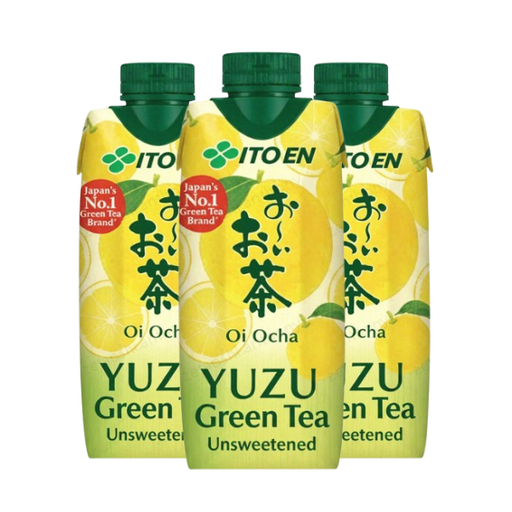
A ready-to-drink citrus variation for lunch without brewing. Check the label if the caffeine amount per drink affects your choice.
 No image available
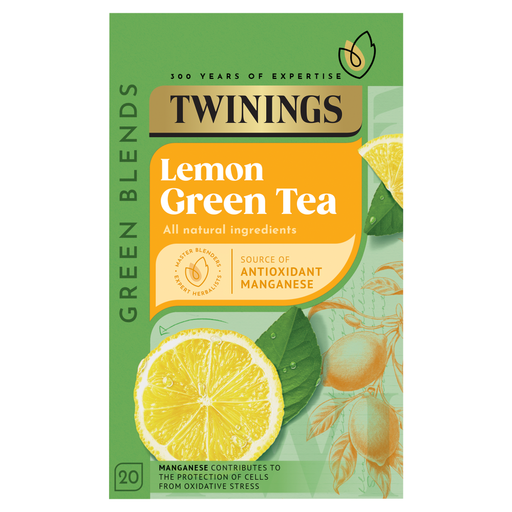
A lemon-flavoured green-tea option when you want a citrus note at lunch. Check this pack’s brewing directions and caffeine information if either affects your choice.
 No image available
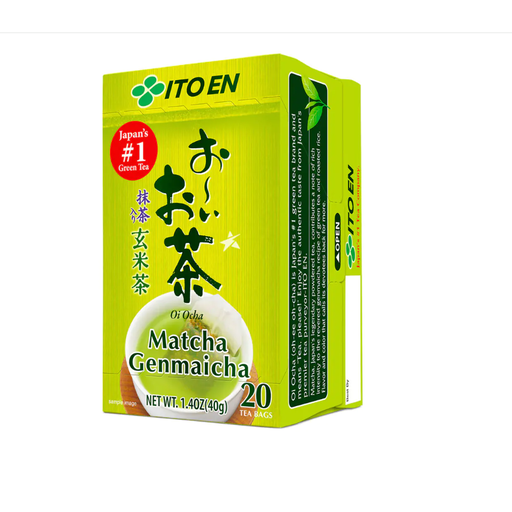
A bagged blend to consider if you want roasted rice alongside green tea and matcha rather than a fruit or mint flavour. Check the pack for brewing directions and caffeine information.
A mixed green-tea selection lets you try several flavours before committing to one: Twinings’ Classic Collection contains ginger, lemon, jasmine and mint varieties. If you would rather taste the tea without added flavours, choose a product with a pure green-tea ingredient list.
Ordinary green tea naturally contains caffeine. Twinings estimates around 30–40 mg per 200 ml cup for its green tea and notes that growing and brewing affect the amount; do not apply that figure to every brand or blend. Check for an explicitly decaffeinated product if reducing caffeine is your priority.
Count tea alongside other caffeine sources rather than judging the lunch-time cup on its own. In guidance published in September 2024, Food Standards Scotland and the Food Standards Agency recommend a total of 200 mg of caffeine per day during pregnancy. Check the individual product label, particularly for blends with additional caffeine-containing ingredients.
No. Yogi Tea Green Energy lists green tea, 7% guarana and other botanicals, and Yogi Tea states that the product contains caffeine. Read its full ingredient list rather than treating it as a substitute for a single-ingredient or decaffeinated green tea.
Teapigs directs users to brew its Mao Feng green tea with 80°C water for at least three minutes. If that does not fit your lunch break, compare the instructions on bagged products before choosing; brewing methods differ between teas.