Parents wanting tea and storage together
Twinings’ filled jars combine a glass storage jar with 30 or 70 green-tea envelopes. Twinings says both jars can be refilled after the initial supply is used.


Choose a filled Twinings green-tea jar if you want tea and storage together: its refillable 30-envelope jar suits trying the format, while the 70-envelope jar suits a household expecting more regular use. If caffeine intake is the deciding factor, choose the tea before its container; NHS guidance says not to have more than 200mg of caffeine a day during pregnancy and advises people who drink caffeine while breastfeeding to try to stay below 300mg a day. Decaffeinated green-tea bags can go in your own jar, while loose tea in a caddy calls for a different preparation routine.
The container matters most after you have settled on the tea and preparation routine that fit your household.
Twinings’ filled jars combine a glass storage jar with 30 or 70 green-tea envelopes. Twinings says both jars can be refilled after the initial supply is used.
Tea contributes to total caffeine intake. Check the tea itself alongside other sources of caffeine before deciding whether a standard green-tea selection or a decaffeinated pack fits your plans.
If you already have a jar for tea bags or a caddy for loose tea, you can choose the tea separately rather than buying a filled jar.
Start with caffeine and the tea you want, then decide whether a filled jar, separate bags or loose tea suits your routine.
| Priority | What to check | Your needs |
|---|---|---|
| Caffeine | Check the exact tea’s caffeine information. Include tea when counting caffeine from other drinks and foods; check the current pack if a decaffeinated option needs to fit a precise daily total. | If I’m pregnant, NHS guidance says not to have more than 200mg of caffeine a day. If I’m breastfeeding and drink caffeine, the NHS advises trying not to have more than 300mg a day. |
| Preparation | Decide whether you want a jar already filled with envelopes, tea bags for your own container, or loose tea that you prepare separately. | I want tea that is straightforward to prepare during an interrupted routine, without choosing a new storage container first. |
| Tea selection | Read the current contents and ingredients of a filled selection jar. If a particular blend matters, check which envelopes the jar contains before ordering. | I’d like to know which teas I’m getting, rather than choosing a jar on its appearance or envelope count alone. |
| Refilling | Check the container and refill format together: Twinings says its filled jars can be refilled with envelopes, while its tea caddies are intended for reusable storage. | If I already keep loose tea in a caddy, I’d rather continue that routine; otherwise, a refillable envelope jar may be simpler for my household. |
Tea counts towards total caffeine intake. NHS guidance says not to have more than 200mg a day during pregnancy and advises people who drink caffeine while breastfeeding to try not to have more than 300mg a day.
Count tea alongside other caffeine sources. If you choose decaffeinated green tea and need to track intake closely, check the current pack information rather than assuming that “decaffeinated” means no caffeine.
A jar sold as a green-tea selection is not a substitute for checking which blends and ingredients you will receive, particularly if you want a specific tea.
Read the current contents and ingredients before ordering. Choose a single-blend pack for your own jar if that is a better fit for your routine.
These brand examples show different tea and storage formats; they are not all filled-jar options.
Twinings lists Green Tea Selection Filled Jars containing either 30 or 70 envelopes.
Clipper lists organic and Fairtrade green teas, including a decaffeinated 40-bag product.
Pukka’s green-tea range is an option for choosing tea separately from its storage container.
Teapigs lists both plain and flavoured green-tea choices.
Tesco’s own-label Green Tea 20 Pack is a tea-bag option for a container you already own.
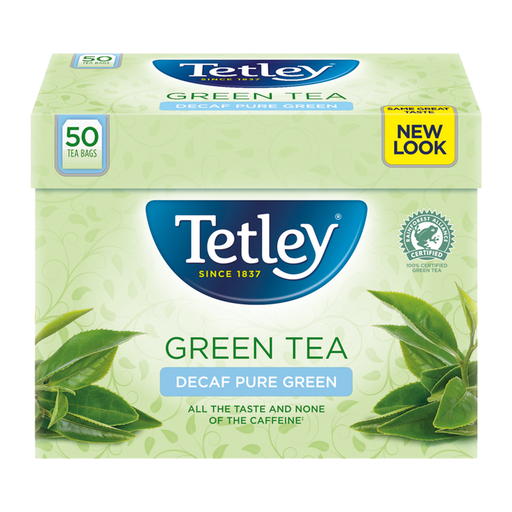
This decaffeinated green-tea bag pack suits the own-jar route: it provides tea bags, not a filled storage jar.
 No image available
For a household choosing decaffeinated green-tea bags to keep in its own jar or caddy. This is a 50-tea-bag, 100g pack, not a filled jar. Check the current pack’s caffeine information if you need to account for a precise amount per serving.
Yes. The NHS identifies tea as a caffeine source and says not to have more than 200mg of caffeine a day during pregnancy. Include tea when counting caffeine from other drinks and foods.
The NHS advises people who drink caffeine while breastfeeding to try not to have more than 300mg a day. Tea contributes to that total; the NHS uses 75mg as an example amount for a mug of tea.
The 30-envelope jar is a smaller commitment if you want to try a filled-jar format; the 70-envelope jar gives a regular tea-drinking household more envelopes before it needs a refill. Twinings says both jars can be refilled. Check the current tea selection before choosing either size.
Read the ingredients list on the exact pack. GOV.UK says prepacked food or drink containing any of the 14 allergens that food businesses must declare must clearly identify them within that list.